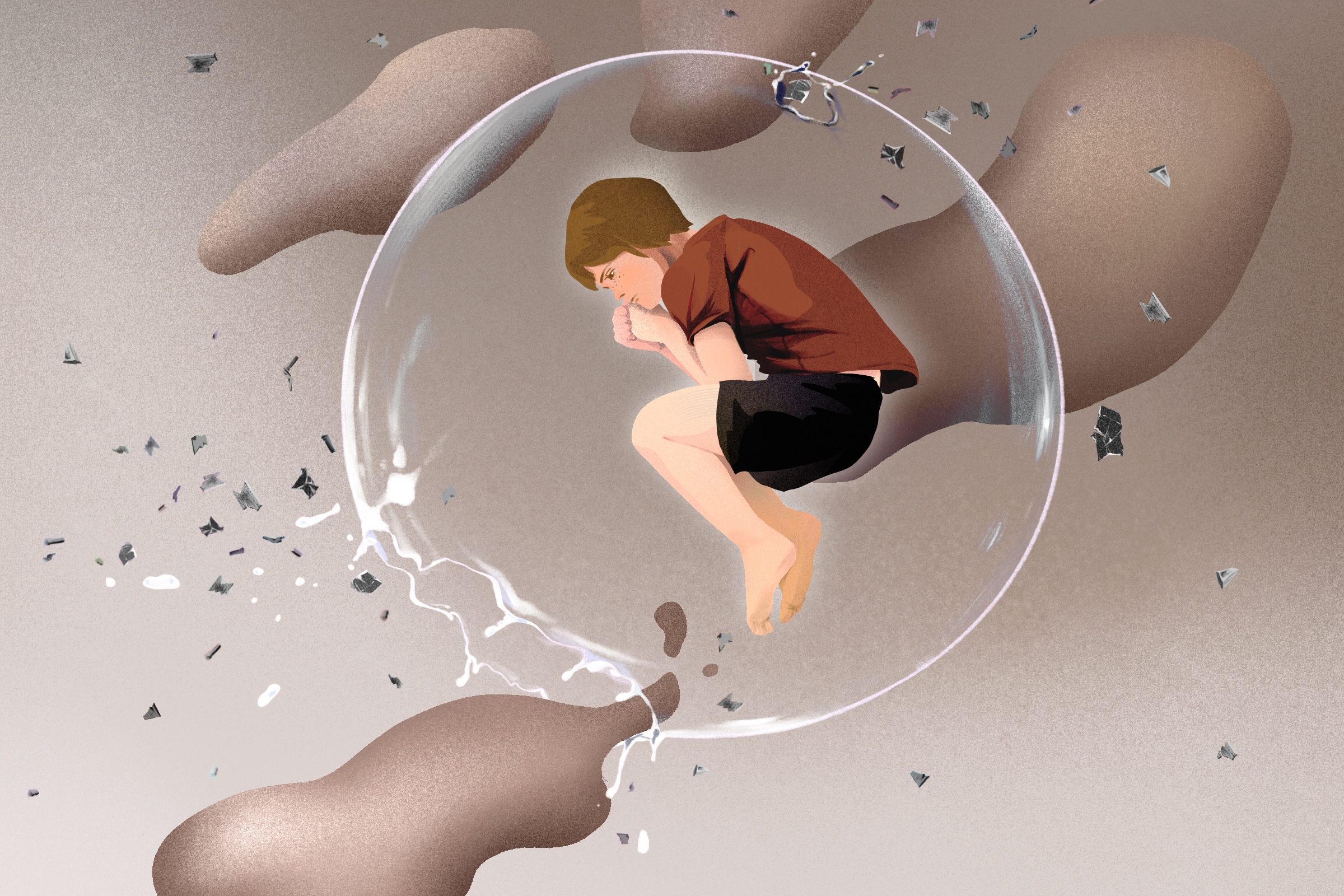
Look closer, and genes come back into play. 
|
|
|
| Ivan Pentchoukov
National Editor |
|
|
| Ivan Pentchoukov
National Editor |
|
|
Good morning! It’s Sunday. Here are today’s top stories. |
- Invasive hogs have contributed to the decline of nearly 300 native plant and animal species in the U.S. Their spread continued unabated, but hunters have a solution.
-
White House border czar Tom Homan told The Epoch Times he plans to put more focus on security at the northern border during the last two years of President Donald Trump’s administration.
-
The United States and China announced a tariff reduction plan of $30 billion in non-sensitive goods from each country following the Chinese leader’s state visit to Washington.
-
President Donald Trump rejected Iran’s latest proposal for an end to the conflict.
- 🍵 Health: Americans are taking supplements for gut health but missing something more crucial.
|
(Illustration by Lumi Liu) |
The rise in autism since the 1970s can’t be explained by genetics alone. Putting aside the thorny vaccine issue, experts point to two other things happening in tandem across the last half century: broadening diagnostic criteria and changes in the environment.
Look closer, however, and genes come back into play. Through what are known as epigenetic changes, toxins, stress, or even nutrition leave marks on our genomes, and affect gene expression. In part six of her series, The Autism Puzzle, Marina Zhang spoke to experts on why pegging down the potential environmental causes of autism is so difficult. |
|
|
The Kind of Publication You’ve Been Waiting For |
In a world where partisan and biased reporting has become commonplace, you can always count on The Epoch Times for a refreshing dose of factual, honest journalism without spin. When you don’t feel like reading the news, pick up a daily tip from us. From what walking barefoot does to your body to why science says the 30-gram protein rule is wrong, our health coverage is deep and extensive. You will find your kind of healthy changes to make right away. Yet what makes you truly love The Epoch Times may be none of the above. It is our talks on art, culture, and history that move hearts. At nighttime or on an indolent Sunday afternoon, find yourself indulging in a fascinating read on stories you have been longing for: a remedy for the decline of modern gentleman; the song that captured Dolly Parton’s life; what Disney left out of ‘Snow White’… The list is endless. The inspiration is infinite.
With the Mid-Autumn Offer, explore our entire treasure trove of content as much as you like for six months with just $0.25 a week.
|
|
|
|
Florida Hunting, Fishing and Outdoor Adventures in Okeechobee, Fla., on July 24, 2026. (Natasha Holt for The Epoch Times, Jacob Burg/The Epoch Times) |
On an 1,800-acre private preserve about 15 miles from Florida’s massive Lake Okeechobee, taxidermist and rancher Ian Hall offers a service some experts say is a critical solution to the explosion of invasive feral hogs across the U.S. mainland: guided hunts.
For a flat $350 fee, you can hunt a feral hog from atop a swamp buggy with a semi-automatic rifle, deep in the mossy pine hammocks and swamp lands of south central Florida, within a fenced ranch that houses other game animals, including alligators, bison, and multiple species of deer.
“Hunting doesn’t always get a good rap. It gets a negative rap, and then a lot of people that are anti-hunting, they never lift up the layers to see the positive side of hunting,” said Hall, who traps invasive feral hogs that enter his property from public land and releases them behind fenced areas on his ranch for clients to hunt.
Descended from both wild boar and escaped domestic pigs, feral hogs have overtaken at least 35 states in the past 40 years. Often weighing between 75 and 250 pounds, feral hogs are large, fast, and destructive. They cause billions in damage to agriculture every year and foul soil, native plants, crops, waterways, and grasslands, making them one of the most harmful invasive species in the United States. They are also extremely dangerous to humans and small animals.
“I had a friend in high school who shot a wild pig that turned around, ran at him, and before he could shoot it again, it took a tusk and ripped up his calves, and he almost died from the infection,” former Environmental Protection Agency Region 9 administrator Josh F.W. Cook, who is an expert on invasive feral hogs, told The Epoch Times.
“Feral pig tusks are the most infectious, disgusting thing you will ever find in biological sciences.” Cook said experts have tried everything from trapping and poisoning to putting up exclusion fences to slow the spread of invasive feral hogs, but hunting and shooting the pigs is required to combat their destructive impacts on the environment. “It’s like a giant wrecking ball through an ecosystem where they don’t belong,” Cook said. (More) |
|
|
(Left) U.S. President Donald Trump in Washington on Aug. 18, 2025. (Right) Russian President Vladimir Putin in Anchorage, Alaska, on Aug. 15, 2025. (Andrew Caballero-Reynolds/AFP via Getty Images) |
-
Fourteen senators are pressing President Donald Trump over reports that Russian President Vladimir Putin has been invited to the Group of 20 leaders’ summit in Miami in December. They ask Trump to rescind the invitation and keep sanctioned Russian officials out of remaining G20 events on U.S. soil.
-
President Donald Trump was aboard Air Force One as it made a low flyover above the 101,000-seat Neyland Stadium in Knoxville, Tennessee, before the Texas Longhorns and Tennessee Volunteers.
-
A federal appeals court ruled that Ohio and Tennessee may apply their gambling laws to Kalshi’s sports-events contracts.
-
A new external review has found no evidence that Utah Valley University employees acted in “bad faith” following Charlie Kirk’s assassination last year, but found several security lapses, including the failure to conduct a formal security assessment.
-
A powerful Nor’easter knocked out power to more than 100,000 people and canceled over 400 flights
|
Fairy tales spark the imagination while teaching right from wrong. (Illustration by Rae Li). |
“Give me a child until he’s 7 years old,” runs the adage, “and I will show you the man.”
Often misattributed to Aristotle or to the founder of the Jesuits, Ignatius of Loyola, this proposition has wisdom that is both timeless and obvious. Nearly 3,000 years ago, for instance, the Old Testament’s Book of Proverbs advised, “Train up a child in the way he should go, and when he is old, he will not depart from it.” Humans have long recognized the connection between early childhood and moral instruction.
Twenty-first-century psychologists agree with ancient philosophers that the code of ethics given to a child becomes a foundation stone for adulthood. Ultimately, the chief teachers of this virtue are parents and grandparents, older siblings, and other mentors. From them, girls and boys at a tender age absorb and process life lessons in honesty, generosity, respect for others, responsibility, and other positive traits. Numerous online articles that repeatedly stress the key role these influencers play offer advice and activities intended to make this teaching easier and more effective.
Missing from many of these lists, however, is any mention of the fairy tales and classic stories that can reinforce these lessons.
Read Aesop to children, and we find an ant schooling a grasshopper in responsibility, a tortoise teaching a hare that slow and steady wins the race, and a boy who cries wolf too many times learning that no one believes habitual liars even when they’re telling the truth. (More) |
- Two Writers, One Ranch, Two Realities—by Mollie Engelhart (Read)
-
Celebrating the Uniqueness of Mothers and Fathers—by Timothy S. Goeglein (Read)
|
If you love apple pie but don’t feel like wrestling with pie crust on a weeknight, this easy apple crisp is the answer. The combination of tart Granny Smith apples and a sweeter variety, such as Honeycrisp, gives the filling a sweet-tart balance. A buttery oat crumble goes on top before the crisp is baked until golden. With just 15 minutes of hands-on prep, it’s an easy dessert to make on a weeknight. |
|
|
“The whole world is a series of miracles, but we're so used to them we call them ordinary things.” |
— Hans Christian Andersen |
|
|
|
🚨 If you enjoyed Morning Brief, subscribe today to get access to everything we have to offer, and support more great stories like this one. You'll get daily news and analysis, health insights, original documentaries, interviews with interesting people, lifestyle advice, delicious recipes, and much more. |
— Simon Veazey, Ivan Pentchoukov, Madalina Hubert, and Kenzi Li |
|
|
Copyright © 2026 The Epoch Times, All rights reserved.
Our mailing address is: The Epoch Times, 129 West 29th Street, Fl 8, New York, NY 10001 | Contact Us
Our Morning Brief newsletter is one of the best ways to catch up with the news. Manage your email preferences here or unsubscribe from Morning Brief here.
|
|
|
|