
|

|
Tesla unveils its long-delayed Roadster nearly a decade after first revealing a next-generation version of its original electric sports car, at a launch event in Waco, Texas, on Oct. 15, 2026. (Tesla/Handout via Reuters) |
|
Innovators and Fakers |
|

|
By Jeffrey Tucker |
|
Commentary
Two major pieces of media hit over the weekend. The more spectacular was the launch promotion of Tesla’s new Roadster, which does much more than drive fast. It defies gravity and launches into the air and then lands safely on the ground again. It’s a merging of rocket technology from SpaceX with Tesla’s already advanced electric systems and autonomous driving.
The live presentation was utterly astounding and seized the culture on a level not seen in decades. It also boosted American pride in a time when it seems we are being outproduced by China on every front. Even though few will ever be able to afford this car when it becomes available for purchase in two years, just knowing that it can and does exist offers a point of optimism about the future.
The next day I found myself stuffed in interstate traffic and wondered what possible use this car would be for daily driving. I could think of nothing but perhaps that’s not really the point. Just imagining a future that can be better than the present is the very essence of the American optimistic spirit, which is very much in need of revival.
I was on the road driving to the opening showing of “You Can See Everything,” a new documentary about Elizabeth Holmes. The film by Nathan Fielder and Lance Oppenheim follows the founder of the defunct health technology company Theranos in the weeks before Holmes began serving a federal prison sentence for defrauding investors.
The great question the documentary seeks to answer is as follows. To what extent was Elizabeth personally culpable for the deceptions of which she was convicted, or was and is she an exaggerating dreamer caught up on the wrong side of an angry mob of investors?
We never quite get that answer but I seriously doubt that anyone who watches this believes that she needs to be serving time in prison right now, for all her faults. It certainly leaves the viewer with mixed feelings for her personally. She certainly is a type: compelling because she is a true believer. Such a person—big on vision but weak on details—can be easily manipulated by others, which appears to be the case here.
She believed that she had invented a process and a machine that would replace the $100B blood-based diagnostics industry with a pin prick plus small decentralized testing machines that would make testing affordable for everyone. She was clever with her language. She always said that her company has “made it possible” to do all blood work, which is still different from saying it is a reality.
Her story is an example of the “Fake-it-until-you-make-it” hustle culture of the time. It drove many mythologies. Just consider the timeline here. After 2001, interest rates were slammed to zero, deprecating traditional savings and sending capital on a wild hunt for return. At the same time, markets had already shaken off the dot-com bust and were ready for the next new thing.
The first big launch was the iPod with a splashy presentation by Steve Jobs. For the first time, we imagined replacing all physical forms of music reproduction with a small digital tool. No more albums, 8-tracks, cassettes, and CDs. Now we would have just a tiny box that would carry rooms full of music. It was amazing and an entire generation seized on the idea.
Part of the legend involved the deprecation of traditional academia and normal professional paths. Jobs created his own career just as so many tech startups had done. Why hang around in school and jump through normal professional hoops when you are carrying around an idea that can change the world?
Sure enough, Elizabeth Holmes, then 19, dropped out of Stanford in 2003 and founded Theranos, a word that combined therapy and diagnostics. Tech journalists at the time were desperate for the “tech bro” culture of Silicon Valley to be disrupted by a woman, particularly one with such a compelling look and way of speaking.
Facebook was launched in 2004 by Mark Zuckerberg and was already christened as the great new thing even before being made available to the general public. It was the new phonebook for the digital age, once again the product of a dreamy dropout from the Ivy League.
The archetype was set in place: find a visionary founder with an impossible plan and throw millions and billions their way.
Already by 2006, Theranos raised $30 million and was hard at work making the dream come true, even as Holmes herself spent her time in promotion and perfecting her pitch. The following year, Steve Jobs introduced the iPhone.
I recall standing around at a picnic when a friend showed me his new iPhone. I could not believe my eyes. I had wanted a phone with a usable internet connection for years but it was always spotty and hard to manage. This new machine was a new level of amazing.
My eyes popped out and I drank the Kool-Aid along with everyone else. I became a wild enthusiast for the impossible, completely unaware that I was being sucked into an unconstrained vision, believing that a mere technological improvement was a metaphor for a life-changing eschatological immanentization. In fact, I later started my own company in the thick of this ethos, one that failed, but that is a story for another time.
By 2008, interest rates were pushed down even more, falling to negative territory, redirecting all investment capital toward a wild speculative binge that benefited the entire startup cult. By 2010, Theranos reached a $1 billion valuation. The same year, the movie “The Social Network” valorized Zuckerberg’s Facebook as a magic money machine, a result of a founder with no real product other than digital connection.
When Steve Jobs died in 2011, Elizabeth was ready to capture the look and ethos. She donned the black turtleneck, lowered her voice, and made all the media rounds. Her legend as a genius only grew. Two years later, she had partnered with Walgreens to ship her product, a shift that drove company valuations to $9 billion.
Keep in mind that all of this happened without any preprint studies, much less peer-reviewed examinations of the technology. There was no article that affirmed the possibility of running hundreds of types of tests on a single drop of blood.
There was zero evidence that anyone involved in the company understood microbiology, engineering, or anything about the industry they were attempting to disrupt. There was nothing in the way of outside verification of a single claim. It all happened based on vibes, public relations, and nothing more. Within the company itself, everyone watched as doubters and skeptics were pushed aside while those who d gave upper management rosy scenarios of a working product were promoted.
Even back in those days, venture capital had lost all confidence in official science, conventional training, or official channels of verification. They had come to believe that the vibe was probably more reliable. This loss of trust—long before COVID—created an opportunity for every conceivable purveyor of flimflam that you can imagine.
Holmes is in prison for defrauding her investors. I’m not so sure about this. They took a risk. They had no interest in due diligence. Their losses are their losses. Any one of them could have taken a day to look carefully at the product or the claims. They did not. It’s pretty rich of them to cast stones at the promoter and get their revenge by sending her to prison.
In our own times is the new story of the world’s largest pharmaceutical companies backed by the biggest and most powerful governments all of whom pushed and even forced another innovation, a magic mRNA shot to protect against a virus that spread multiple times to most people in the world regardless of billions of injections.
Not only did it not work; we have millions of pages of direct evidence that the injection caused disability and death without precedent. And what happens to these CEOs? Nothing bad. They get more investment, more status, more power, and release more products.
The whole situation is beyond belief. I’ve spent 12 grueling hours reading direct testimony of people who had their lives ruined by agreeing to that injection and experienced devastation as a result. No one bears any liability for this outrage. And yet Holmes languishes in prison because her machine did not match the promised performance, even if (as I understand it) she was never convicted for harming anyone’s health.
So there’s the irony of our times right there. The wrong people are going to prison for medical fraud. If we can see anything, much less everything, this is what we should see.
As for Elon’s flying car, what we saw was real. It lifts our spirits even if none of us will ever own one. All entrepreneurs live on the thin line between fantasy and reality. Some are just much better at navigating that line than others. |
|
|
|
|
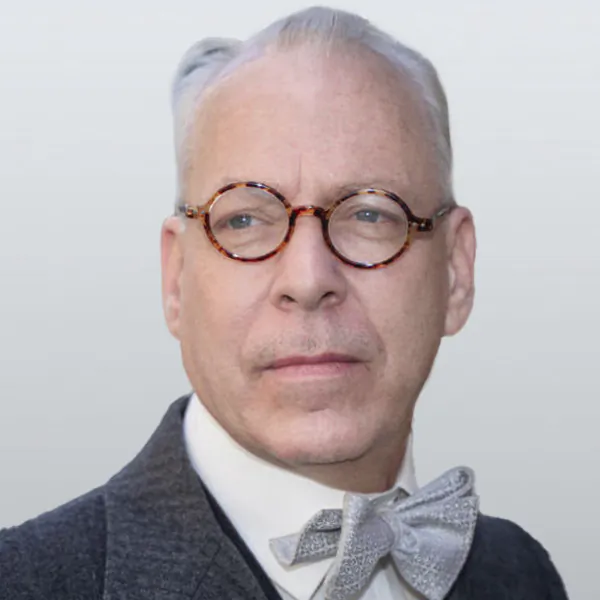
Jeffrey A. Tucker is the founder and president of the Brownstone Institute and the author of many thousands of articles in the scholarly and popular press, as well as 10 books in five languages, most recently “Liberty or Lockdown.” He is also the editor of “The Best of Ludwig von Mises.” He writes a daily column on economics for The Epoch Times and speaks widely on the topics of economics, technology, social philosophy, and culture. |
|

|
|
|
Thank you for being a subscriber
Your Feedback |