|
|
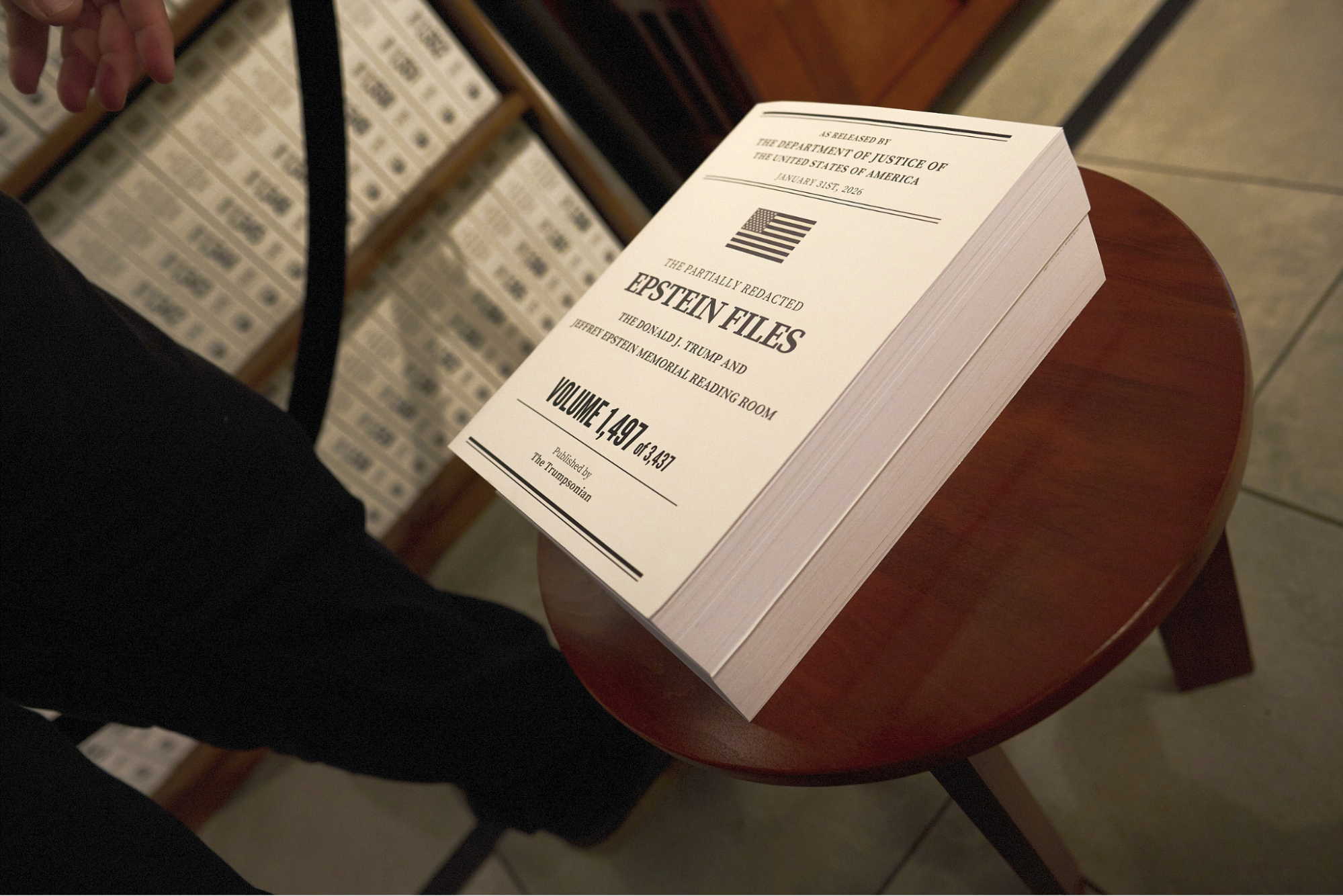
The Institute for Primary Facts, a non-profit organization, opens a library archive of 3.5 million pages of the Epstein files that have been made available to the public at the Donald J. Trump and Jeffrey Epstein Memorial Reading Room in Tribeca, New York City, on May 8, 2026. (Edna Leshowitz/Getty Images) |
|
How Conspiracies Happen |
|

|
By Jeffrey Tucker |
|
Commentary
It was my pleasure to speak at a medical freedom conference this weekend. As always at such events, the conversations outside the main hall are where the real action is. With friends new and old, we worked through the last 10 years of amazing events and shared details, which invariably include corporate scheming, government corruption, censorship and psyops, malicious actors and cover-ups, and much more.
In other words, we discussed what is often disparaged as conspiracy theory. They exist for every subject. We just marked 25 years since the terrorist attacks on Sept. 11, 2001. Even now, there are as many theories as theorists, while everyone agrees that the official report is not the whole story.
It’s the same with the Epstein files, January 6, the COVID mess, and much more. A cab driver even casually mentioned this tendency to me with an optimistic spin. Maybe political life has always been this opaque. We just have more information than ever before. All anyone knows for sure is that we don’t have the full truth.
At dinner that night, an older man raised an interesting question. If any or every conspiracy theory of any of the above is really true, why are there not more people from within who break ranks with the plotters and go public?
Just consider the scheming behind the COVID shot alone, which all known data reveals to be among the most dangerous ever approved. Why did it take so long for the news to go public and why are so many still languishing in silence?
There are a number of ways to address this. One is that whistleblowers are treated horribly by every system that needs them the most. They are most often ignored, smeared, investigated, fired, and made to have a miserable life as an example to others. You only need to see that happen once to make you rule out going that route completely. Even after leaving jobs, people are more inclined to stay quiet than to speak out.
I watched as top scientists, doctors, and lockdown victims spoke out and paid a huge price. They lost jobs, lost access to media, were shunned by colleagues and friends. Powerful people tried to ruin their lives. Very few people are willing to face such a prospect.
Another answer is addressed by game theory. In the classic prisoner’s dilemma game with two players, they are most likely to defect and throw the other person under the bus rather than cooperating in a lie. But change the rules of the game a bit to make it more realistic—repeated plays and higher payouts—and participants learn quickly that it is always better to cooperate and go along rather than defect from the crowd.
Perhaps that sounds technical but there is a social aspect to it also. When the success of the group narrative depends on everyone going along with it—the now debunked theory that the world would soon melt under the weight of industrialization and whole land masses would be flooded—even preposterous lies can last and last.
That point is clear enough but how far and how long can a good conspiracy extend before it breaks? This is where it gets interesting. For example, pharmaceutical companies have accumulated enormous power over academia, professional societies, think tanks, media, medicine, and even retailers. Their reach is into every nook and cranny of life today.
And yet few are willing to stand up and say plainly: this product does not work as promised. It is a ripoff. The trials were rigged. The agencies were paid off. The doctors who prescribed it had no idea what they were doing. Truly products can be around for decades and generate billions in profits before even one researcher comes forward with the truth. Even then, his statement of truth might never find an audience.
As we were discussing this, my mind drifted off to an early job I had at a fish restaurant. Our single most profitable item on the menu, one that sold by the dozen or two, were our famous baskets of hot puffs. You would get a dozen in an order. We had honey on the tables and people would fill the hot puffs with honey and gobble them up.
Back in the kitchen, we would marvel over this because we knew the truth about what we were selling and what they were eating. The hot puffs were really just sliced canned biscuit dough packed in long tubes. We opened them and threw them into the vats of roiling hot grease. They would cook on one side and we would flip them until they were golden brown.
There was no way any of us would ever eat them because each hot puff probably contained a quarter cup of corn oil! We would test this using paper napkins, smashing the cooked puff between two napkins and weighing the results. It was always hilarious and shocking. Add mounds of honey to each and you have the makings of a culinary disaster.
There were times that I wanted to go into the dining room with an announcement: “You are all out of your minds to be eating those things by the dozens. Stop now before you die an early death from a heart attack!”
Did we do that? No, because they were a hugely profitable item on our menu. We were famous for them. And truly people did love them, so what was it to us to tell people what they should and should not eat?
I think about this case often. We had a conspiracy of silence going on, an innocent one more or less, one common in most of the food industry. They know that what they are selling is not good for us but they aren’t in the business of health. They are in the business of business and people love bad food. If people would wise up and stop eating junk, the industries would simply collapse.
The situation turns much darker when it comes to pharmaceuticals deemed safe and effective when the real data reveal them to be not all they are advertised to be. There are often hard tradeoffs here and no pharmaceutical product is without possible adverse effects. Profitable sales can incentivize coverups that last years or decades. So long as everyone is making money, there is no reason for anyone to sound the alarm.
Here is where government regulation becomes a genuine problem. We created the Food and Drug Administration (FDA) to operate as the policeman on the beat. But the cop was long ago paid off to work closely with the companies it regulates, in the form user fees paid by drug companies that account for nearly half of the FDA’s program level budget. Meanwhile, few fully understand the extent of the problem and the very existence of the FDA crowds out what would otherwise be private attempts at oversight.
It’s true for government commissions too. When was the last one that settled anything? I cannot think of a single one. This is why I have never favored the idea of a COVID commission. The last thing we need is for the Big Lie to be codified by government and all the critics of the final report to be censored and shamed. As much as epistemic chaos is uncomfortable, it is far more preferable than a comfortable myth.
This is the age of ubiquitous distrust. AI will not fix that. If anything, it is making it worse. Trust will not return until individuals and institutions can earn it back. That will be a long time coming because earning something requires courage and breaking ranks from the crowd. |
|
|
|

|
Jeffrey A. Tucker is the founder and president of the Brownstone Institute and the author of many thousands of articles in the scholarly and popular press, as well as 10 books in five languages, most recently “Liberty or Lockdown.” He is also the editor of “The Best of Ludwig von Mises.” He writes a daily column on economics for The Epoch Times and speaks widely on the topics of economics, technology, social philosophy, and culture. |
|
|
|
|
Thank you for being a subscriber
Your Feedback |