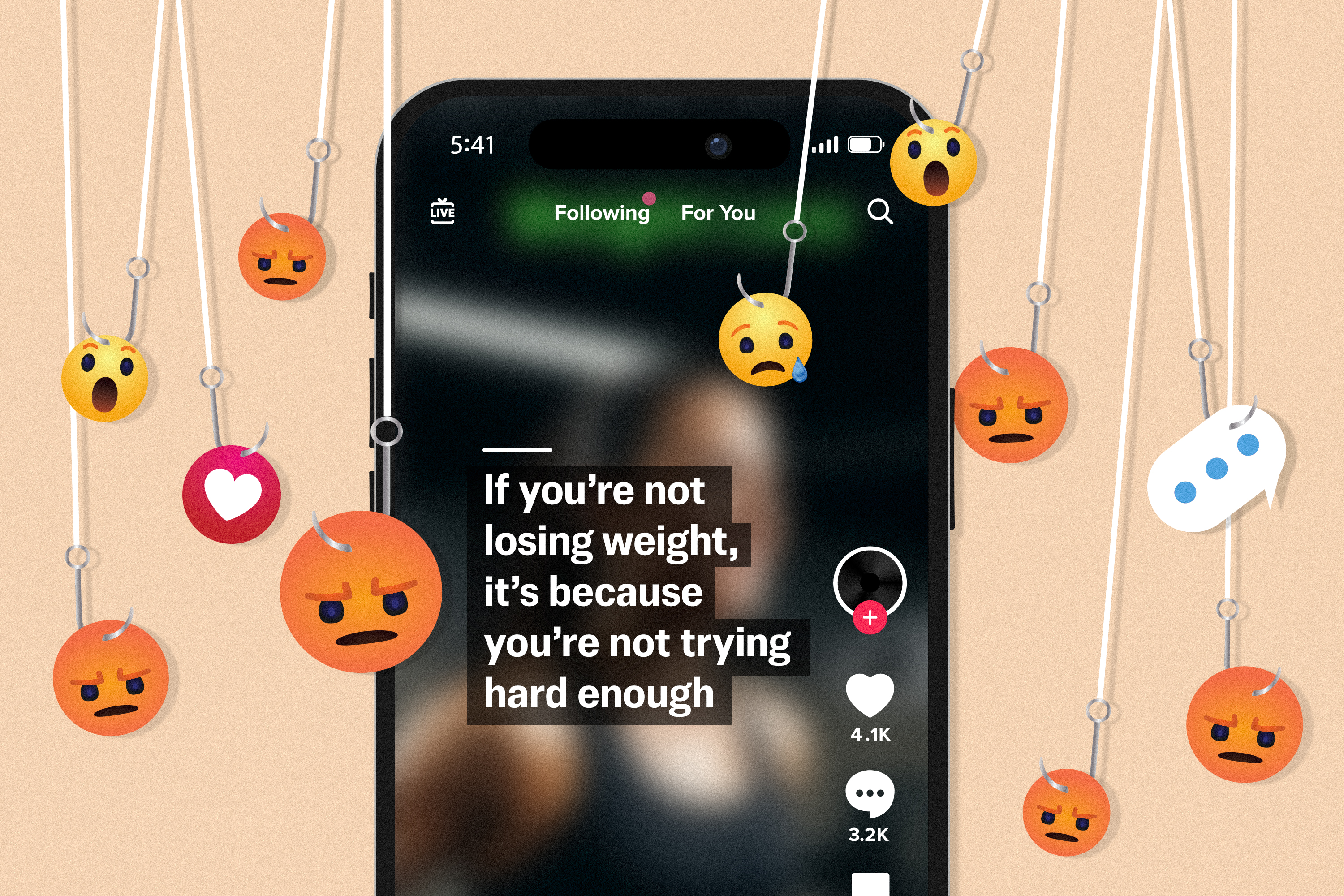
A video appears on social media with a message about weight loss that ignites viewer outrage.
Some people click on the post, which contains a link to a weight-loss app. Other viewers file into the comments section to argue, criticize, and share the video.
But behind the scenes, what appeared to be just another inflammatory social media post was actually a carefully orchestrated advertisement.
And the outrage? That’s part of the strategy.
“I’ll be honest, I’m guilty of AI rage bait,” Carmelo Zaffarana, founder of Lucernel LLC, told The Epoch Times.
Lucernel is an independent software company that also builds web platforms and iPhone applications.
Zaffarana laid out how the concept works. First, a creator uses artificial intelligence (AI) to make content that looks like a real person filmed it and showcases a specific reaction.
“Say you have a diet, calorie tracking, or weight loss app. A rage bait video could be [about this point of view]: ‘if you’re not losing weight, it’s because you’re not trying hard enough,’ followed by the person’s reaction. Then they grab their phone and open the app you’re promoting,” he said, adding the video usually includes a soft ad.
“The video fills up with angry comments and gets shared with friends, and some people get curious and ask, ‘what’s the app name?’ That’s where the real funnel starts,” Zaffarana said.
In his experience, it’s often the app’s founder, or a secondary profile, who writes the comment asking for the app name, he said.
“I don’t really think the algorithm boosts this kind of content. … It goes viral because of the emotional spike; people watch the video in loop and share it with friends.”
Manufactured outrage or “rage bait” has been around for years, but AI has thrown gasoline on the fire, making it easier than ever to share a hot take on social media and networking platforms.
The Epoch Times interviewed experts on digital marketing, behavioral science, and rage bait to learn how making people angry online can lead to money in the bank. (More)