| Timothy Matlack hardly fit the image of a polished revolutionary statesman. A Quaker who loved gambling, cockfighting, taverns, and occasional brawling, he often scandalized his religious community. Yet despite his rough demeanor, he had an extraordinary talent—one that would leave a permanent mark on American history.
Matlack’s elegant penmanship, marked by its distinctive looping flourishes, launched him from an apprentice merchant into one of the most important scribes of the Revolutionary era. Born in 1736 and raised in Philadelphia during a time of political upheaval, he endured family financial ruin, personal debt, and eventual expulsion from the Society of Friends. At the same time, he became increasingly connected to Philadelphia’s growing circle of political radicals.
As tensions between Britain and the colonies escalated after the French and Indian War, Matlack’s skill with the pen made him indispensable. Benjamin Franklin recognized his abilities early, hiring him to copy official petitions. Later, during the Continental Congress, Matlack was entrusted with preparing formal documents for the revolutionary cause, including George Washington’s military commission.
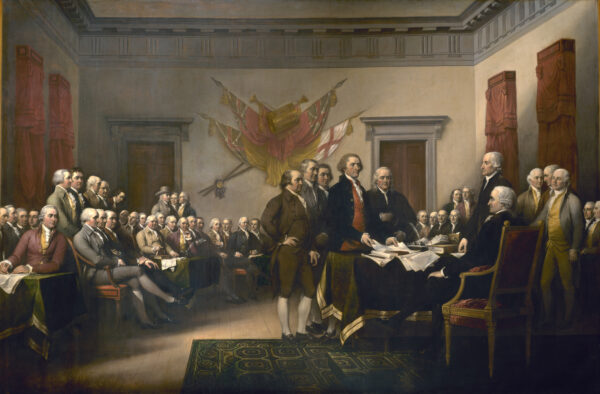
His most notable assignment came in the summer of 1776. After Congress approved independence, Matlack was chosen to create the official handwritten version of the Declaration of Independence—the very copy that would be signed by the delegates and preserved for generations. It was Matlack who carefully inscribed the now-famous title: “The unanimous Declaration of the thirteen united States of America.”
Matlock was a man whose personality often contradicted the ideals of his Quaker upbringing, yet whose craftsmanship helped shape the image of the American Revolution. Today, millions recognize the Declaration itself, but few know the turbulent and fascinating story of the man who penned it.
|