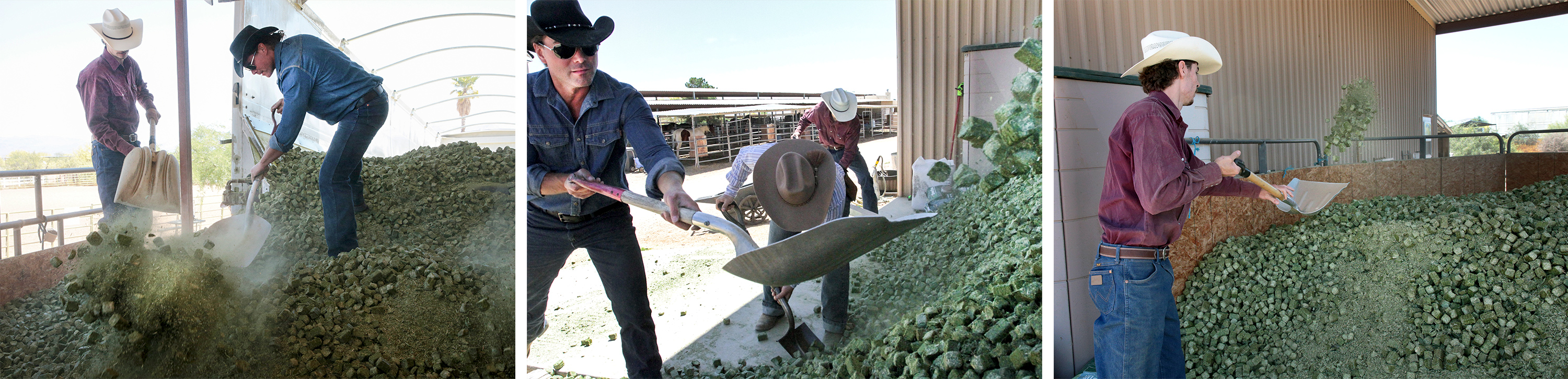
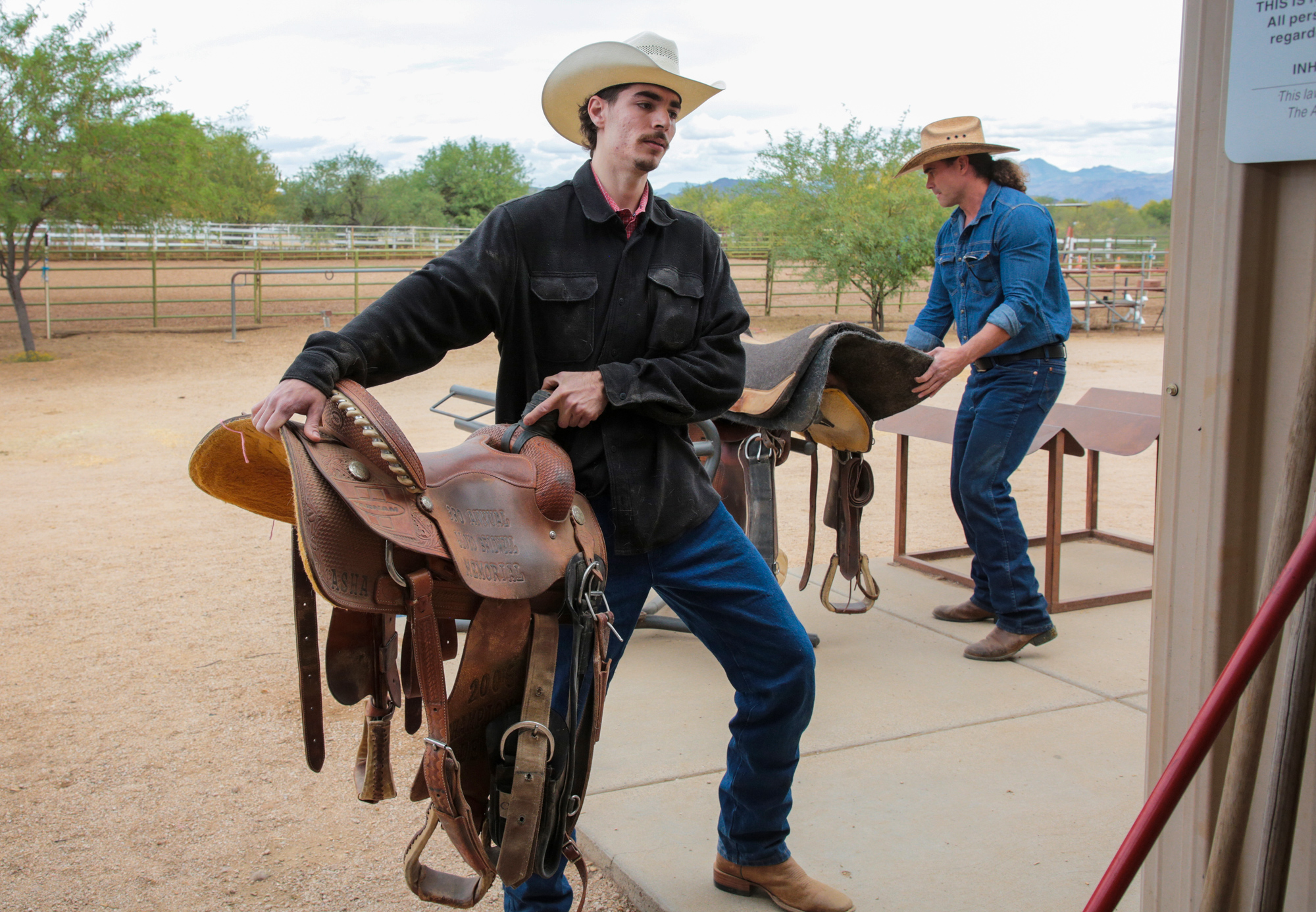
SCOTTSDALE, Ariz.—When a farm truck hauling 10 tons of alfalfa cubes came up several feet short, three student cowboys grabbed shovels and set to work.
“This is normal,” said Jason, 51, unfazed by the morning’s detour.
“Welcome to the real experience,” added Carmine, 35.
“There is no job description—whatever happens happens,” said Alec, 23.
They shoveled alfalfa—enough to feed more than two dozen horses for a month—into a storage shed, kicking up clouds of green dust.
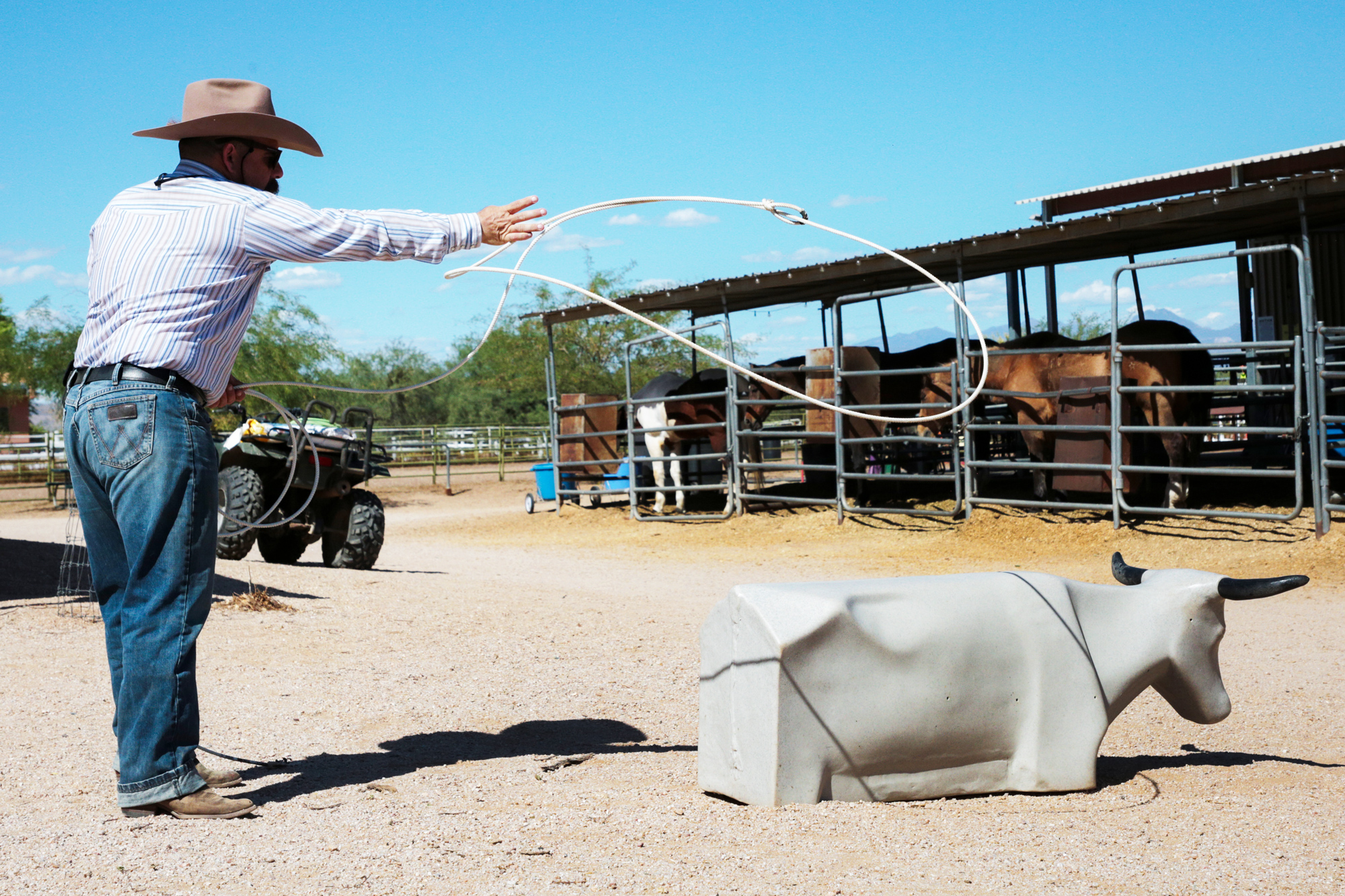
But that was just a small diversion from the day’s larger lessons: riding horses across rugged desert terrain and learning to rope cattle from two of the most experienced wranglers in the business, Lori Bridwell and Rocco Wachman.
At Arizona Cowboy College in Scottsdale, learning to become a wrangler is more than an education—it’s a way of life, rooted in a profession in which character matters, the pay is low, and the lifestyle endures in history and imagination.
Lloyd, Bridwell’s husband, ran the first session of the college in 1989 and was its head instructor until April 2000. The couple had been married 17 years when Lloyd died from complications of burns over 95 percent of his body.
Lloyd was a fourth-generation cowboy, and his passion was well-known. His mission was to put everyday people on horseback, Bridwell said.
Years earlier, while helping a fellow rancher in Agua Prieta, Mexico, Lloyd was bitten by a blister beetle and fell ill from its toxic secretion.
“When you’re sick from a blister beetle, you’re awake all night and sleep all day,” Bridwell told The Epoch Times. “He was watching those commercials—be a dog groomer, be a truck driver.”
(Left–Right) Trainee cowhands use shovels to shift a 10 ton load of alfalfa feed that was dumped in the wrong spot, at Arizona Cowboy College in Scottsdale, Ariz., on April 14, 2026. Richard Moore/The Epoch Times
“[He said,] ‘I could teach a cowboy school.’
“He talked about it for a year and a half. I finally told him, ‘Either you stop talking about it or do something.’”
They placed an ad in the local newspaper, and the response was immediate. Interest grew quickly, drawing students from across the state, the country, and beyond.
Bridwell’s philosophy of being a straight-shooter in word and deed is central to her school and to cowboy culture. It’s a time-honored tradition shaped by westward expansion in the 1800s.
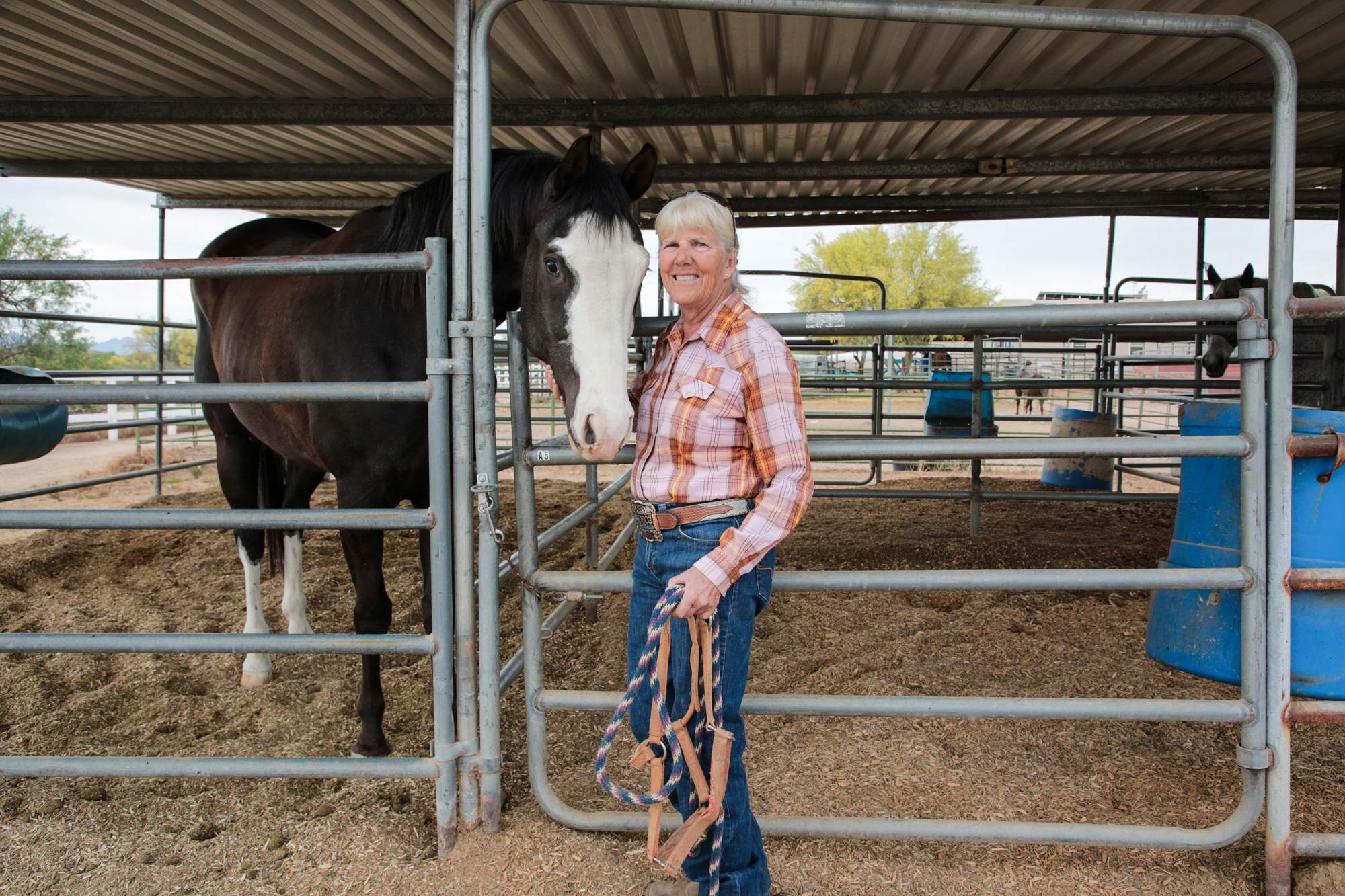
“If you’re straight with people, and you don’t cheat people, and you do business right, you can be in business a long time,” said Bridwell, 67.
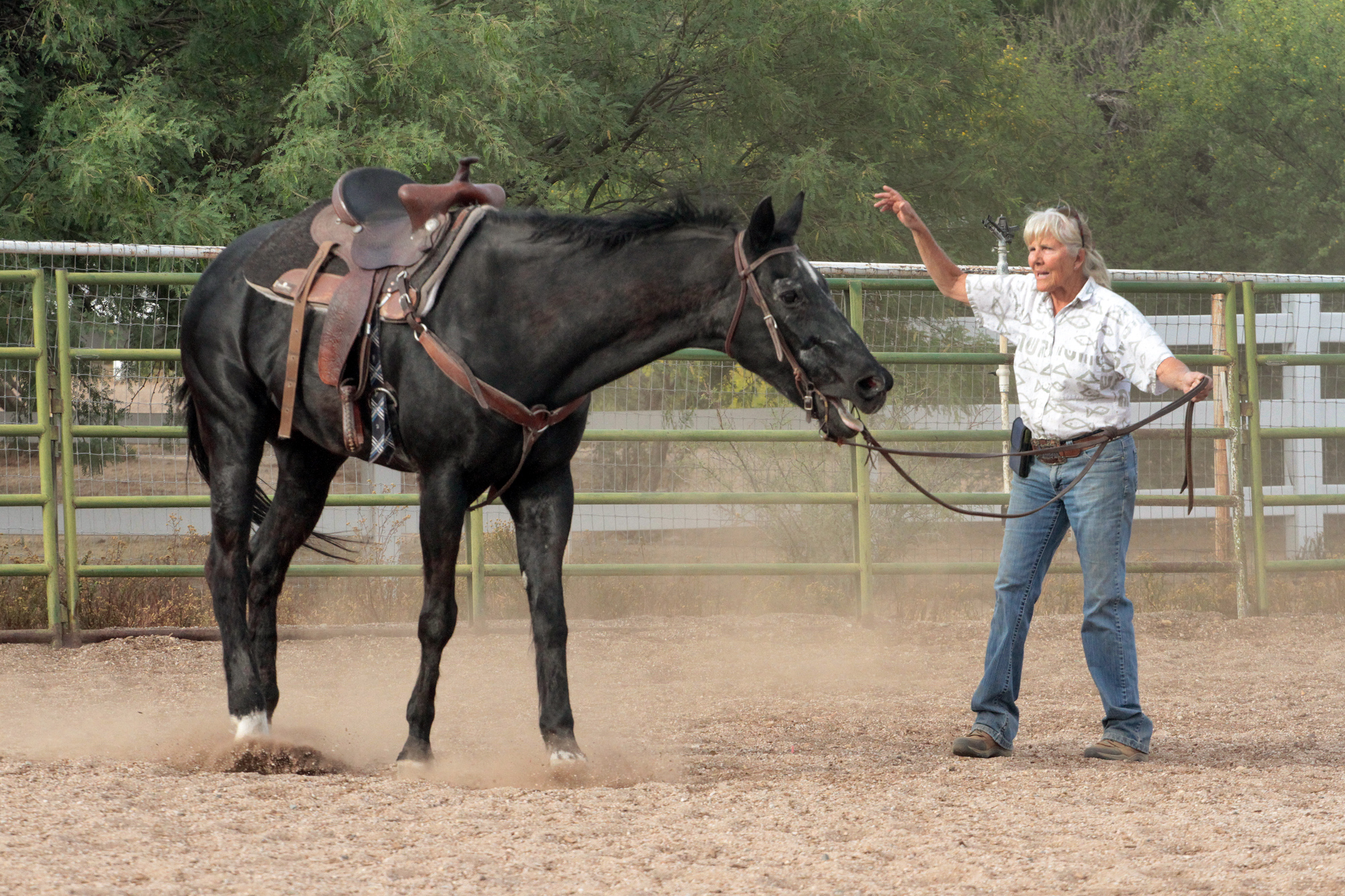
Arizona Cowboy College owner Lori Bridwell, 67, at her facility in Scottsdale, Ariz., on April 13, 2026. Bridwell’s philosophy of being a straight shooter in word and deed is central to her school and to cowboy culture. Richard Moore/The Epoch Times
So You Wanna Be a Cowboy?
The life of a cowboy is harsh but rewarding beyond measure, Bridwell said. Few other professions involve riding horses all day in all weather conditions, facing rattlesnakes and other dangers.
The days are long, the trail is longer, and the money—factoring in room and board—is modest at best. The payoff is carrying on a legacy few get to experience.
Of the estimated 600,000 to 1 million working cowboys in the United States, 67.2 percent are male and 32.8 percent are female, according to Zippia.com. More than 62 percent are white, and about 30 percent are Hispanic or Latino.
When it comes to pay, the average annual cowboy salary is only $28,844, according to the career site. Male cowboys earn an average of $32,428, compared with female cowboys, who earn an average of $26,552.
Some of Bridwell’s students want to make a living at it. Others have always dreamed of becoming cowboys—if not in reality, then at least in spirit, she said.
She said that in some respects, she thinks it’s a dying profession.
“It doesn’t pay much. It’s hard, hard work,” she said.
Arizona Cowboy College owner Lori Bridwell at her facility in Scottsdale, Ariz., on April 13, 2026. The life of a cowboy is harsh, but rewarding beyond measure, Bridwell said. Richard Moore/The Epoch Times
Technology has also found its way into the cowboy lifestyle, she said. Some ranches use drones and microchips to track and monitor cattle, in addition to the traditional methods of professional wranglers.
But the essentials remain.
“I teach them our way of life, what it’s really like to work,“ Bridwell said. ”Integrity means a lot to me. Loyalty—your handshake is your word. You know, just getting back to real life.
“We’ve had students from Ecuador. We’ve had them from Germany, Japan, Northern California, New York—it doesn’t matter where they come from. We even had some people from Brazil who didn’t speak English. That was tough.”
Bridwell takes pride in running a women-owned business on her 10-acre ranch alongside her granddaughter, Grace, 21, and senior instructor Wachman, 70.
Cowboy classroom sessions range from single-day workshops to the most intensive option, a five-day program that costs $2,450.
“My favorite is the five-day. We actually get to go up to the ranch,” Bridwell said. “We get to spend some time with people. The one-day ones are just a quick synopsis of ‘here’s a horse.’ We might rope a little, and we ride, and that’s about all you do.
Arizona Cowboy College attendees Alec (Left) from Florida and Carmine (Right) from Prescott, Ariz., get a hands on view of cowboy life at the college's facility in Scottsdale, Ariz., on April 13, 2026. Richard Moore/The Epoch Times
Arizona Cowboy College attendees Alec (Left) from Florida and Carmine (Right) from Prescott, Ariz., get a hands on view of cowboy life at the college's facility in Scottsdale, Ariz., on April 13, 2026. Richard Moore/The Epoch Times
“The five-day, we actually start working with cattle, learning about cattle, and learning about grazing.”
Most of her students are men, she said, as was the case in her latest cohort. Carmine is from Prescott, Arizona; Jason is from central Texas; and Alec is from Florida. All three asked that only their first names be used.
Carmine, a martial arts instructor, said his goal is to improve his horsemanship and roping skills while helping preserve the cowboy ethos.
“Rocco and Lori are legends [in their profession]. I’m going to say that again—legends,” Carmine told The Epoch Times.
“I actually want to do it for the rest of my life.”
Reflecting on the difference between martial arts and horseback riding, he said: “When it’s just you, by yourself, you just go, right? But now there’s a living being with its own spirit underneath you. That’s a big difference.”
Jason works as an investigator for a state regulatory agency in Texas. It was his first time at a cowboy college—his first time testing himself in the boots of a cowboy.
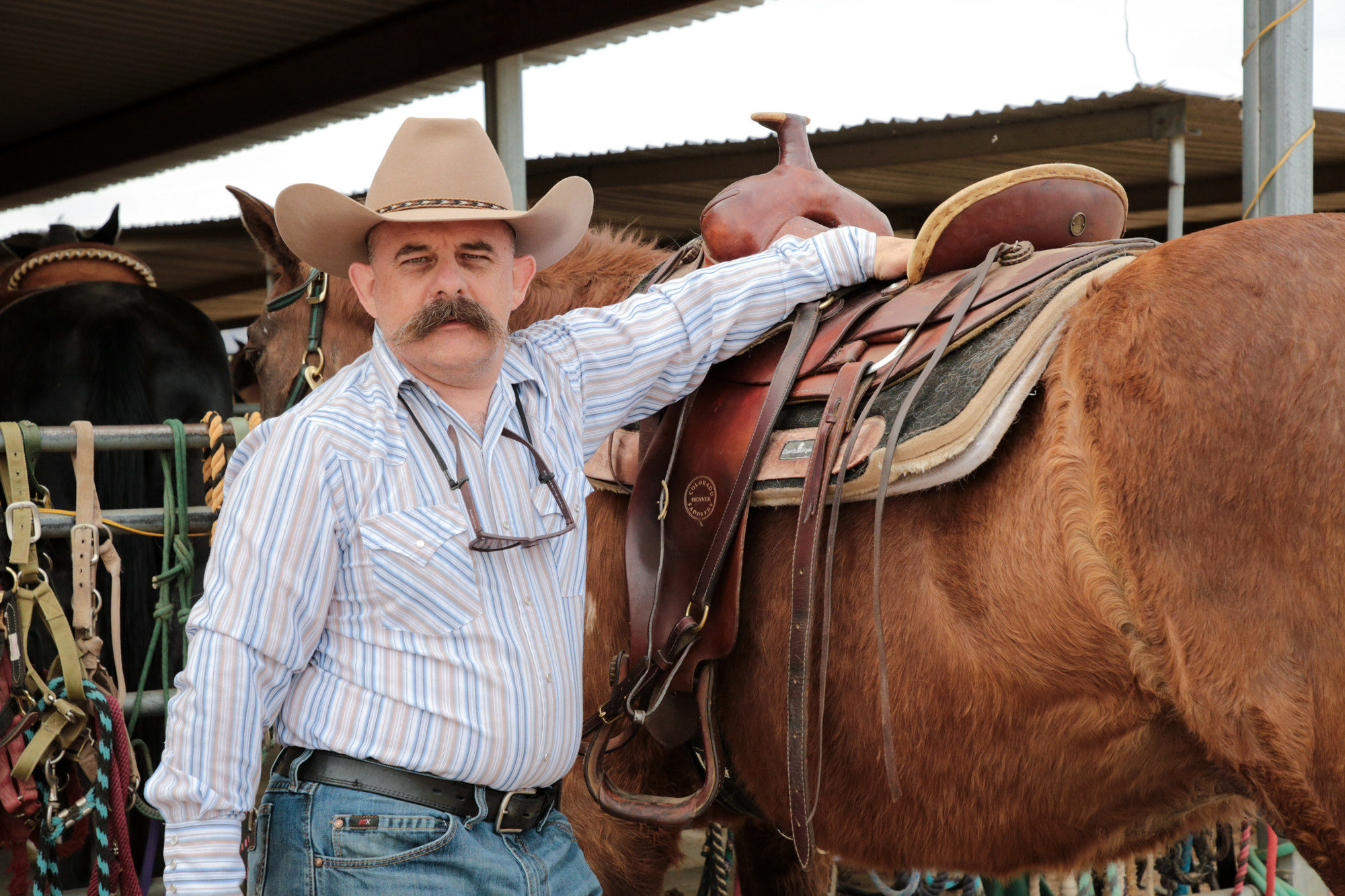
Jason, an investigator for a Texas regulatory agency, gets into cowboy life at the Arizona Cowboy College in Scottsdale, Ariz., on April 13, 2026. Richard Moore/The Epoch Times
Jason, an investigator for a Texas regulatory agency, gets into cowboy life at the Arizona Cowboy College in Scottsdale, Ariz., on April 13, 2026. Richard Moore/The Epoch Times
“You get old. Things don’t work anymore,” he told The Epoch Times. “At some point, I’m not going to be able to do something like this. I might as well do it right.”
Alec, the youngest of the three, has been around horses and ranches much of his life. He wanted to learn more, possibly find work on a ranch someday, and experience Arizona’s heat and terrain.
“This is to get exposed to it—to acquire the skills to work as a wrangler,” Alec told The Epoch Times. “Wherever it takes me, I’ll get what I can get.
“There’s a lot to learn. I think it’s awesome. It’s part of American culture as well; it’s what founded this country.”
Like real cowboys, all three students shared a bunkhouse complete with couches, a common bathroom, and other rustic amenities.
They ate meals together at Bridwell’s ranch house: breakfast at 7 a.m., followed by morning lessons at 8; lunch around noon, more hands-on classes; and dinner at 6.
When they weren’t immersed in the day’s lessons, they spent much of their time socializing and bonding.
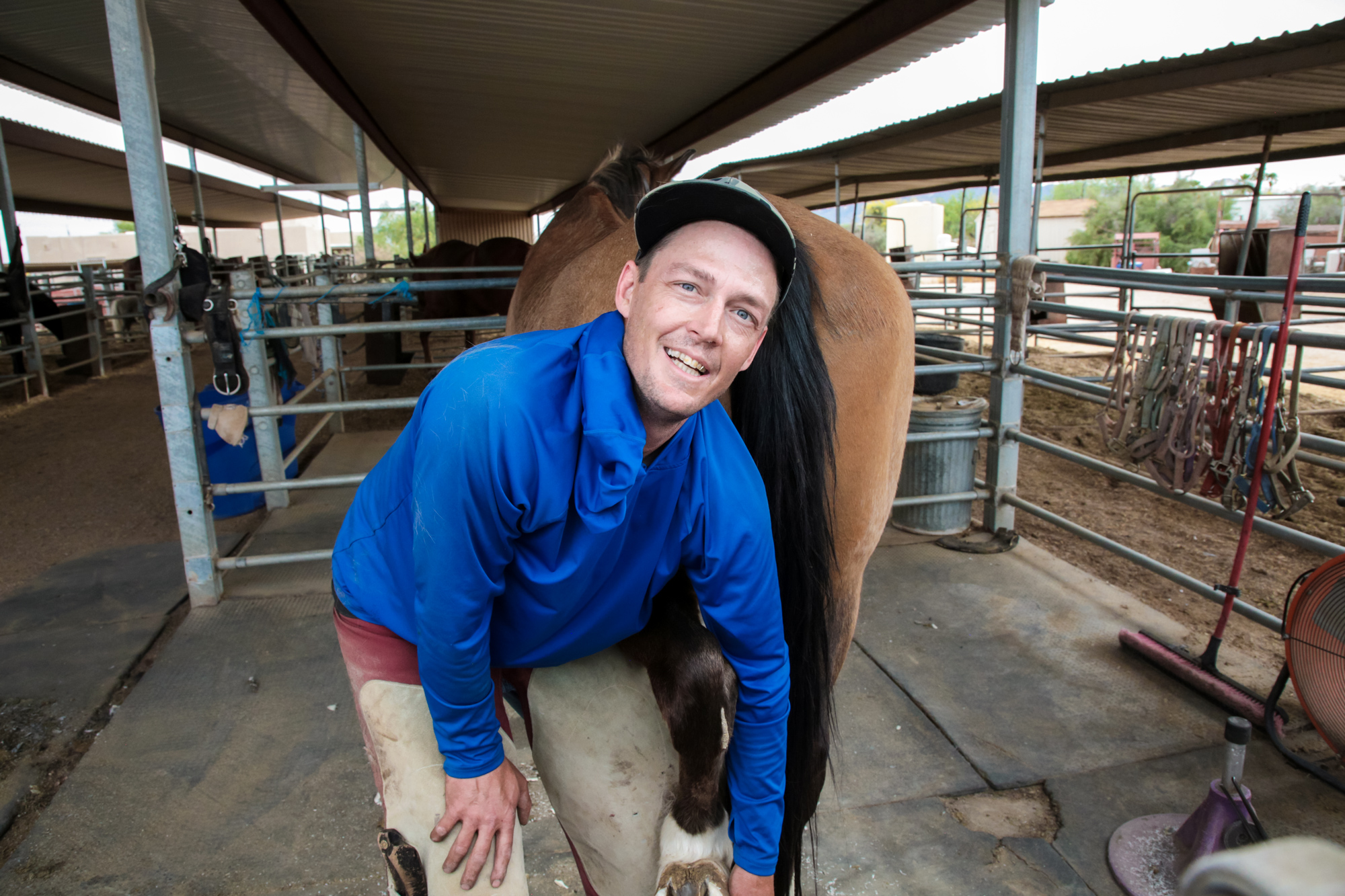
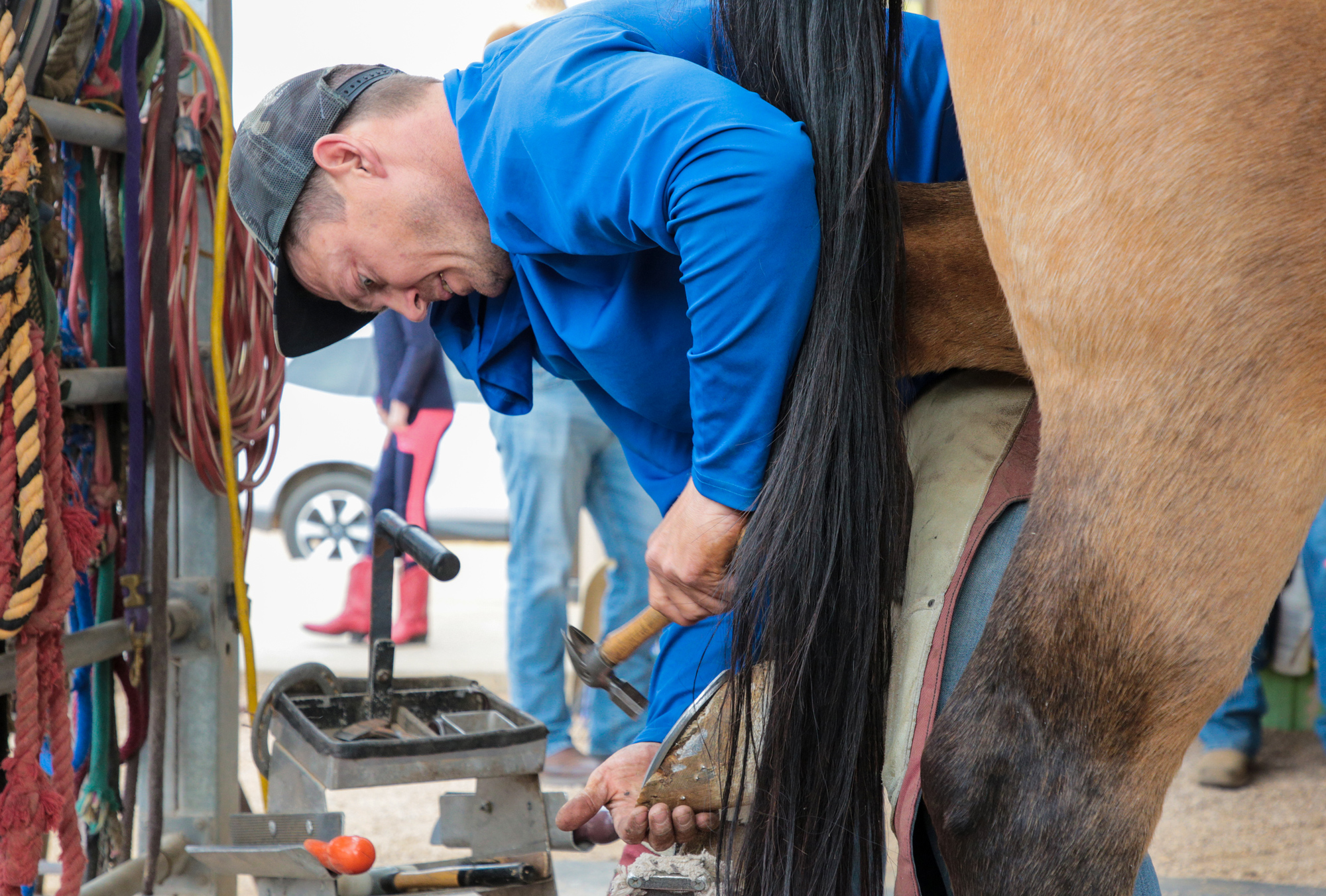
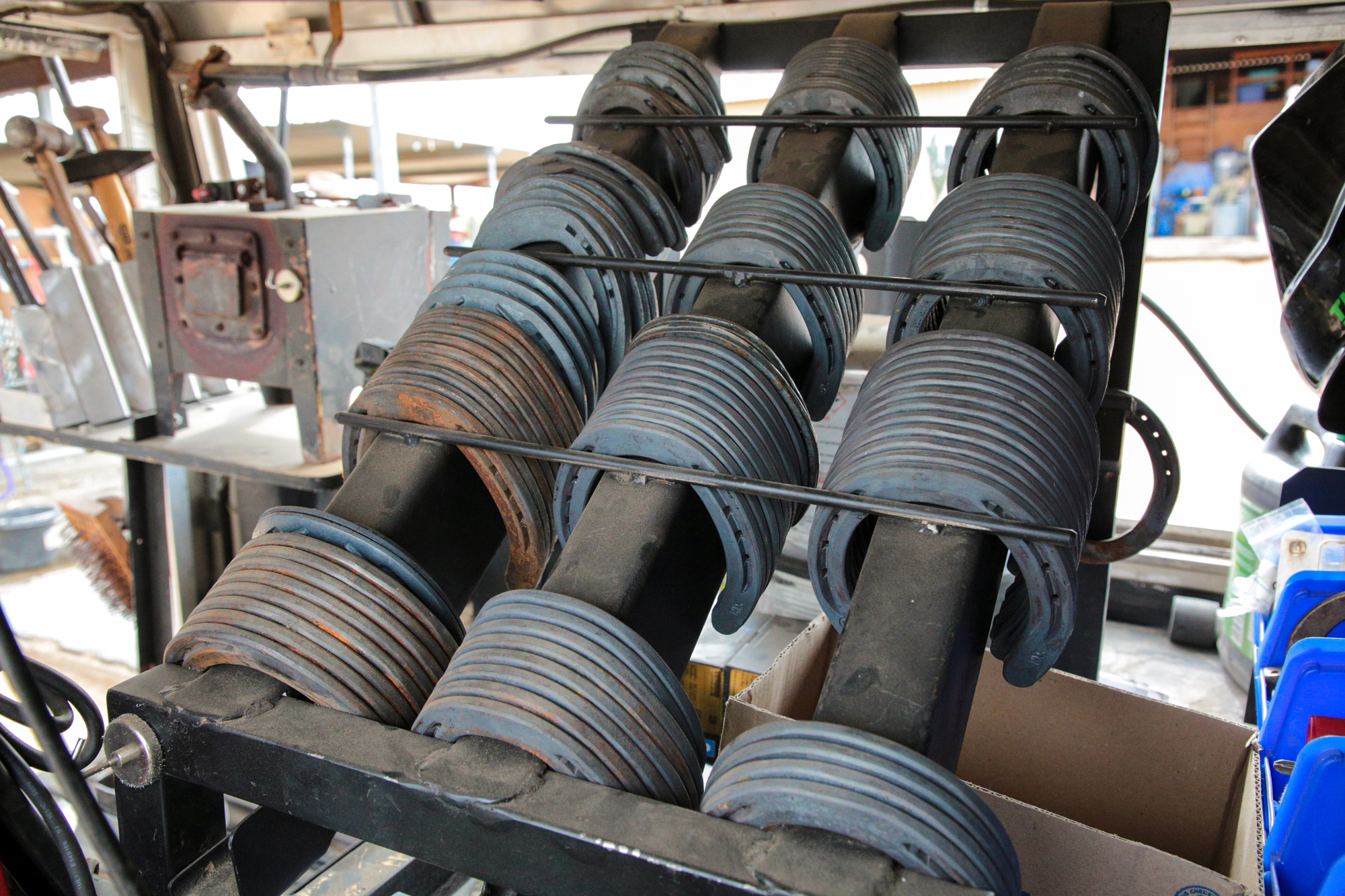
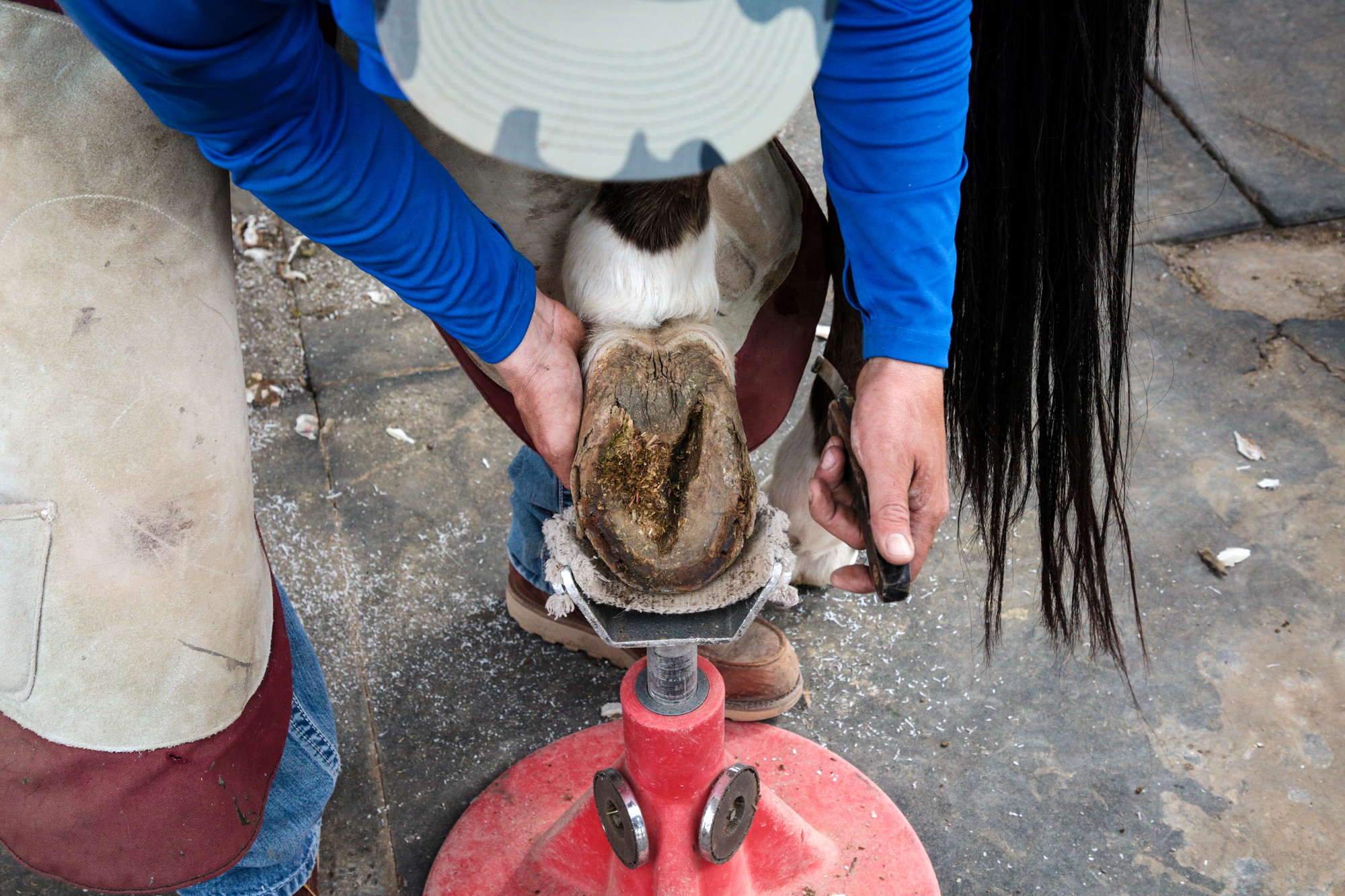
Before they began the course proper, they observed farrier Thorsen Dusenberry cleaning a horse’s hooves and shoeing it.
Dusenberry, who has worked as a farrier for 19 years, combines the skills of a blacksmith with some veterinary hoof-health know-how.
He said he makes visits to the college every two months or so.
Farrier Thorsen Dusenberry on one of his regular visits to Arizona Cowboy College in Scottsdale, Ariz., on April 12, 2026. Dusenberry has worked as a farrier for almost two decades. Richard Moore/The Epoch Times
Farrier Thorsen Dusenberry on one of his regular visits to Arizona Cowboy College in Scottsdale, Ariz., on April 12, 2026. Dusenberry has worked as a farrier for almost two decades. Richard Moore/The Epoch Times
Horse Sense
Wachman is also president of Heart Riding Therapy and coauthor of “Cowboy: The Ultimate Guide to Living Like a Great American Icon.” He has more than 30 years of experience as a ranch cowboy, horse trainer, and riding instructor.
He has worked with more than 2,000 clients from 20 countries and hosted Country Music Television’s “Cowboy U,” viewed in nearly 400,000 households, for six seasons.
Wachman has worked on cattle ranches in Arizona, Hawaii, and New Mexico. As senior instructor at Arizona Cowboy College, he describes the program as a “cowboy immersion program.”
“My job is to get people interested. I’ve got to get them riding well enough,” he said.
He prefers riders with little to no experience.
“People who know how to ride have a lot of bad habits,” he said.
Most students at Arizona Cowboy College aren’t there to become cowboys. They come for the romance of riding high in the saddle, out in the fresh air and desert breeze, against the stunning backdrop of the McDowell Mountains.
Arizona Cowboy College trains Western enthusiasts in the skills used by cowboys—riding, roping, grooming, and safety around horses—at its facility in Scottsdale, Ariz., on April 13, 2026. Richard Moore/The Epoch Times
“People don’t spend $2,000 to learn how to do something you get paid $50 a day for. I think they do it for the experience,” Wachman told The Epoch Times.
“It’s a mecca for Fortune 500 CEOs and women who are looking for a sabbatical. The average age is between 35 and 52.”
Wachman is blunt about the realities of the job: It favors those who start early—and those raised in it. A New York businessman who traded city for saddle, Wachman came to the profession later in life and, against the odds, stayed.
“I wouldn’t do anything else for a living. I got lucky,” he said.
Learning the Ropes
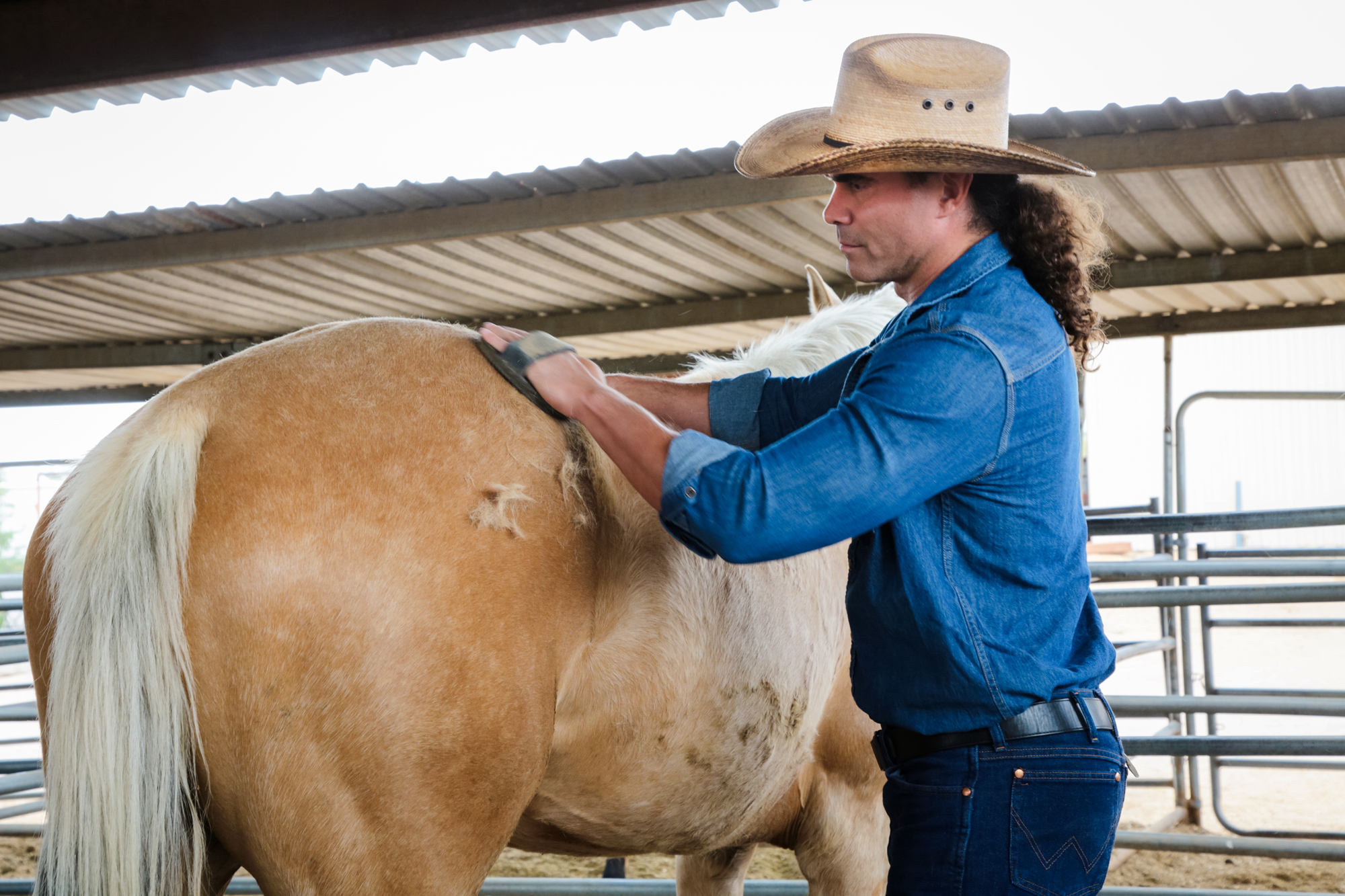
On the first day of the program, Wachman walked the students through the basics of horse grooming: checking for cuts, abrasions, scorpion bites—anything that could impede the horse or threaten rider safety.
If you’re attentive enough, you can begin to feel a horse’s thoughts, emotions, and attitudes—all important predictors of behavior, he said.
“When you’re perceptive, you pick up on it. You turn it into something good,” Wachman said.
And good horses, he said, are hard to find.
“I can’t afford good horses—I’ve got to make good horses,” Wachman told his students. “I don’t like smart horses. A smart horse can do something dangerous.”
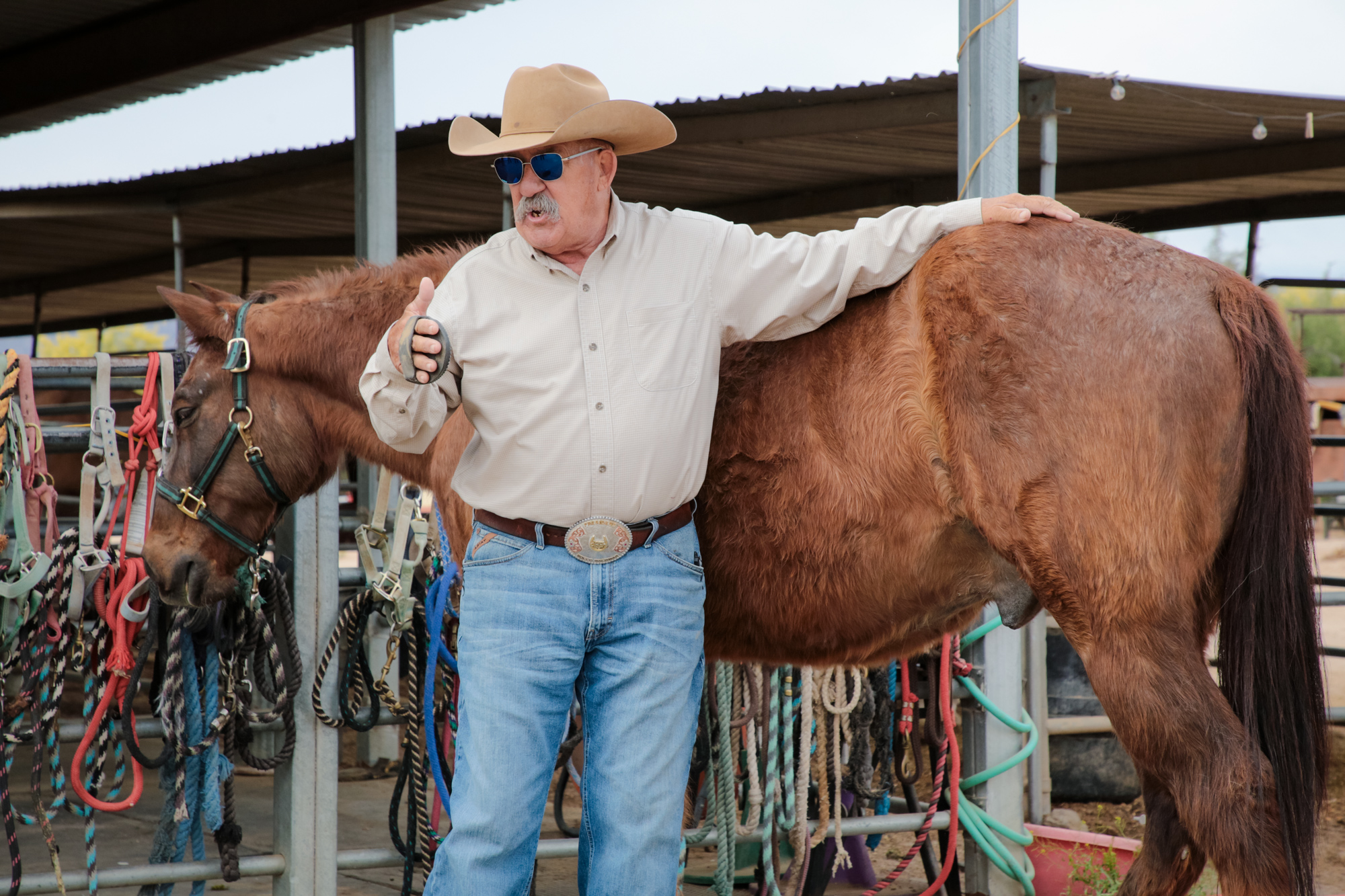
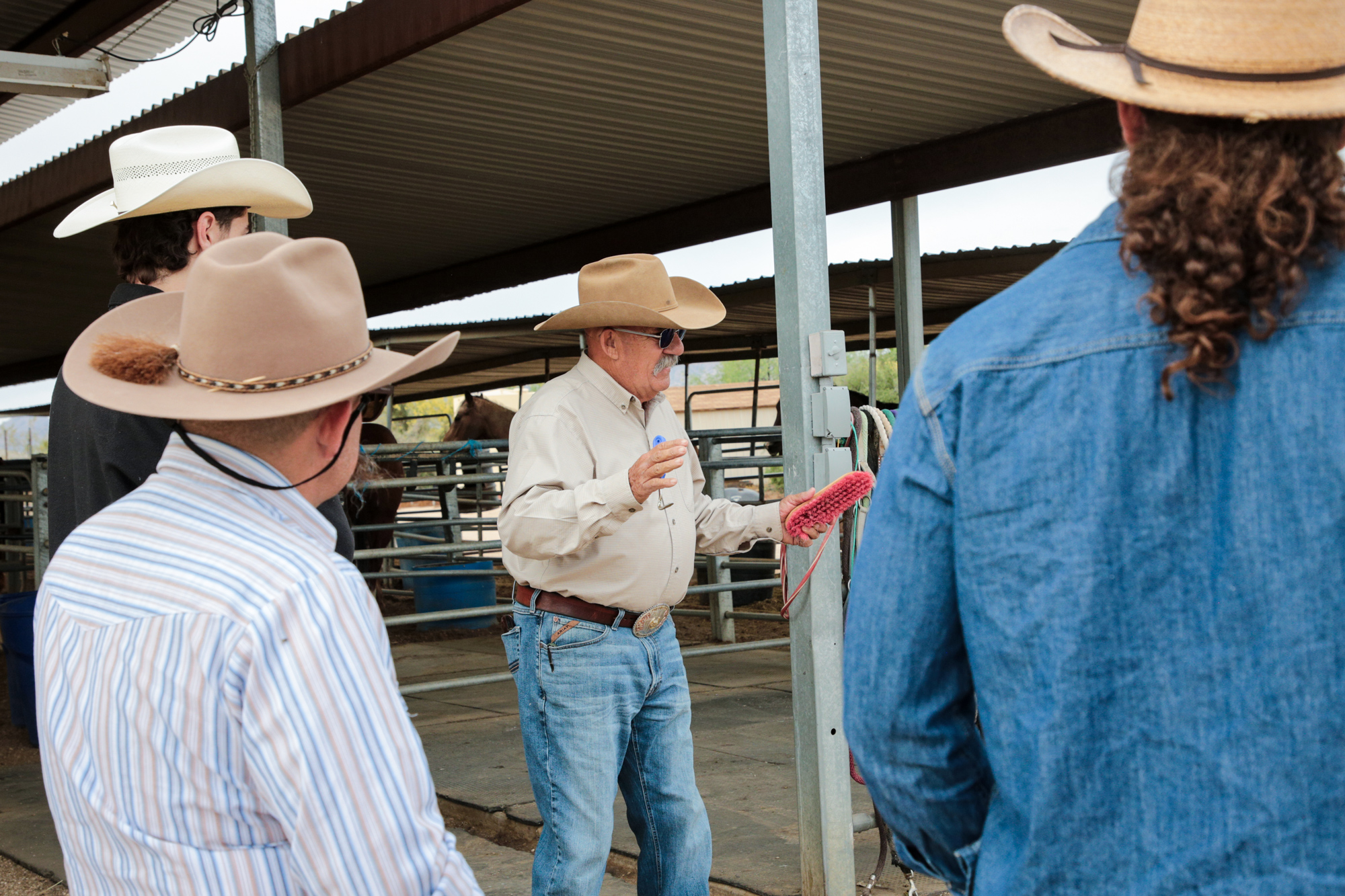
Arizona Cowboy College senior instructor Rocco Wachman instructs attendees in how to groom a horse and why it is important to do it correctly, in Scottsdale, Ariz., on April 13, 2026. Richard Moore/The Epoch Times
The Brain Injury Association of Missouri reports that more than 100,000 horse-related injuries occur each year in the United States, nearly 84 percent of which result from falling off a horse.
About 75 percent of horse-related deaths are caused by head and neck injuries.
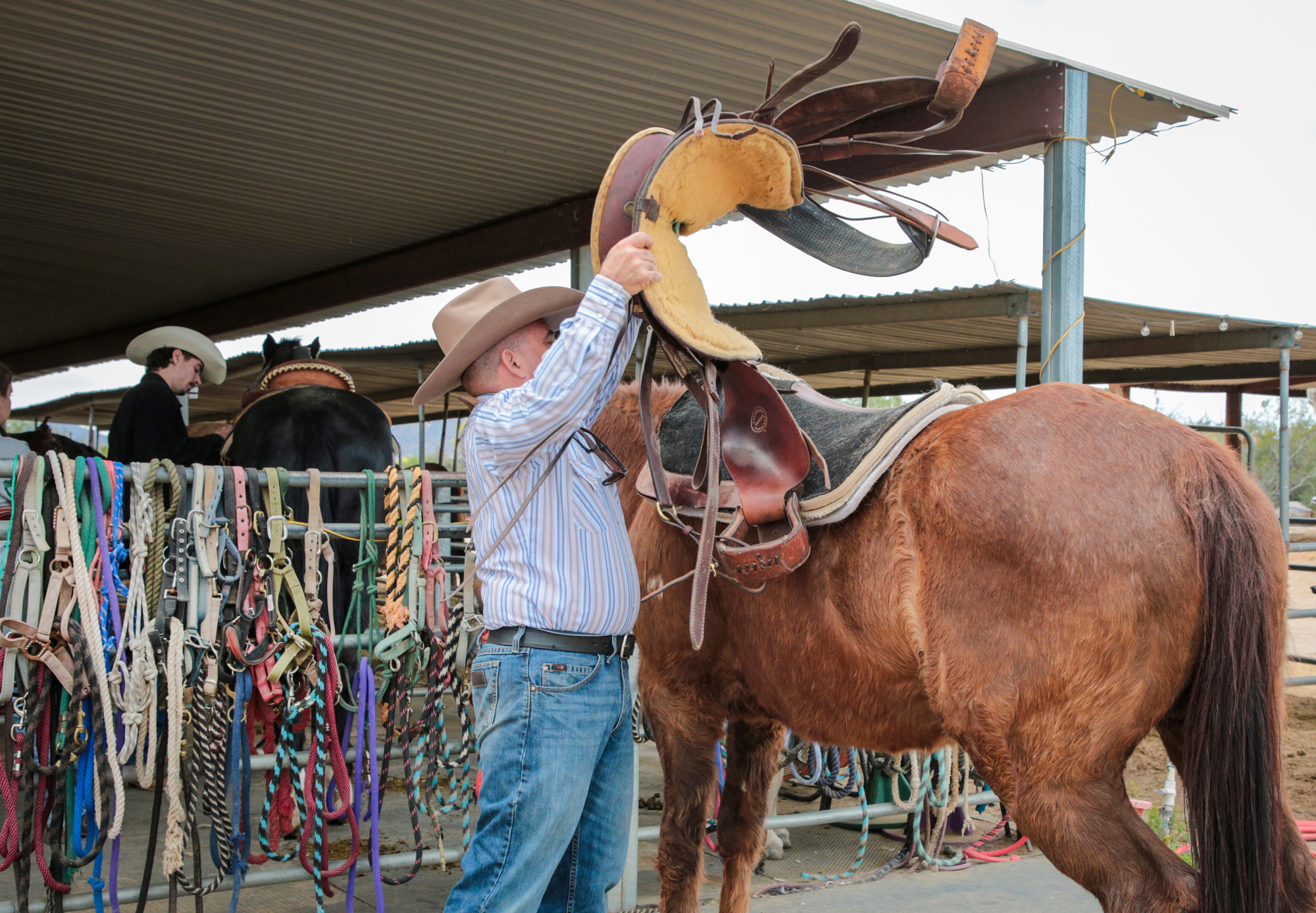
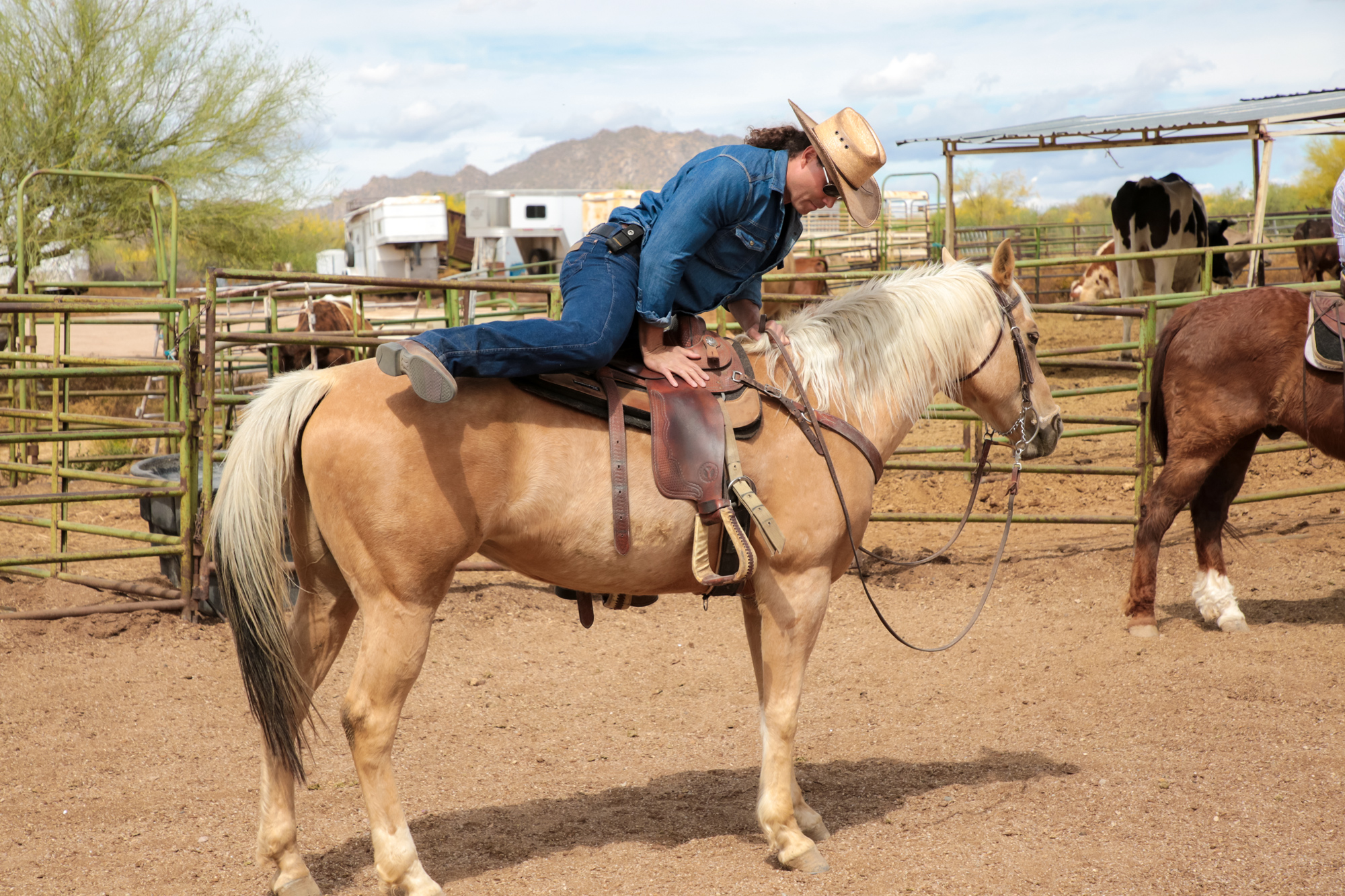
Wachman demonstrated how to approach a horse without getting kicked, how to rig a harness and fix a saddle, how to mount and dismount, and the correct posture while riding.
“There are things that work and things that are counterproductive,” Wachman said. “Shoulders up, chin like a bull rider.”
In the stirrups, toes up, heels down, squeeze both legs against the saddle, he said.
“This is going to be a great week. We’re going to be using better-than-average horses—way better than average horses,” he said.
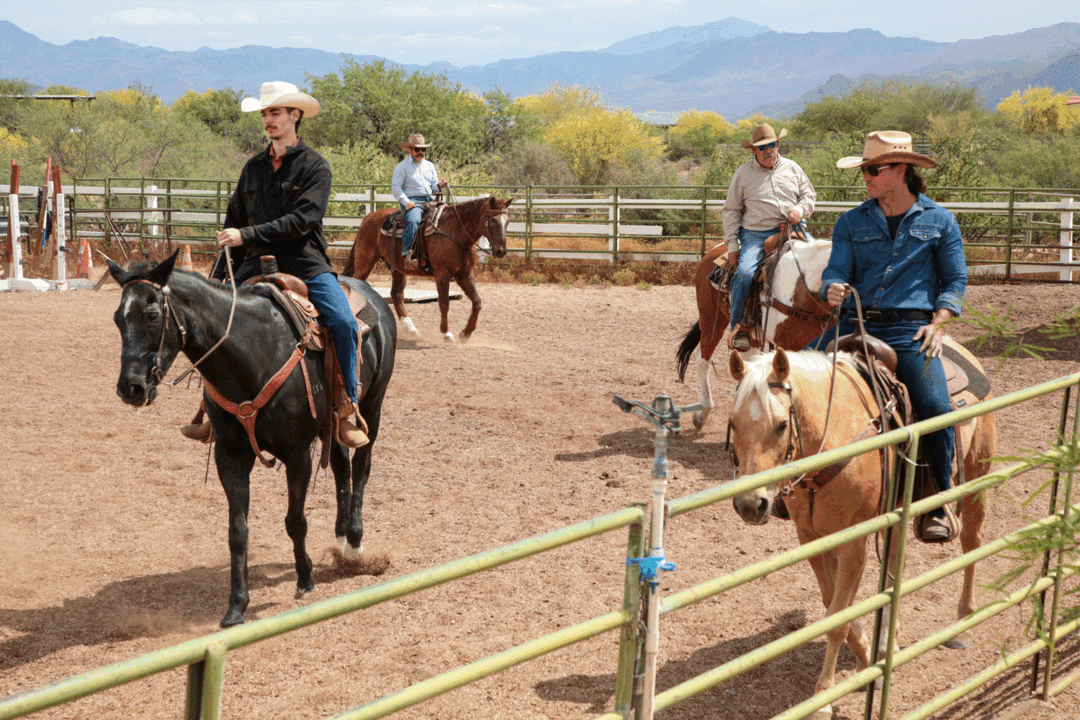
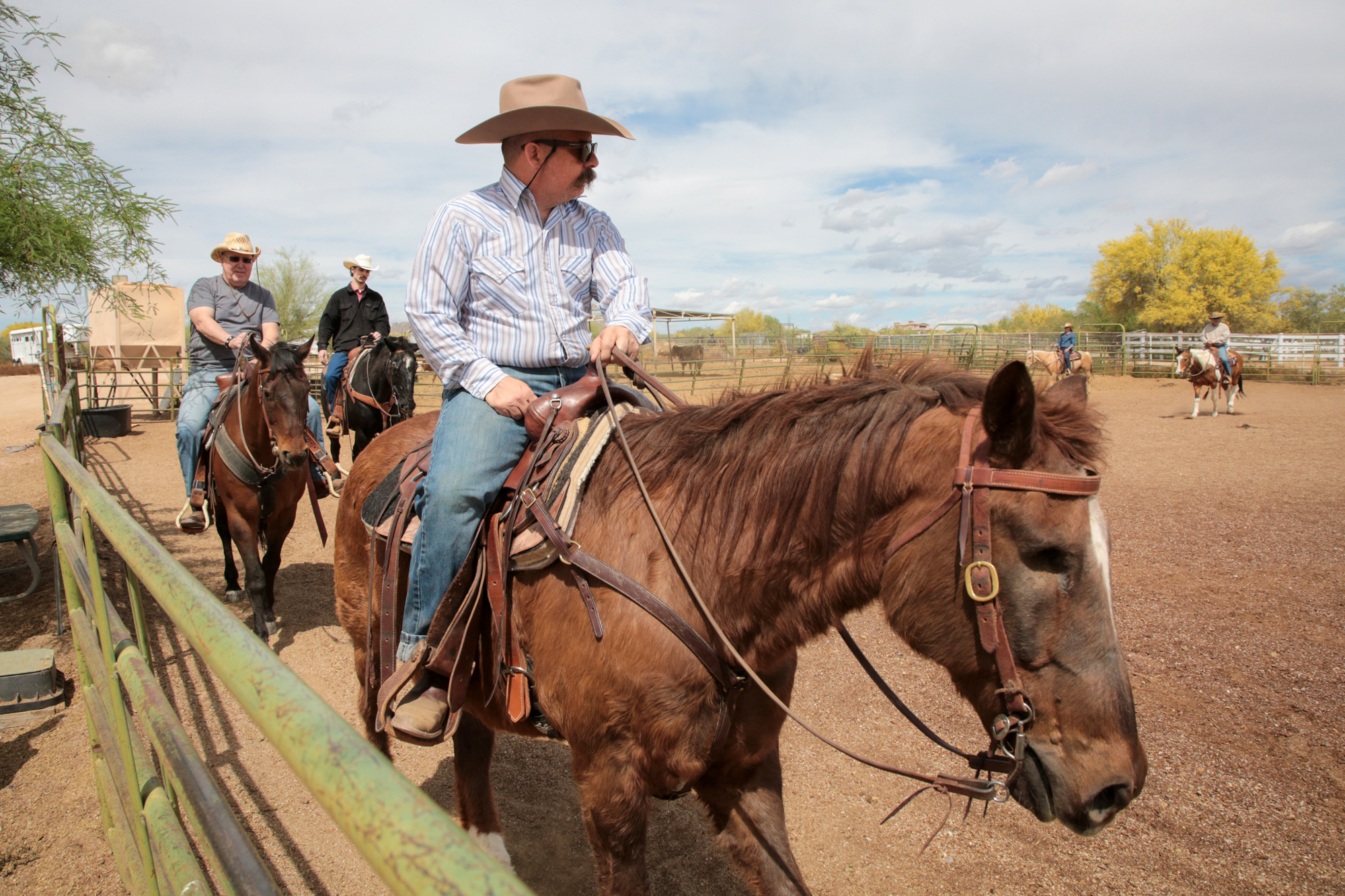
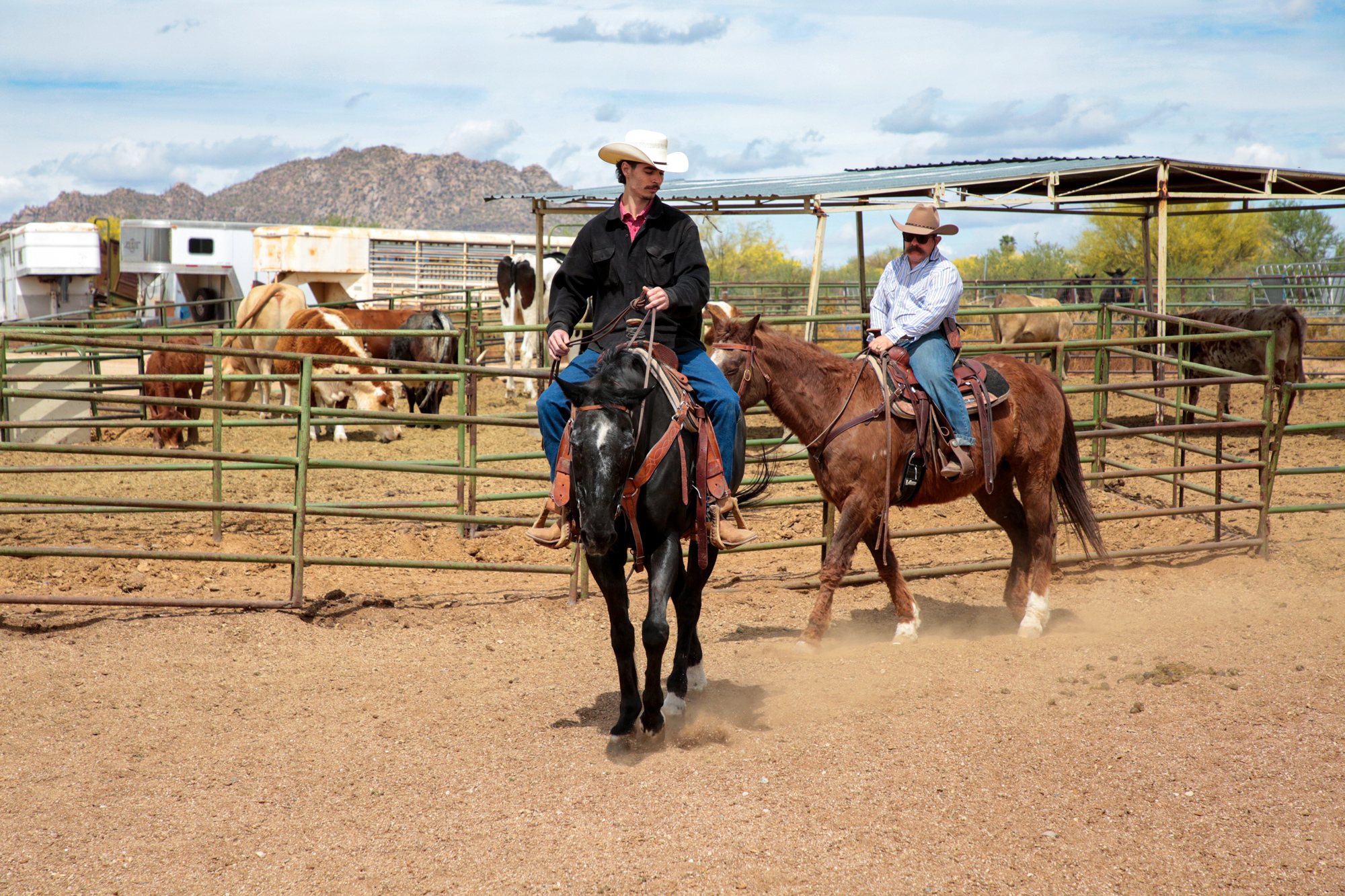
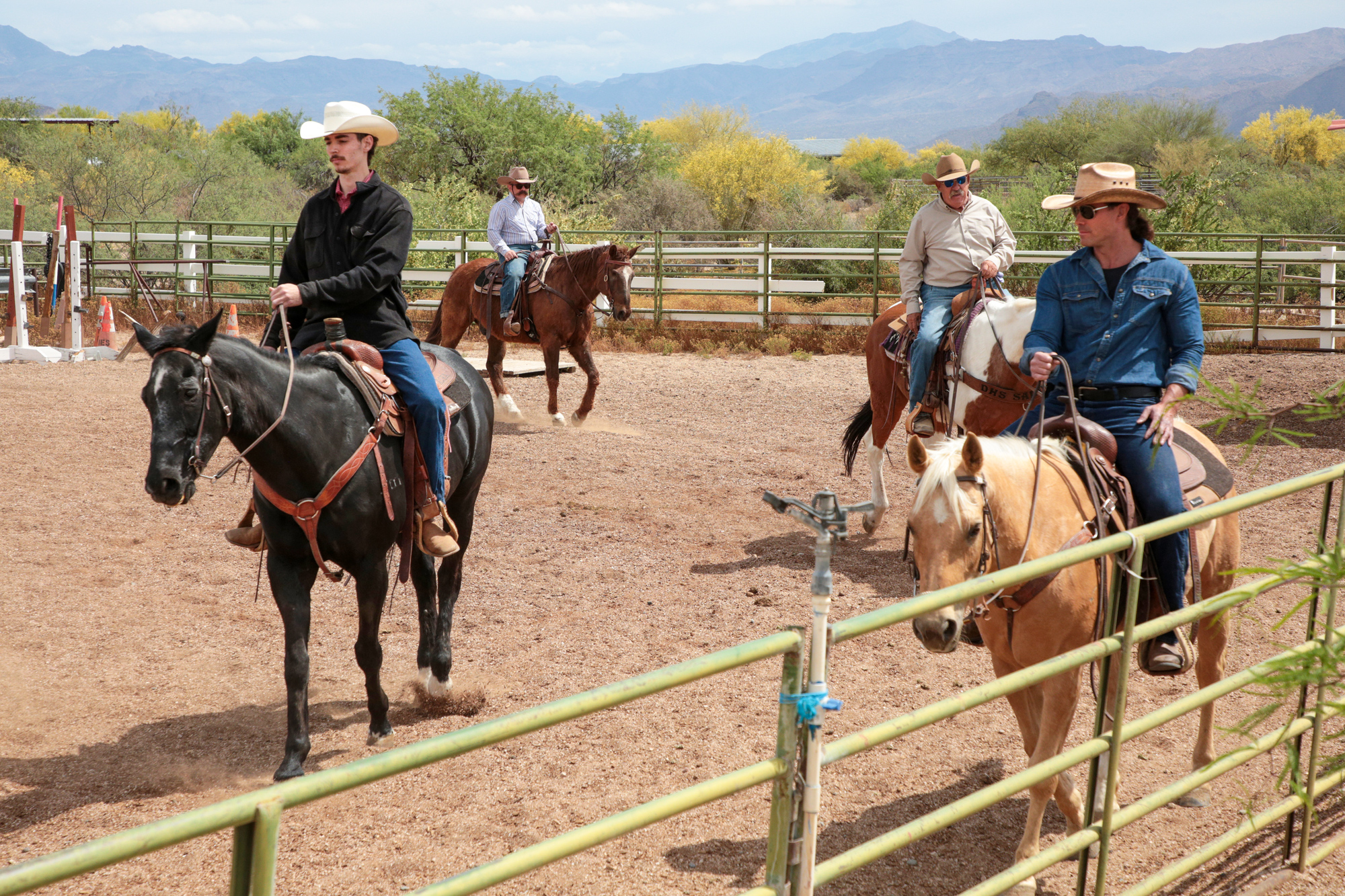
Later in the day, the students experienced riding in the big arena, starting with a slow walk before advancing to a brisk gallop. They circled the arena in single file, moving clockwise and counterclockwise, like a cattle drive in motion.
Arizona Cowboy College attendees Carmine, Alec, and Jason ride horses at the college's facility in Scottsdale, Ariz., on April 13, 2026. Richard Moore/The Epoch Times
Arizona Cowboy College attendees Carmine, Alec, and Jason ride horses at the college's facility in Scottsdale, Ariz., on April 13, 2026. Richard Moore/The Epoch Times
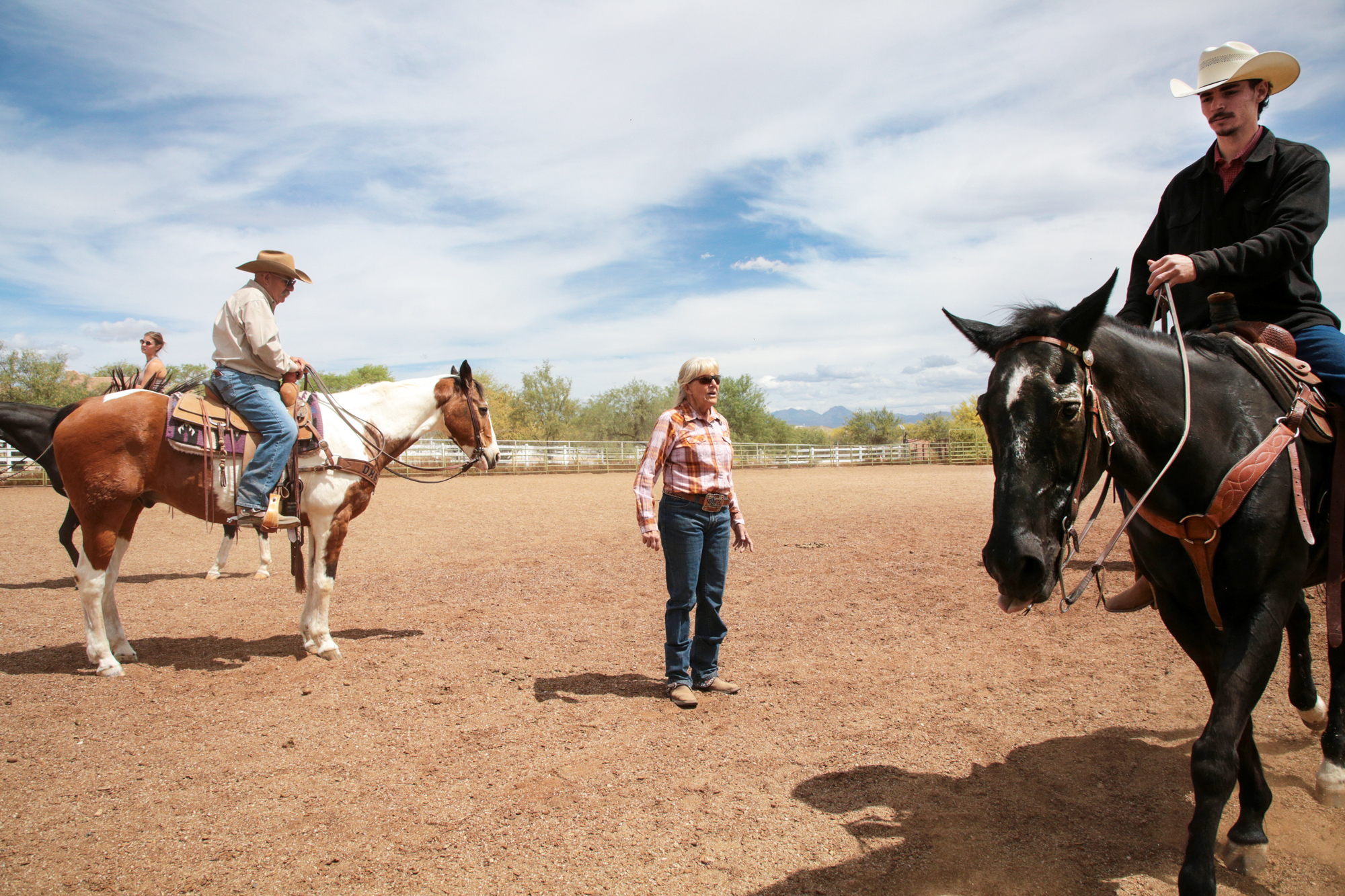
From the center of the arena, Wachman, on horseback, and Bridwell, on foot, watched their progress closely.
“Slow down—against the rails,” she advised.
“Yes, ma’am,” one student replied.
To another student, she said: “Just squeeze your legs. You’re kicking. Tiny squeeze. Keep the heels down.”
She said students must get the basics right before they’re ready to ride on the open range. Some past students have been unable to handle the rigors of the course, she said.
“We actually had one guy leave,“ she said. ”I’d never had that happen. It kind of freaked me out. He just panicked. The next morning, he wanted to leave. That was many years ago.”
She said you can’t force lessons, but her students must learn them to pass the course.
“We don’t force you to do anything you don’t want to do if you’re scared or if you’re hurt and you don’t want to ride,” she said.
Arizona Cowboy College owner Lori Bridwell watches the progress of the attendees on horseback from the center of the arena at the college's facility in Scottsdale, Ariz., on April 13, 2026. Richard Moore/The Epoch Times
On day two, the students learned roping and then embarked on a ride in the desert on harsher terrain.
The third day involved learning how to pack gear and horses and establishing a “cow camp"— a temporary outpost that allows cowboys to manage cattle across grazing territories far from the ranch.
On the final two days, students learned ranchwork and horse care, then sat down to a graduation dinner.
“Every day will get progressively harder,“ Wachman said. ”Every day, there is a method to the madness.”
Close Call
Wachman said he has spent the better part of his life—at least 36 years—on horseback. He knows that even the smallest mistake or miscalculation can become a matter of life or death.
On the group’s first desert ride, a brisk wind kicked up and tore a straw cowboy hat from one of the students.
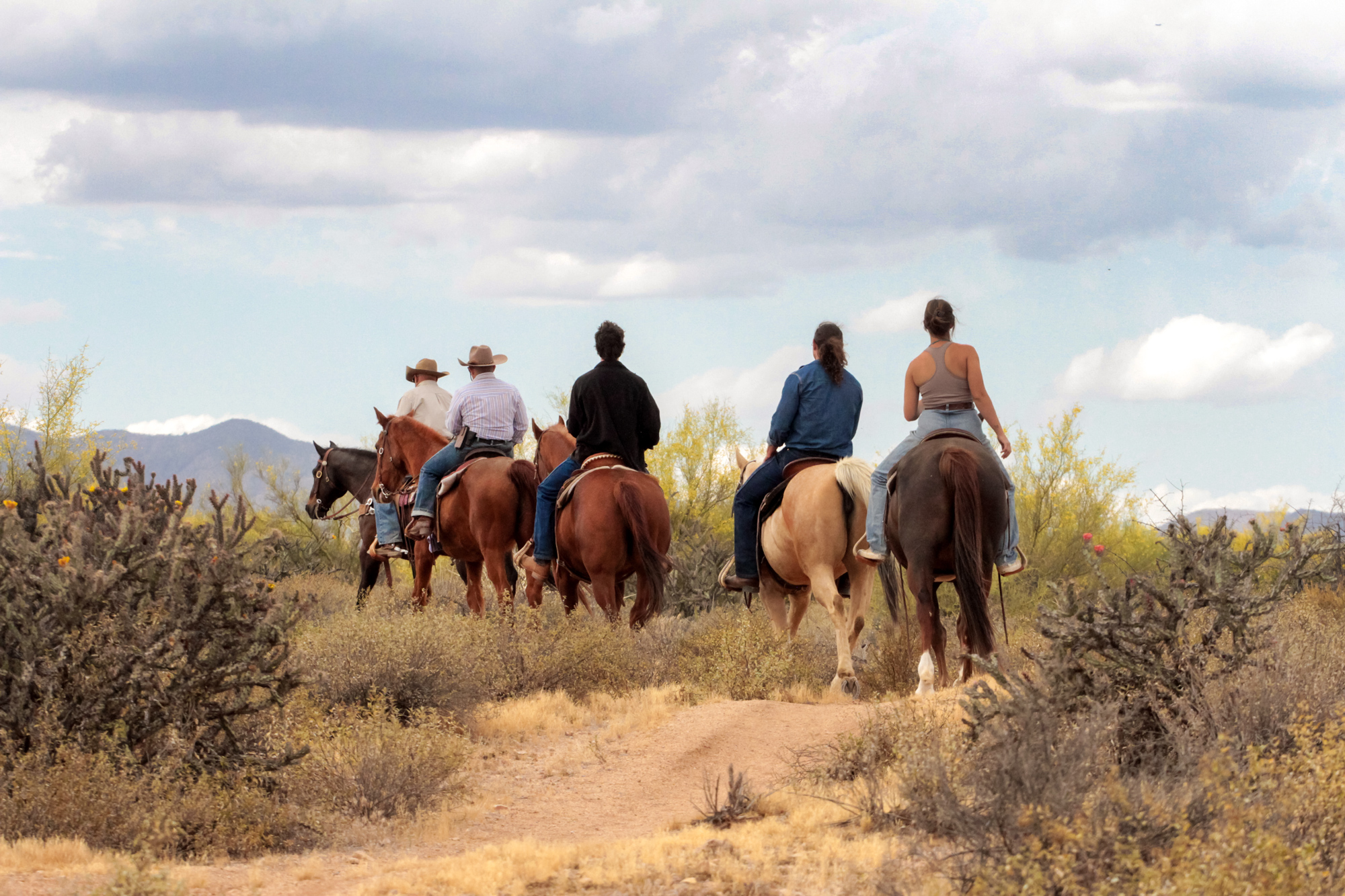
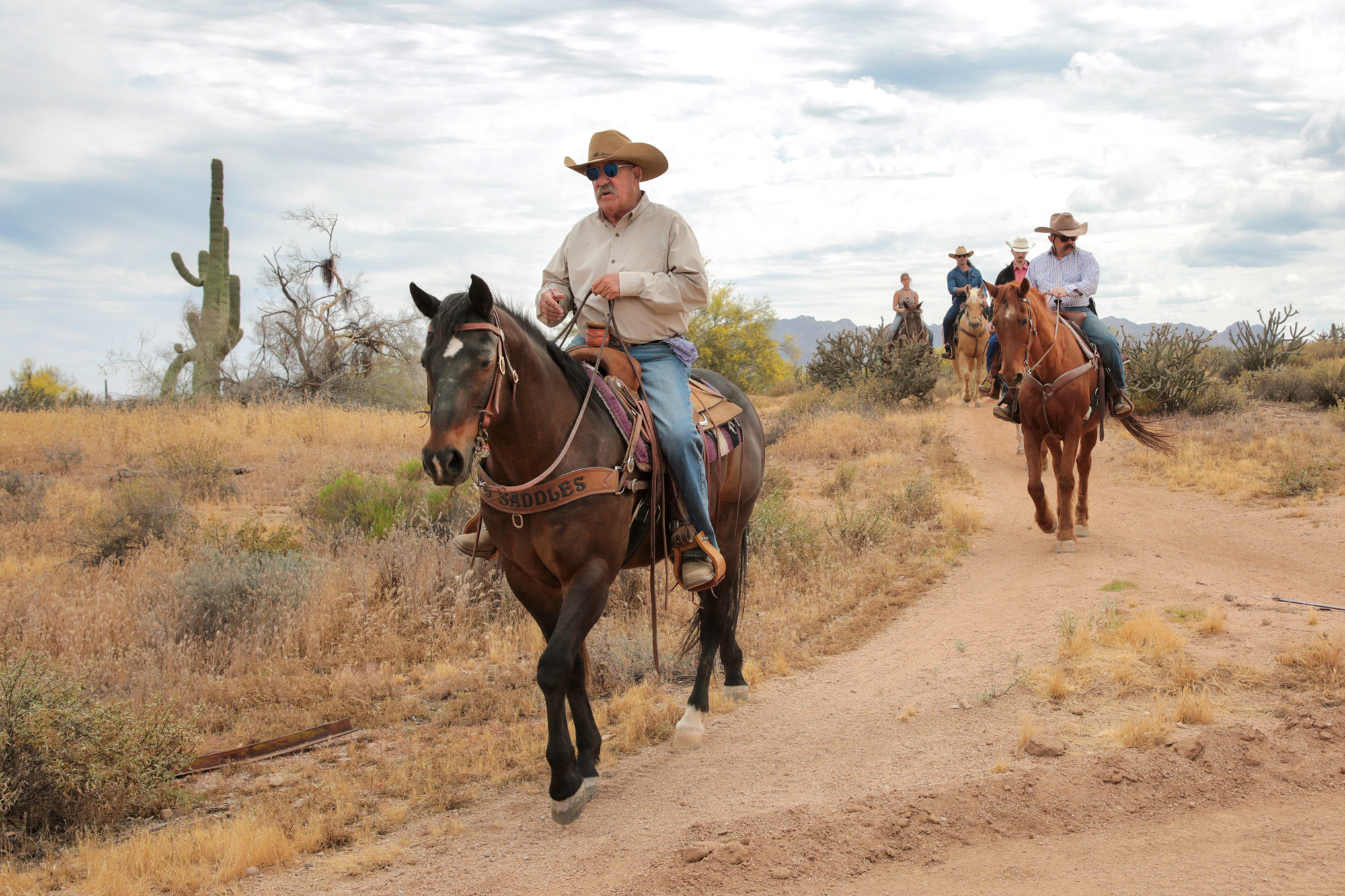
Arizona Cowboy College instructor Rocco Wachman leads attendees on a horseback ride along a trail at the college's facility in Scottsdale, Ariz., on April 13, 2026. Richard Moore/The Epoch Times
The movement startled Wachman’s horse, Preacher, which reared backward, throwing the group off rhythm and jolting the rider in the saddle.
“Whoa! Whoa! Whoa!” Wachman cried, managing to quickly bring the horse under control and avoid falling off.
The lesson: Wear a stampede strap, a leather cord that secures a cowboy’s hat while on the trail. It doesn’t take much to spook a horse.
“You never know what’s coming,” Wachman said, still shaken.
Only one thing could be worse than being thrown from a horse—a “heart attack,” he joked.
Another student walked over and handed in his unstrapped cowboy hat.
“I don’t want to kill anybody,” he said.