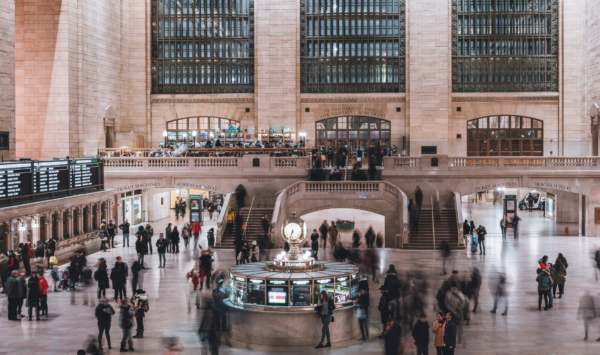
| Every day, hundreds of thousands of people pass through Grand Central Terminal, often without pausing to consider the beauty of the building. It's one of New York City’s most enduring public spaces—not just as a transit hub, but as a place shaped by tragedy, ambition, artistry, and daily life.
The story begins with a little-remembered disaster: a deadly 1902 train collision that filled a Park Avenue tunnel with smoke and steam and forced the city to confront the dangers of its rail system. From that moment of crisis came a sweeping transformation. Steam locomotives were banned from Manhattan, rail lines were electrified, and engineer William J. Wilgus introduced the radical idea of burying tracks and building upward—an innovation that would reshape urban development far beyond New York.
When Grand Central Terminal opened in 1913, it declared confidence in the modern city. Its Beaux-Arts design, soaring ceilings, and carefully choreographed spaces reflected a belief that infrastructure could be both functional and beautiful. That belief still lingers today, etched into details like the celestial ceiling and the four-faced clock that has anchored generations of meetings and farewells.
Beyond the architecture, there's life within the terminal: the Oyster Bar beneath Guastavino's tiled arch, the hum of the Dining Concourse, and the market stalls and small shops that bring the flavors of New York State underground. The life in Grand Central shifts with the seasons, especially around Christmas time as holiday trains circle miniature cities and Vanderbilt Hall is filled with light and crafts.
Grand Central is a living record of New York itself—restless, resilient, and monumental. Every passage through its halls adds another layer to a place where history and daily life continue to meet.
|