U.S. forces took out military targets on Iran’s Kharg Island, but left in place its oil infrastructure, U.S. President Donald Trump said on March 13.
The assault came 14 days into Operation Epic Fury, marking the first time the island—Tehran’s most vital economic asset—has been targeted in the U.S.–Israeli campaign.
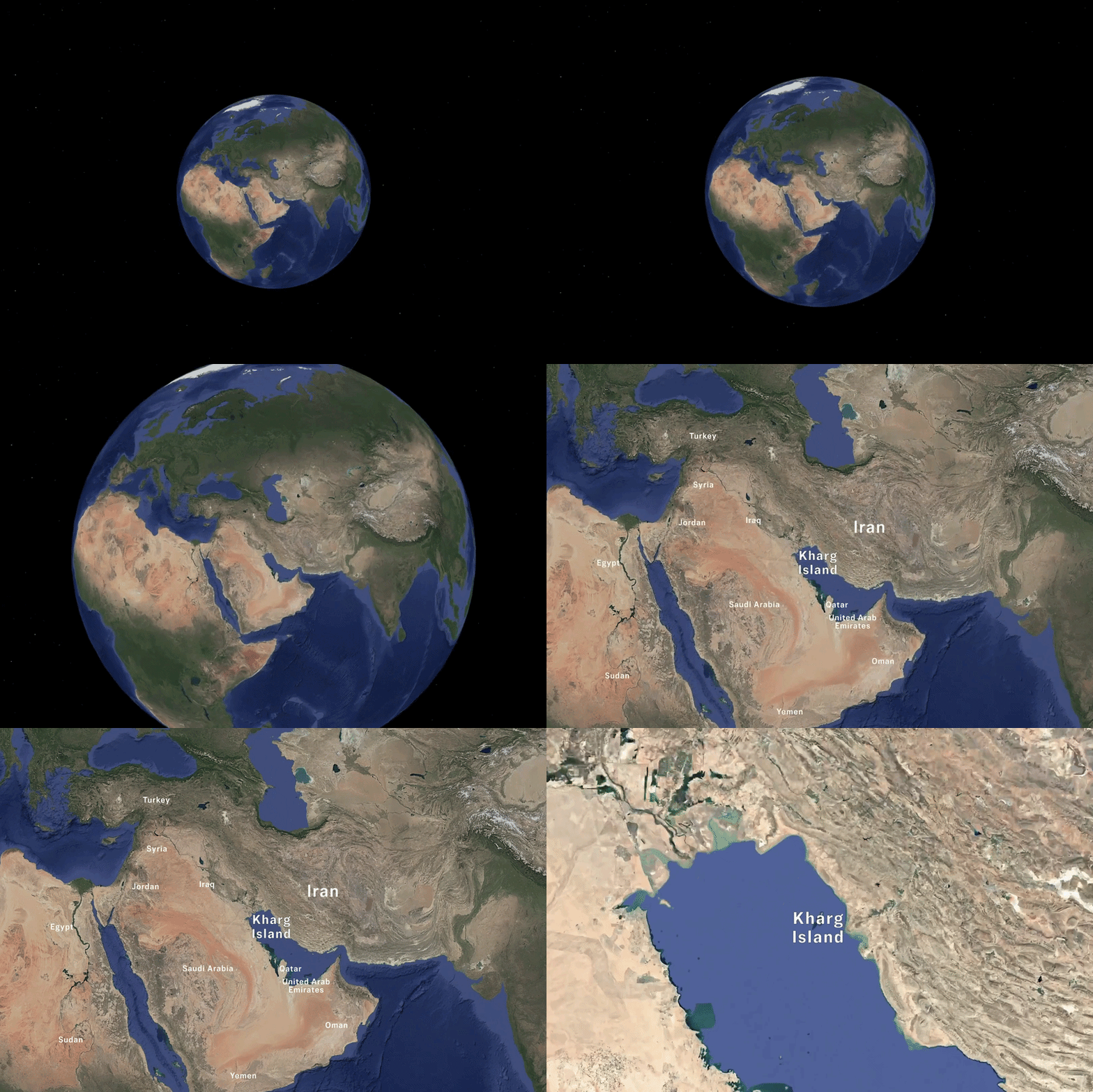
The eight-square-mile island 16 miles from Iran’s Persian Gulf coast is where 90 percent of the oil the country exports is pumped from terminals into supertankers—up to 10 at a time—300 miles north of the Hormuz Strait. Most is shipped to Asia, with China being the biggest destination.
Trump warned that should Iran continue to threaten shipping in the Strait of Hormuz, he would “immediately reconsider” his decision not to bomb the island’s oil assets.
“The United States Central Command executed one of the most powerful bombing raids in the History of the Middle East, and totally obliterated every MILITARY target in Iran’s crown jewel, Kharg Island,” Trump said in a March 13 Truth Social post.
“I have chosen NOT to wipe out the Oil Infrastructure on the Island. However, should Iran, or anyone else, do anything to interfere with the Free and Safe Passage of Ships through the Strait of Hormuz, I will immediately reconsider this decision.”
Retired U.S. Navy Capt. Stu Cvrk, an Epoch Times contributor, said he believes that Kharg was “deliberately spared ... to limit escalation.”
“A U.S. strategic objective is to create the conditions for a ‘counterrevolution’ in Iran—one that would oust the current leadership clique, as well as their supporting security and intelligence infrastructure,” he told The Epoch Times.
“That means not providing any reasons the regime could use to convince the Iranian people to rally around it. Taking out Kharg would do exactly that because that would set their ability to export oil back for months, for years.”
It would also send global oil prices skyrocketing, he said.
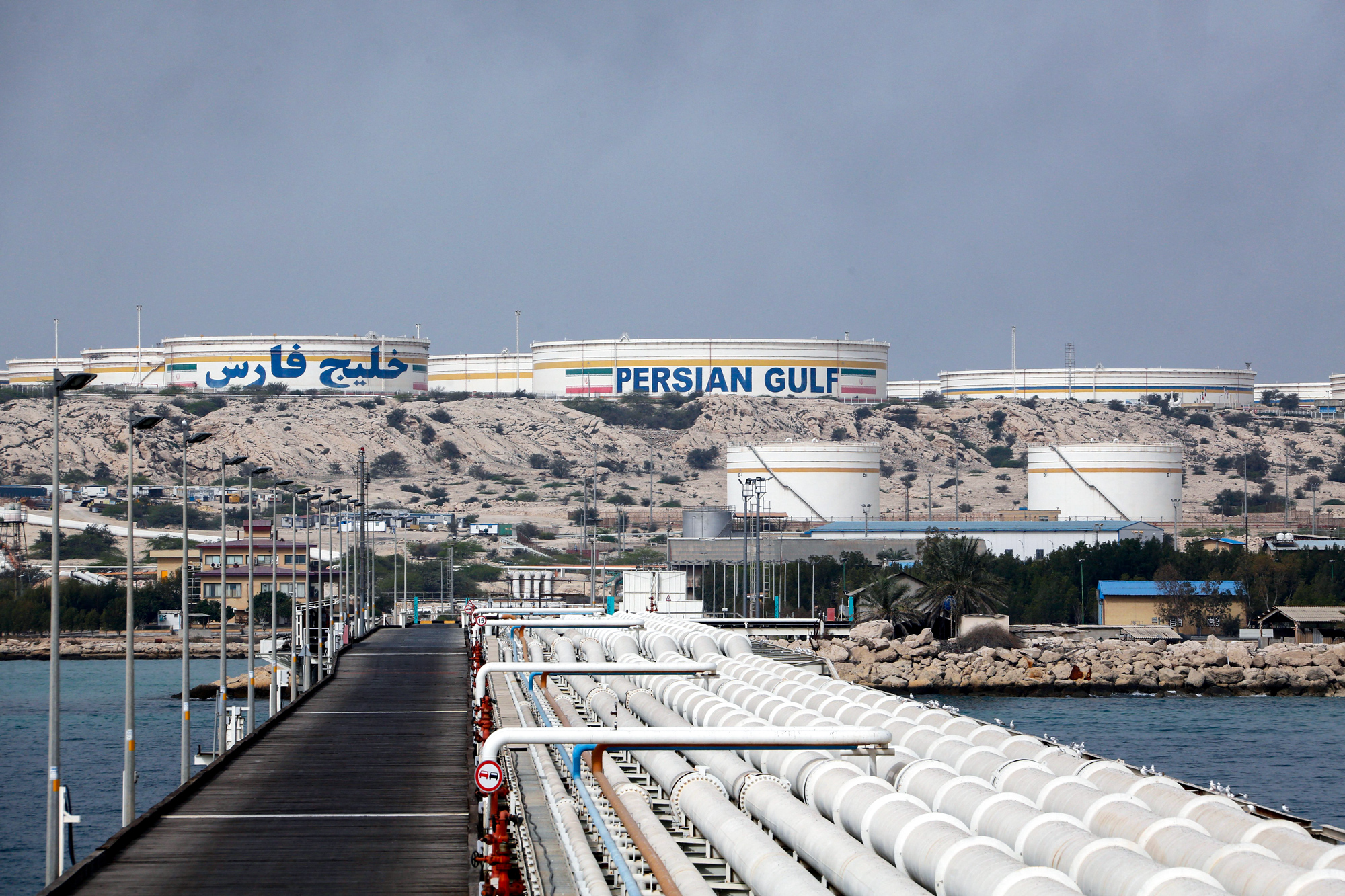
A general view of the Port of Kharg Island oil terminal near the Iranian coast in the Persian Gulf on March 12, 2017. Most of Iran’s oil exports pass through the island and are shipped mainly to Asia, with China being the largest destination. Atta Kenare/AFP via Getty Images
A general view of the Port of Kharg Island oil terminal near the Iranian coast in the Persian Gulf on March 12, 2017. Most of Iran’s oil exports pass through the island and are shipped mainly to Asia, with China being the largest destination. Atta Kenare/AFP via Getty Images
Venezuela Model
“It is wrong to leave it in the hands of a terrorist regime in Iran,” he told The Epoch Times, suggesting a scenario similar to the U.S. seizure of Venezuela’s oil assets after the United States captured leader Nicolás Maduro in a Jan. 3 raid.
American companies, most notably Chevron, developed Venezuela’s oil industry before it was nationalized when socialists seized power in the 1990s.
U.S.-based Amoco built and operated Kharg Island’s first oil terminals in 1958. After its 1979 revolution, Iran seized Amoco’s property on the island.
“Revenues from the export, or U.S. tax of the exports, could pay back the many victims of the regime, including those in Iran, Israel, and U.S. service members,” Corr said.
“It could help pay for the U.S. and allied military operations to free Iran, and it could pay for Iranian civil society groups that will hopefully democratize Iran.”
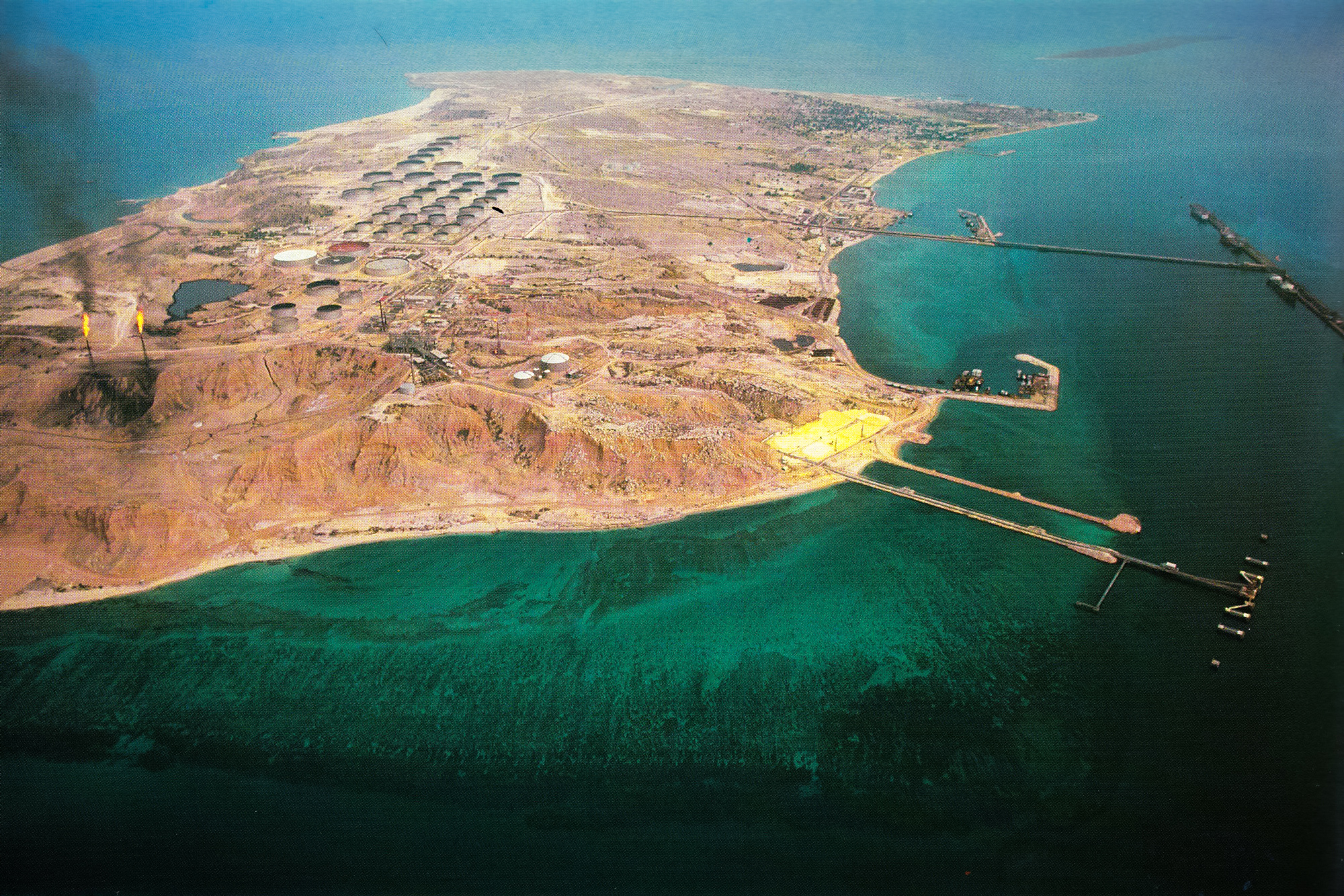
An aerial view of Kharg Island in the Persian Gulf in 1973. U.S.-based Amoco built and operated Kharg Island’s first oil terminals in 1958, which Iran seized after its 1979 revolution. Public Domain
‘Forbidden Island’
“If I were advising President Trump, I would restrain from executing any military operation against Kharg Island and use the possibility of an American attack as a bargaining chip instead,” said Brent M. Eastwood, a defense expert, author, and former U.S. Army infantry officer who serves as defense and national security editor for 19FortyFive.
“A potential U.S. action against the island is already a threat that Iran is taking seriously ... so better to keep this as a potential card to play and an item of leverage to be used during cease-fire and peace talks.”
An assault to seize the island would likely be initiated by Navy SEALs or Army special forces such as Delta Force, followed by occupation by Army airborne troops or Marines.
“This is tailor-made for a group of SEAL Team Six operators to be infiltrated by submarine or an airborne parachute operation with a HALO [high altitude, low opening] jump, probably both at once,” Eastwood said.
Once shock troops seized the island, he said, he “would concurrently send a battalion or two of Marines with an amphibious operation to hold the island for as long as possible.”
Christian Milord, a U.S. Coast Guard veteran and Epoch Times contributor, agreed: “I think it might be pretty difficult to seize it.”
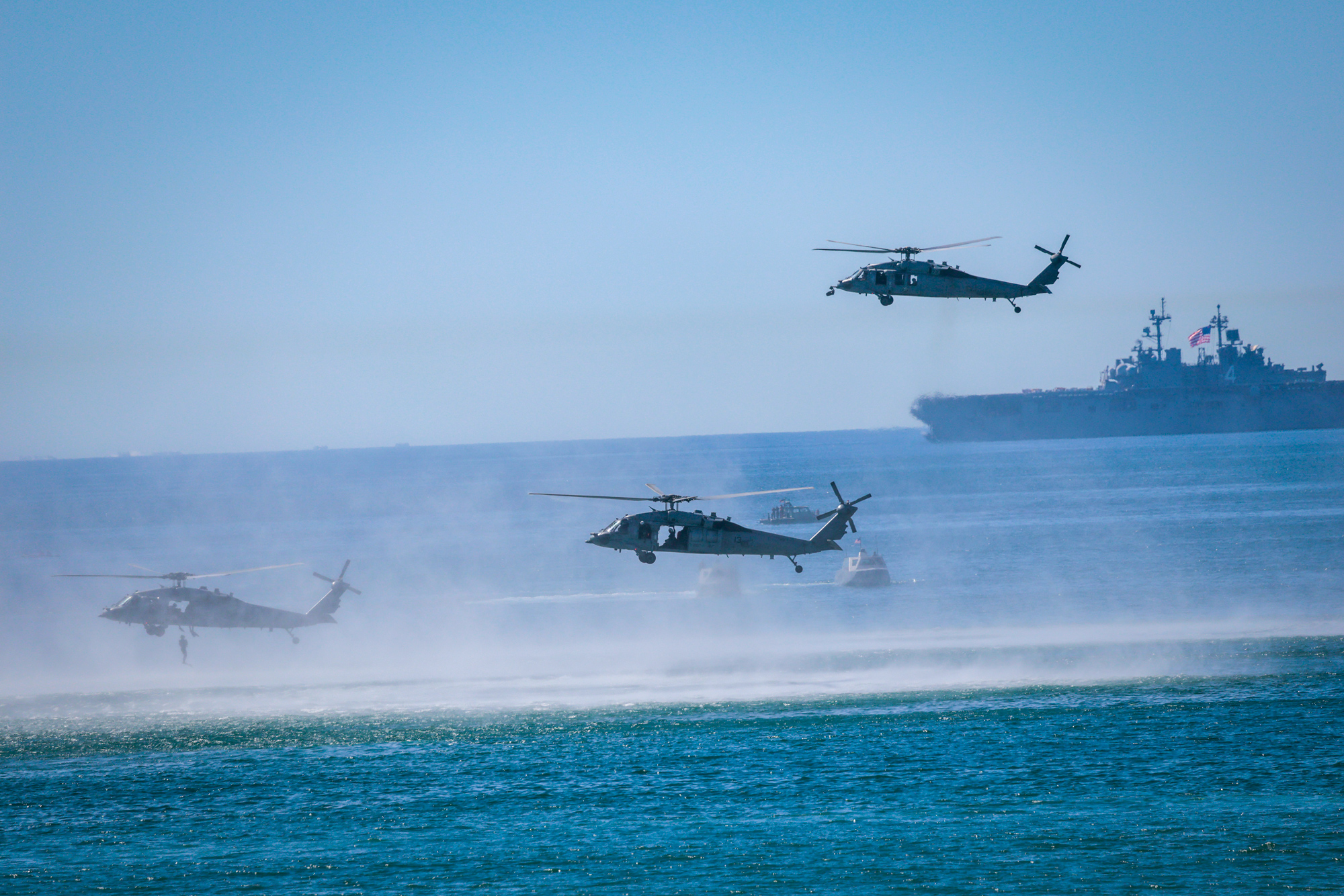
A team of U.S. Navy SEALs drops into the water from UH-1 Venom helicopters during a live demonstration at Camp Pendleton in Oceanside, Calif., on Oct. 18, 2025. Mario Tama/Getty Images
The waters around the island are likely mined and would need to be cleared under fire, and while “force protection” by U.S. Navy warships would be stout, he said, those ships themselves would be targets in confined waters.
“They’ve gotten most of the missiles and drones that you can see, but they still need to get the drones and the rockets that are in stockpiles underground,” Milord said, noting that there are likely stockpiles on the island itself.
“So it’s not an easy thing to seize Kharg Island,” he said. “Somehow you got to seize it, not wreck it. Exactly how they do that, if we were to try to do that, it would be the ultimate sensitive operation.”
The island’s sparse scrubland offers little cover outside seaside settlements that house up to 20,000 workers. It is referred to as “Forbidden Island” because of a large Islamic Revolutionary Guard Corps presence that analysts say includes Silkworm anti-ship missiles, Eisenhower-era Raytheon MIM-23 surface-to-air missiles, and Soviet-made SA-5 air-defense missile sites.
It is less than 35 miles from large bases in the Iranian city of Bushehr, although they have been savagely targeted by U.S. and Israeli strikes.
The Pentagon in early March abruptly canceled major training exercises for the 82nd Airborne, fueling speculation about a Middle East deployment. An Army infantry brigade, the 10th Mountain Division, was already scheduled to relieve the Iowa National Guard in the region this spring.
Although there are no Marine expeditionary forces near Kharg Island, the USS Tripoli and the 31st Marine Expeditionary Unit with about 2,400 Marines was reported on March 13 to have left the Japanese island of Okinawa, headed for the Arabian Sea.
Meanwhile, the amphibious assault ship USS Iwo Jima is stationed in the Caribbean as part of Operation Southern Spear.
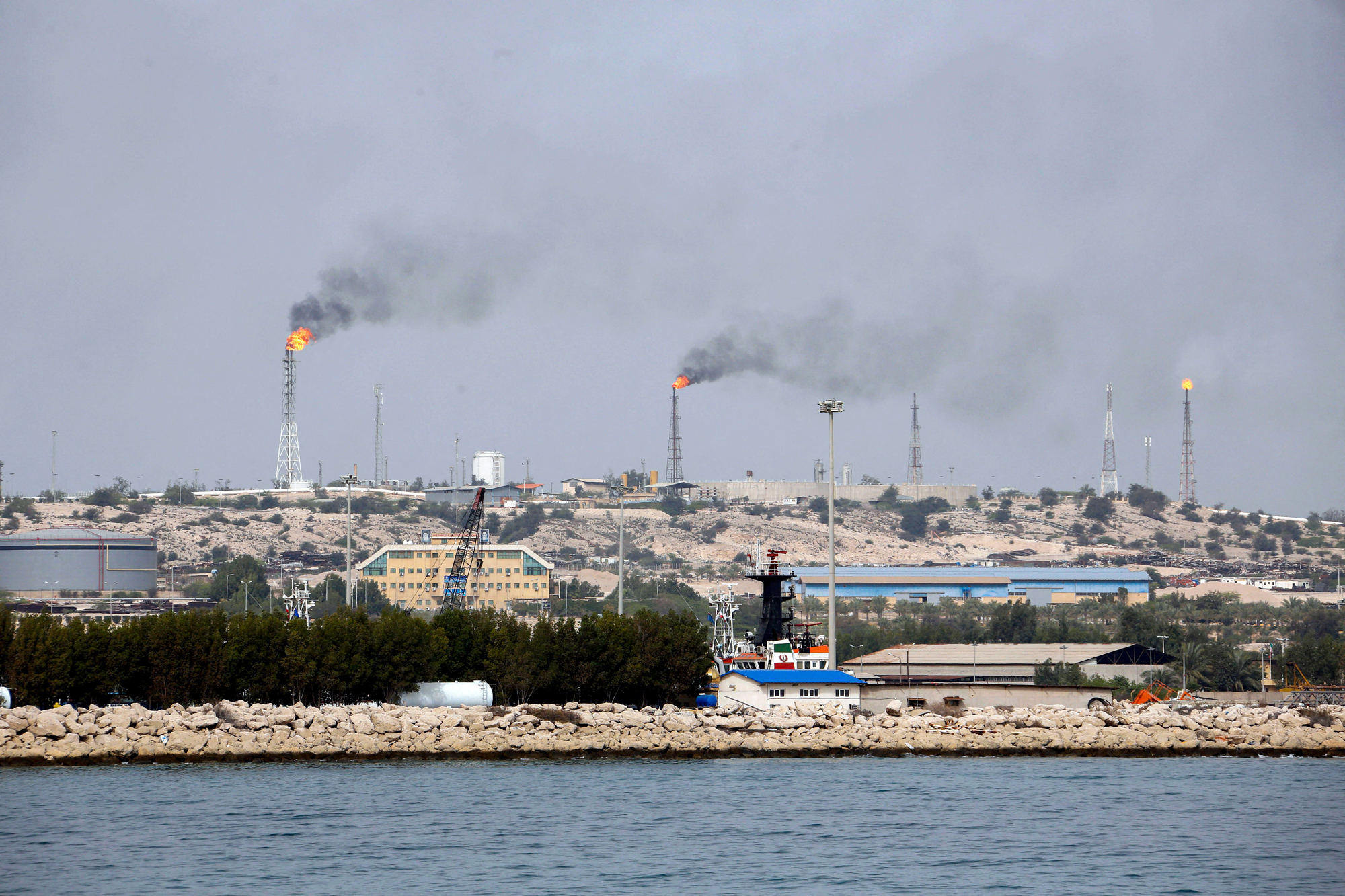
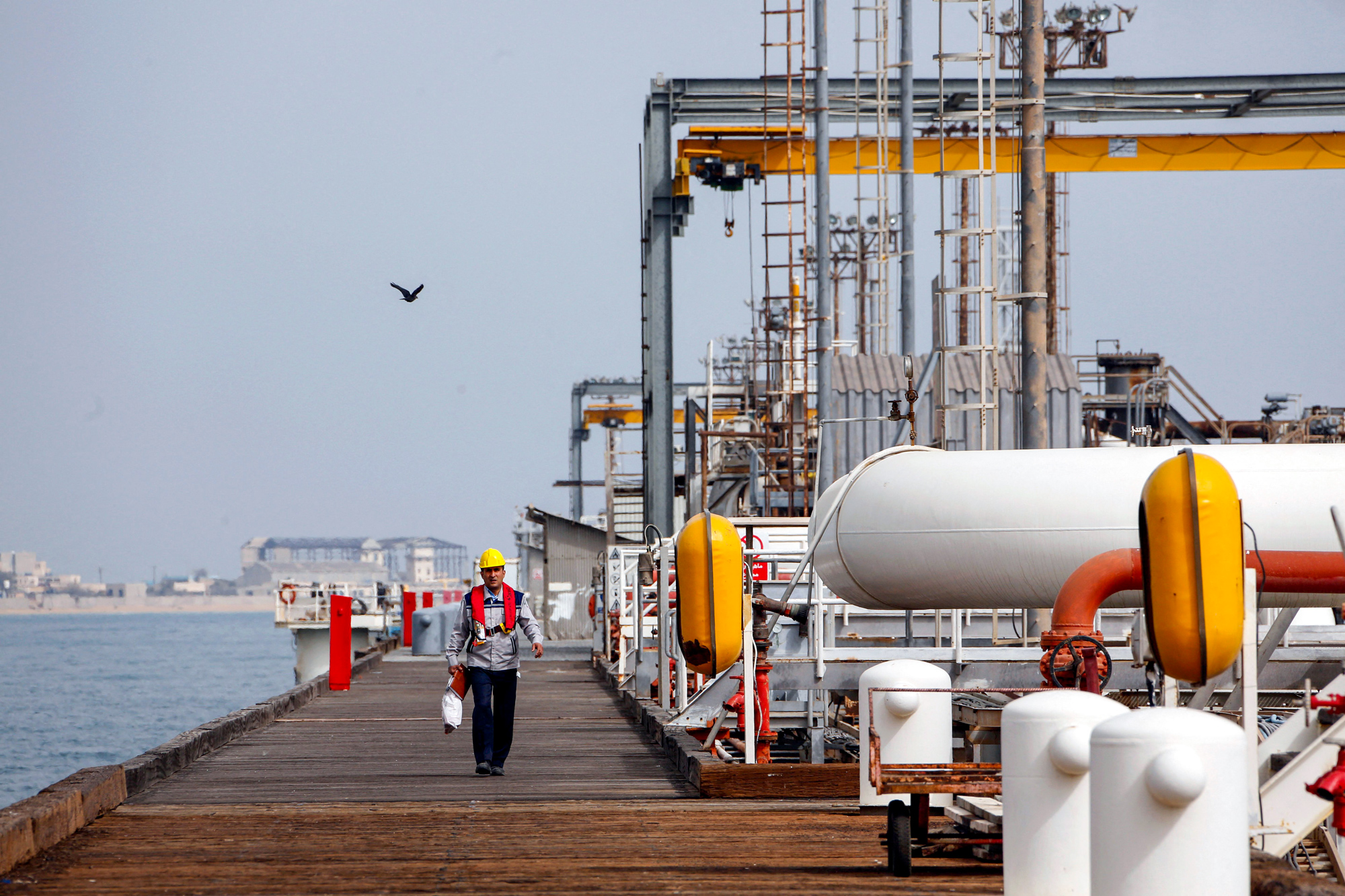
An Iranian laborer walking the platform of the oil facility in Kharg Island on the shore of the Persian Gulf on March 12, 2017. Atta Kenare/AFP via Getty Images
Once a larger ground force secured the island, Eastwood said, troops would likely be targeted by shore-based Iranian missiles, drones, and artillery, but “this would be less of a risk due to American and Israeli air superiority and air cover there.”
Corr, calling seizure a “justified” capture of Iran’s “oil export chokepoint,” agreed.
“The risk-reward ratio is minimal, and the island would be relatively easy for the U.S. military to defend,” he said.
Correction: A previous version of this article misstated the movement of U.S. ground forces to the Middle East. The Epoch Times regrets the error.