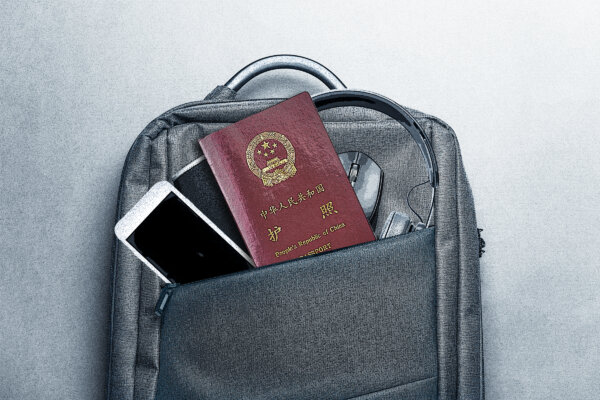
| The Trump administration’s pledge that it will begin to “aggressively” revoke visas of Chinese students was made after years of concern over the Chinese regime’s efforts to infiltrate U.S. academia. |
| Secretary of State Marco Rubio announced on May 29 that the United States will begin revoking Chinese student visas, specifically targeting those with ties to the Chinese Communist Party (CCP) or studying in critical fields. It will also revise visa criteria and heighten scrutiny for future visa applications. |
| State Department spokesperson Tammy Bruce on Thursday said the government is enhancing scrutiny of all Chinese visa holders in the United States. She declined to detail specific criteria the department will use in assessing applications. |
| A total of 277,398 students from China were enrolled U.S. entities in the 2023–24 academic year, according to a collaborative report from the State Department and the Institute of International Education. |
| |
| The FBI warned in a 2019 bulletin that the CCP exploits the openness of the U.S. academic environment to conduct economic espionage to advance its own scientific, economic, and military goals. While most Chinese students and researchers are in the United States for legitimate academic reasons, the FBI said, the CCP can use them as “non-traditional collectors of intellectual property.” |
| Here’s a look at a few prosecutions of Chinese nationals who came to the United States on student visas: |
| Photographing Naval Base |
| Earlier this month, Immigration and Customs Enforcement (ICE) deported Chinese national Shi Fengyun, who was convicted of using a drone to photograph a naval shipyard in Virginia known for building nuclear submarines and next-generation Gerald R. Ford-class aircraft carriers. |
| He had come to the United States on an F-1 student visa and committed the crime while on break from graduate studies at the University of Minnesota. He pleaded guilty to two misdemeanors under the Espionage Act and was sentenced to six months in prison and one year of supervised release. |
| Stealing Trade Secrets |
| Chinese professor Zhang Hao was sentenced in 2020 to 18 months in prison and ordered to pay $476,835 after being convicted of conspiracy, economic espionage, and theft of trade secrets. He met one of his co-conspirators, Pang Wei, as doctoral students at the University of Southern California and both worked at American companies upon graduation. They worked with Tianjin University officials in China to steal wireless signal filtering technology from these companies for the benefit of the Chinese regime. |
| Smuggling Biological Materials |
| Zheng Zaosong came to Harvard University’s Beth Israel Deaconess Medical Center as a visiting graduate student in pathology in 2018 and was caught hiding 21 vials of biological materials related to cancer research packed in a sock inside one of his bags at Boston Logan International Airport a year later. Zheng said he intended to bring the vials home to China and publish research under his own name. He agreed to a plea deal and was ordered to be removed from the country. |
| Harassing Democracy Activists |
| Wu Xiaolei entered the United States on an F-1 visa to attend the Berklee College of Music in Boston, and in 2022 began harassing a fellow student for posting a flier with a message supporting democracy in China. In Berklee Class of 2024 WeChat group messages, Wu said he had reported her to Chinese authorities who were now investigating her family, and threatened her with violence. He was convicted and sentenced to nine months but released early and returned to China. |
| Undercover Military Officer |
| Ye Yanqing entered the United States on a J-1 visa to study as an exchange student at Boston University from October 2017 to April 2019. After she returned to China, she was charged with lying on her visa application as she concealed her identity as a lieutenant in the People’s Liberation Army. Prosecutor allege the Chinese regime sponsored her exchange student visit and she completed “numerous assignments” for the Chinese military during that time, including retrieving U.S. military intelligence and sending U.S. documents to China. She remains at large. |
| Photographing Military Base |
| Zhao Qianli came to the United States as an summer exchange student and overstayed his visa. He was arrested after trespassing and photographing a U.S. naval base in Florida, whereupon he told officers he was lost and “a dishwasher from New Jersey.” He pleaded guilty and was sentenced to a year of supervised release. During questioning, Zhao said he received military training at a university with close ties to the Chinese military, which he had not disclosed on his application. |
| Catherine Yang contributed. |
| |
| To dig deeper into the subject, read the following original reporting by our journalists: | |
| |
Thank you for being a subscriber
If you enjoy what you’re reading, please consider forwarding this email to someone who might find it informative. Your Feedback
We'd love to hear from you. You can email us at topstory@epochtimes.nyc We may feature an exerpt of your response in the next newsletter.
| | |