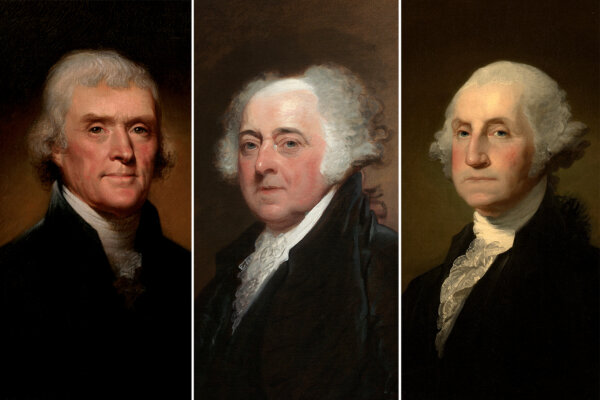
| A few years after winning the Revolutionary War, America’s Founding Fathers crafted and ratified a constitution—guaranteeing rights, liberties, and freedoms—that remain in effect today.
Was this the result of luck? Or was it the product of visionary leaders who served where they were best suited—moral men of character, humility, and conviction, who sought God’s guidance and pledged their lives, fortunes, and honor to the cause?
The answer becomes clearer when the choices they made are considered.
On a cool Friday June morning in Philadelphia, the Second Continental Congress met in the Pennsylvania State House—today known as Independence Hall. Most of the delegates were pleased when John Hancock, president of Congress, announced the man chosen to serve as “General and Commander in Chief of the Army of the United Colonies.” One delegate from Virginia, however, was less than pleased—for it was he who had been chosen.
A veteran of the French and Indian War, Washington attended Congress in his military uniform, projecting “martial dignity,” an “elegant form,” and “great self-command.” Dr. Benjamin Rush later observed, “You would distinguish him to be a general and a soldier from among ten thousand men.”
Washington had likely expected to serve only as a general, not to oversee the entire war effort. It was a role he had not sought and did not desire. Upon realizing he was the nominee, Washington modestly slipped away. His humility only strengthened support for his candidacy, and, the next day, Congress unanimously appointed him commander in chief.
|