| WORDS OF WISDOM | | “It has long been an axiom of mine that the little things are infinitely the most important.” | | —Arthur Conan Doyle, "Adventures of Sherlock Holmes" | |
🎧 Prefer to listen? Get the podcast. |
| TOP STORIES |
| |
  | |
In light of the war in Iran, we’re running a special promotion to make our reporting accessible at the lowest possible annual rate: full access for an entire year for just $26.
Sale ends tonight. The Epoch Times strives to fill the void at a time when partisan and biased reporting has become commonplace. As staunch believers in traditional journalism, we rigorously pursue facts and accuracy, leaving views strictly as opinions. When you do choose to explore people’s perspectives, we guarantee you the freedom of thought. Too often, certain voices are suppressed or silenced—that’s never the case at The Epoch Times. Browsing through the commentaries, you will immediately recognize honest, refreshing, and at times courageous discussions on topics perhaps purposefully left out by others: A Former Anthropic Employee’s Last Warning; The Labor Crisis No One Wants to Talk About; Why International Women’s Day Should Include Motherhood... Take this opportunity to explore our entire treasure trove of content as much as you like for a full 12 months, with $26. | | Subscribe Now | | | |
| |
| |
| |
| |
| |
| |
| PREMIUM |
| |
| INSPIRED |
| |
| CULTURE |
 | | A Newspaper Legend | | In the early 19th century, newspapers were full of words, but no pictures. There were no photographs, sketches, or visual storytelling to accompany the day’s events. Readers had to imagine the scenes for themselves. That began to change through the work of a young printer named Nathaniel Currier.
Born in Massachusetts in 1813, Currier entered the world of printing at a young age after his father’s death left the family in difficult circumstances. By 15, he had begun apprenticing in Boston at the nation’s first lithography shop, where he learned a relatively new European printing technique developed by Alois Senefelder. Lithography allowed artists to draw directly onto stone blocks and reproduce detailed images quickly—an innovation that would soon transform American printing.
After completing his training, Currier eventually moved to New York City and started his own small business. At first he printed sheet music and various commercial jobs, but he soon noticed something striking: people were eager to see pictures of major events, not just read about them. When he began producing lithographs depicting recent disasters and dramatic news stories—such as urban fires or building collapses—crowds gathered outside his shop window to buy them.
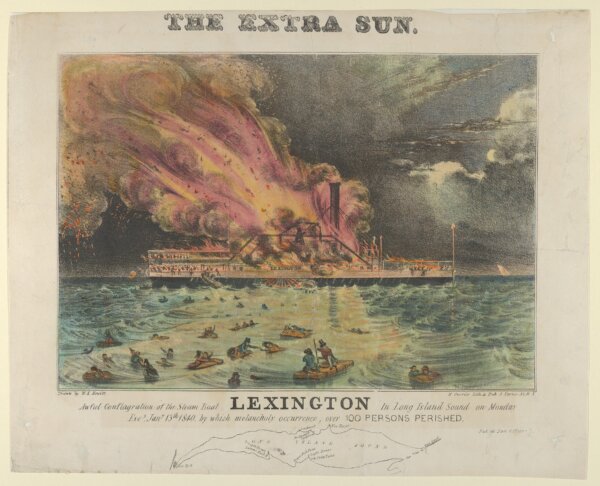
A turning point came in 1840, when a dramatic print of a steamboat disaster in Long Island Sound caught the attention of the New York Sun. The newspaper soon began publishing Currier’s illustrated news sheets, spreading the idea that current events could be reported visually as well as in print.
Behind this growing enterprise stood a quiet, introspective man whose personal life was marked by both family joys and profound loss. Yet his work continued to evolve, laying the groundwork for what would become one of the most recognizable names in American art and publishing: Currier & Ives.
| | | |
| EPOCH TV |
| |
| |
| OPINION |
| |
| |
| EPOCH FUN |
| |
| |