
|
|
(STR/AFP via Getty Images) |
|
Nostalgia for the Pre-Digital Age |
|

|
By Jeffrey Tucker |
|
Commentary
Have you lately watched any movies from the 1970s or 1980s? They are intriguing for reasons that could not have been understood when the movies were made. They reveal a world gone by, one never likely to return, and tragically so.
These were the last days before the advent of digitalization of everything, and before the whole of humanity connected itself to the digital borg with nonstop surveillance and distraction. This was before social media wrecked the young, the smartphone ate up the lives of the professional class, and before the elderly were the daily prey of online scam artists.
They lived real lives in the physical world. They instead relied on trust, learning, and community. People were assets, not useless eaters, and awareness and talent came at a premium.
In these movies, when people drive somewhere, they need to know the way there. If they did not, they would take recourse to a physical map or ask for directions. As a result, they had to be attentive to what was around them and cultivate a sense of direction.
Phones were on desks or attached to walls, and operated with buttons that one would push. This was an upgrade over the rotary dial. When the phone could ring, you had no idea who it would be. This is the source of a great deal of drama. Maybe it was a scary call, as in a Hitchcock movie, or maybe it was romantic as with a Neil Simon play. Regardless, it was always a surprise.
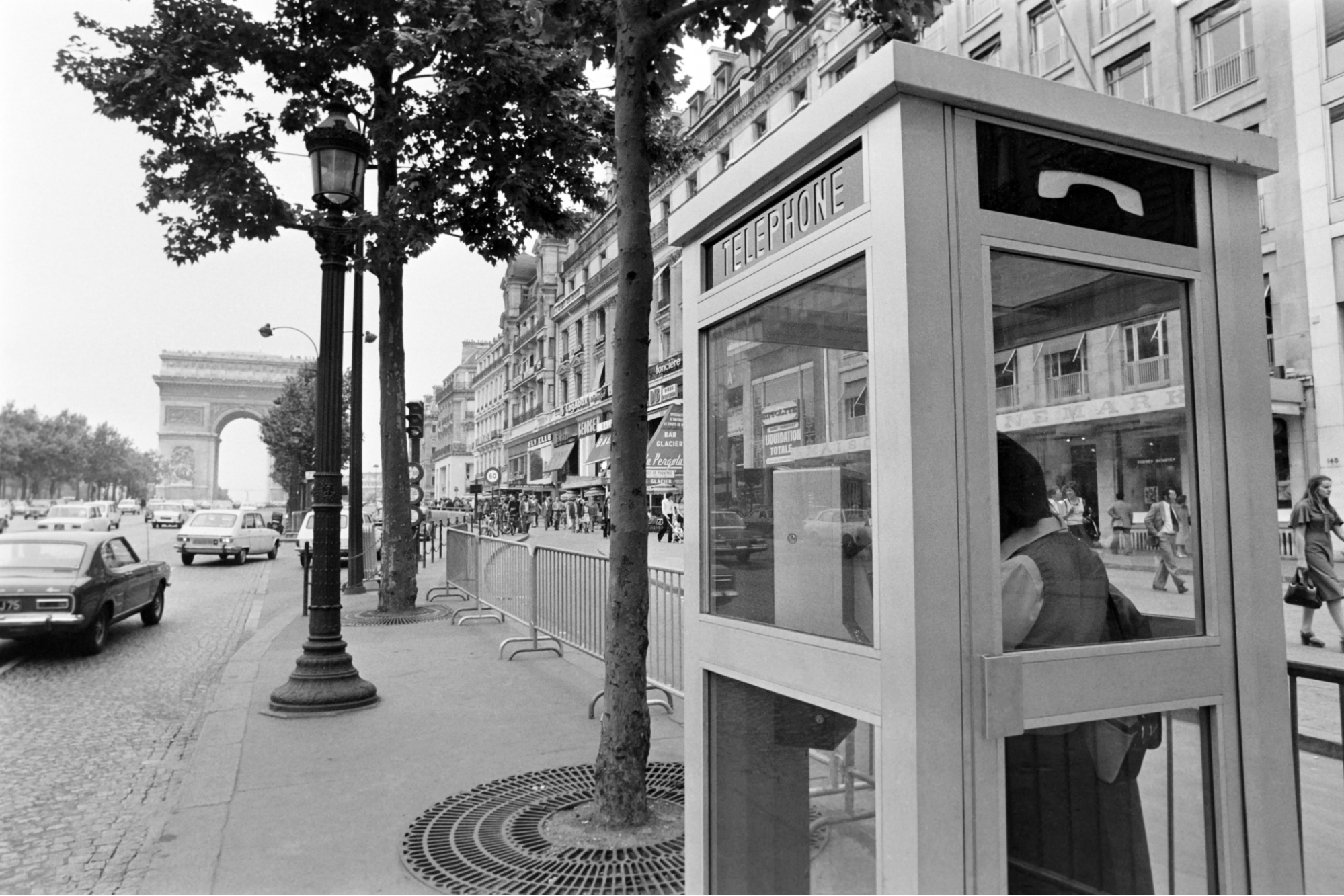
If you were at a restaurant eating, you were away from the phone. If someone knew you were there, they could call the place and the waiter would come to your table and tell you that you are wanted on the phone. You would then excuse yourself to go to a phone booth.
At the phone booths, small enclosed rooms with glass walls, there were sometimes lines and you would have to wait for the person before you to end the conversation. As a result, conversations were rather short. They had to be.
If you called someone outside the city, you would have to pay long-distance charges, either on your bill at home or by putting many coins inside a machine. If you ran out of money, you could not talk. Speaking of money, it was physical as in coins or paper bills. In order to conduct banking operations, people had to go to a bank.
No one knew for sure where anyone was. As a result, people had to rely on trust, promises, routines, and clues. If the husband came home late, his arrival time was uncertain. If this was routine and there was always an excuse, the wife naturally assumed he might be having an affair.
There was never a reason to unplug because no one was really plugged in. People would routinely disappear. Jack was supposed to show up to a card game that is weekly. He is not there. The guys would call his wife who says he is not at home. No one knows where he is and panic sets in. This is a normal drama in these movies.
Speaking of card games, men seemed to gather often because this was the way to socialize, not through Zoom calls and social media postings. Women would gather for tea or a night out. Families would gather for picnics and outings. People would go on vacation and pay attention to where they were because the only thing to do was enjoying the surroundings.
You would arrive in a hotel room and maybe turn on the TV for entertainment but there were not 1,000 emails and random Facebook postings awaiting an answer. To get away from it all meant truly getting away from it all.
Doing business meant looking through physical papers and signing things with a real pen. If something needed to be typed, it was typed from a machine straight to a paper. Then paper was mailed, and the mail would get lost sometimes or intercepted. There were telegrams for really important communications.
Contacts were kept in physical books and card files on the desk and people would scroll through them. Remote human contact was more rare in quantity but high in quality.
When people rode public transit, they read newspapers or books or just looked out the window. It was common for people actually to speak to each other on the streets and while shopping. Eye contact was a means of communicating in stores and in offices, and it had a language all its own.
What people wore mattered because people would actually look at each other and size each other up based on appearances. As a result, people would care for themselves in hopes of making the best-possible presentation of themselves to others.
If you met someone for the first time, you really met them for the first time and there was no cheating by quickly scrolling through the whole of their lives on some permanent digital record. First dates were really about getting to know someone.
As a result of this, people could make mistakes in life and actually start over. It was mostly up to the individual to tell other individuals about who they are and what they believe.
This allowed people to change and leave their pasts behind, a genuine second and third try at life itself. If someone was dogged by a regrettable past, it was because he had developed a reputation but this was mostly spread by word of mouth and could be forgotten in time.
To look something up meant to go to the library and look through books and old newspapers. Here is where you would find out about the world beyond your community, including publications, organizations, and other peoples and places.
Every house had a huge collection of books. Looking through the titles would give you a wealth of information about their interests, erudition, and social status. Kids read cereal boxes during breakfast.
When you wanted music, you could listen to the radio for the Top 40, find a specialized station, or go to a record store and flip through what they had. You would buy the record and put it on a turntable but the music would only last 30 or so minutes before you had to stand up and change it.
Your listening experience was limited by what was available and the records you owned would take up vast space. The records would wear out and get scratchy or skip.
There was no such thing as a “digital nomad” so everyone was either at home doing home things or at the office doing office things. Where you were determined what you did.
The difference in our time is palpable and obvious.
Sitting at an airport, riding a train, or even sitting at the park, it’s rather apparent that everyone is somewhere else other than where they are. They are all staring at a thin box in their hands that tells them what’s what every single instant.
People avoid eye contact. Visual cues don’t matter much because no one is looking at anyone else. People lift their eyes from their smartphones only long enough to achieve something before they go back to scrolling again. Attention spans have shrunk to minutes and seconds. I strongly doubt that many people actually read books anymore.
It’s preposterous to claim that there are no advantages to the digital age. I can write for multitudes daily and read content from the world over. Print on demand has dramatically changed publishing costs for books.
I can order most things online and get them in a day or two. Food comes to my door in under an hour. When I was a kid, I collected cereal box tops and sent them in and the toy arrived in 6-8 weeks if at all. Today’s world is incomparably better at getting us what we want faster, to the point that no one has patience for anything.
I would never want to pay my bills through the mail and balance my checkbook by hand as my father did. I love streaming music so much, which allows me to flip between all music made between the 3rd century and this morning, and find a station that plays 100 hours in succession.
All of this is wonderful but let’s not pretend that it does not come at a huge cultural cost. There are times when it feels like the end times, a scene from a dystopian novel in which privacy, autonomy, person-to-person contact, and basic humane values are wholly banished forever.
Sometimes nostalgia for the analog past overwhelms me and I want to go back. I know, it’s a luxury to be nostalgic because our wishes cannot and do not come true, so we indulge in a kind of luxury of selective memory. We remember the analog age the way we remember the 19th century: only the good composers, books, and presidents, while forgetting the bad.
That said, will there come a time when the digital age will become civilized? Will we ever learn to play with our new tools in a way that doesn’t degrade family, community, and people? I don’t know but that time cannot come too soon. Because the current path seems unsustainably terrible. Have a look at a movie made 50 years ago and see if you agree.
|
|
|
|

|
Jeffrey A. Tucker is the founder and president of the Brownstone Institute and the author of many thousands of articles in the scholarly and popular press, as well as 10 books in five languages, most recently “Liberty or Lockdown.” He is also the editor of “The Best of Ludwig von Mises.” He writes a daily column on economics for The Epoch Times and speaks widely on the topics of economics, technology, social philosophy, and culture. |
|

|
|
|
Thank you for being a subscriber
Your Feedback |