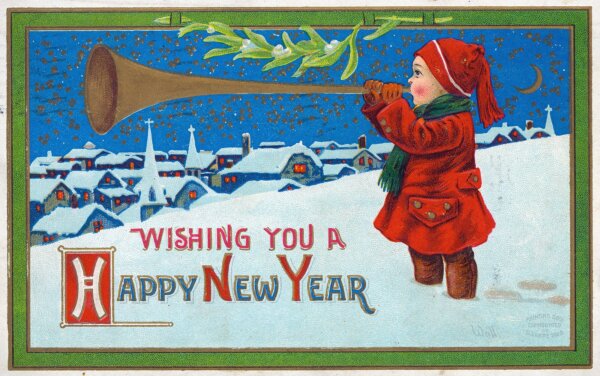
| The turning of the year always carries emotional weight. Celebration and unease may go hand in hand, as the relief of closing one chapter meets the uncertainty of opening another. We toast new beginnings, while sadly aware that somethings won’t return. The New Year invites resolve and reinvention, but it also asks us to reckon with time, memory, and the limitations of change.
That mixture of emotions is conveyed beautifully through the words of four poets who approached the New Year not as a slogan or a countdown, but as a deeply human experience. Writing across different eras, sensibilities, and genres, T.S. Eliot, Thomas Mann, Alfred Tennyson, and Ella Wheeler Wilcox each give voice to a distinct way of understanding what it means to step from one year into the next.
Eliot sees the New Year as an invitation to renewal, where endings and beginnings are inseparable and language itself is allowed to change. Mann, by contrast, tempers celebration with perspective, reminding readers that time moves on regardless of our rituals and that humility can sharpen rather than diminish joy. Tennyson lingers on the ache of leaving the old year behind, expressing the desire to preserve what was good even as change becomes unavoidable. Wilcox gathers all of these moods—hope, grief, love, repetition—into a quiet acknowledgment of life’s fullness, with its joys and sorrows entwined.
Together, these voices form a reflective portrait of the New Year as more than a date on the calendar. It becomes a moment to sift experience, to decide what to carry forward and what to release, and to recognize that meaning often lies not in novelty but in attention. Pause before making resolutions, and approach the New Year not just with ambition, but with gratitude, honesty, and a deeper awareness of life in all its forms.
|