President Donald Trump has decided to delay potential strikes on Iranian energy sites by 10 more days, citing progress in talks with Tehran.

|
|
|
| “The basic laws of the universe are simple, but because our senses are limited, we can't grasp them. There is a pattern in creation.” |
| |
|
| Ivan Pentchoukov
National Editor |
|
|
| Ivan Pentchoukov
National Editor |
|
|
Good morning! It’s Friday. Here are today’s top stories. |
- President Donald Trump has decided to delay potential strikes on Iranian energy sites by 10 more days, citing progress in talks with Tehran.
-
President Trump said that Iran had given the United States a “present” in the form of 10 tankers carrying oil.
-
The president plans to sign an order that will pay Transportation Security Administration agents who have not received a check since the Department of Homeland Security entered a partial shutdown in mid-February.
-
A pamphlet explaining traditional Christian views of sex and marriage is “hate speech,” Finland’s Supreme Court ruled on March 26, fining a member of parliament, a Lutheran bishop, and a church group hundreds of dollars. The verdict, the culmination of years of prosecutions, sends a chilling message on free speech, advocates warn.
- 🍵 Health: Neuroscientists have revealed that what you believe can change your body.
|
|
|
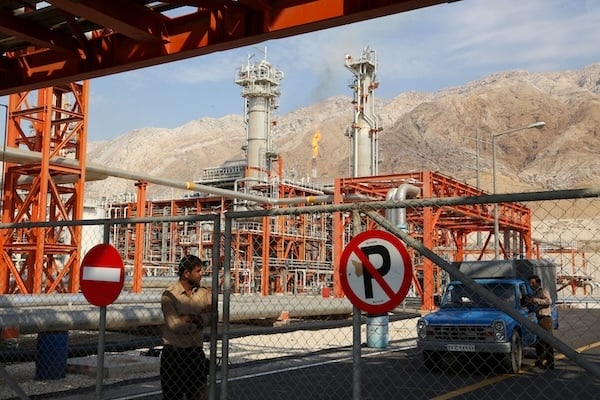
A general view of the phase 17-18 of the South Pars gas field facilities in the southern Iranian port town of Assaluyeh on the shore of the Gulf on Nov. 19, 2015. (Atta Kenare/AFP via Getty Images) |
President Donald Trump has decided to delay potential strikes on Iranian energy sites by 10 more days, citing progress in talks with Tehran.
“As per Iranian Government request, please let this statement serve to represent that I am pausing the period of Energy Plant destruction by 10 Days to Monday, April 6, 2026, at 8 P.M., Eastern Time,” Trump wrote in a March 26 post on Truth Social. “Talks are ongoing and, despite erroneous statements to the contrary by the Fake News Media, and others, they are going very well.” On March 21, Trump issued an initial demand for Iran to reopen access to commercial traffic through the Strait of Hormuz within 48 hours, or face new strikes targeting its energy infrastructure.
After U.S. and Israeli forces launched strikes against Iran on Feb. 28, Iranian forces began harassing commercial traffic in the Strait of Hormuz, a narrow chokepoint in an otherwise major artery for global oil exports.
Following Trump’s initial ultimatum, Iran’s Islamic Revolutionary Guard Corps threatened to completely close down access to the Strait of Hormuz and target energy facilities in Middle Eastern countries that host U.S. forces. They also threatened to attack crucial water desalination facilities operated by those neighboring countries.
Iranian forces similarly threatened to strike energy facilities operated by countries throughout the Persian Gulf after Israeli forces struck the South Pars gas field jointly operated by Iran and Qatar. In a March 23 update, Trump announced he had delayed his initial deadline regarding potential strikes against Iranian energy facilities, citing productive discussions.
Trump’s March 26 post now marks the second time that he has postponed new strikes on Iranian energy sites. (More)
|
-
U.S. President Donald Trump on March 26 warned Iran to “get serious” about negotiations to end the war, accusing Iranian officials of falsely downplaying ongoing contacts and cautioning that failure to engage could lead to severe consequences.
-
U.S. forces have struck 10,000 military targets in Iran—and more when combined with Israeli forces.
-
Israel said it had killed the commander of the naval forces of the Islamic Revolutionary Guard Corps, Commodore Alireza Tangsiri, as the Jewish state, along with the United States, continues to wage war against Iran.
-
The Iran war has showcased the challenges that can arise in a large-scale conflict, when waves of attack drones are mixed into salvos of ballistic missiles to exhaust defensive networks. These relatively inexpensive weapons are driving military planners to reevaluate their defensive systems and strategies.
|
- Senate Majority Leader John Thune (R-S.D.) said Republicans have given Democrats their “last and final” offer to end the partial government shutdown. “Enough is enough,” Thune said.
-
Thousands of Transportation Security Administration agents called out sick on March 25, as long lines persisted at airports across the United States due to the ongoing funding impasse.
-
President Donald Trump’s signature will appear on future U.S. paper currency in honor of the 250th anniversary of the United States, marking the first time this has happened for a sitting president, according to the U.S. Treasury Department.
-
President Donald Trump praised the National Guard troops stationed in Washington, saying he doesn’t want them to leave. “I never want to take them out of D.C.,” Trump said.
-
Biden White House officials edited messaging on the finding that there was a higher-than-expected number of strokes following COVID-19 vaccination, according to newly released documents.
-
Federal Trade Commission Chairman Andrew Ferguson sent letters to Visa, Mastercard, and other financial infrastructure firms reminding them of their obligation to serve customers regardless of their ideology, political views, or religious affiliation.
-
When Elsa Johnson left her Minnesota home for Stanford University two years ago, the teenager figured she would be approached by campus clubs or student social organizations, not the Chinese Communist Party. But that’s just what happened.
|
- The number of Americans currently receiving unemployment benefits declined to a two-year low, sending mixed signals about employment conditions across the U.S. economy.
-
Mining company Energy Fuels announced March 26 it had successfully produced its first kilogram of terbium oxide at its Utah project, becoming the first U.S. company to produce the compound domestically in decades.
|
| ADVERTISER'S NOTE: |

|
|
|
|
-
Rising prices of both grain and animal feed triggered by the Iran war have put extra pressure on tens of millions of Chinese pig farmers, while domestic hog prices have hit a 16-year low.
-
Czech police have detained three people, including U.S. and Czech citizens, following an arson attack at an industrial drone complex.
-
The Kremlin said that Russia is in contact with the United States about the possibility of more talks on a settlement of the conflict in Ukraine.
-
British Prime Minister Keir Starmer has given the military permission to board ships that make up Russia’s shadow fleet if they are passing through UK waters, including the English Channel.
|
- White by Default—by Lewis Low (Read)
-
Iran Publicly Rejects a Deal While Privately Asking for More Time—by Tamuz Itai (Read)
- What 122 Universal Basic Income Experiments Actually Show—by Vance Ginn (Read)
- Is Live Symphony Performance Going Away?—by Jeffrey A. Tucker (Read)
- Iran Could Reshape the Middle East and the Global Balance of Power—by Fariba Parsa (Read)
- He Spent $1.5 Million in Food Stamps—by Terence P. Jeffrey (Read)
- Sugar: A Drug We Refuse to Name—by Mollie Engelhart (Read)
|
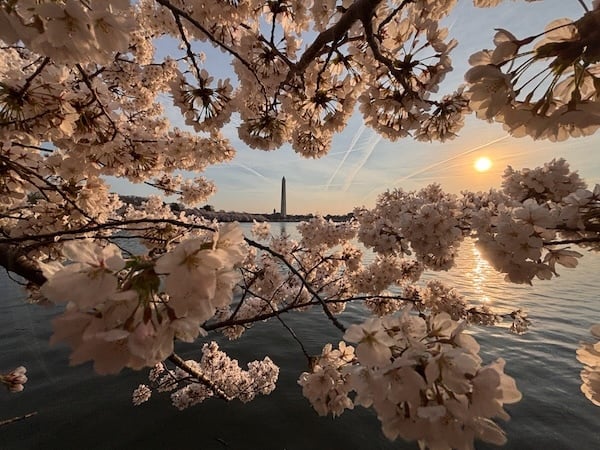
Cherry trees bloom near the Washington Monument on the National Mall at sunrise in Washington on March 26, 2026. (Marc-Antoine Baudoux / AFP via Getty Images) |
📸 Day in Photos: Swiss Ice Skaters, Protests in South America, and Conflict in the Middle East (Look)
🎤 Interview: How ‘Brain Rot’ and the Escapist Virtual World Is Harming Our Youth—Adnan Alkhalili (Watch)
🎙️ Podcast: AI Models Deployed Nuclear Weapons 95 Percent of Time in Simulated War Games: Study—Facts Matter (Listen)
🎵 Music: Mozart - Quartet No. 18 (Listen)
⏳ (Sponsored) Final Days to Invest Pre-IPO: They’re bringing Juan Valdez back to America, with 37X revenue growth behind them and 2027 IPO plans ahead. Become a pre-IPO investor in Green Coffee Company before time runs out.* |
A group of hotel housekeepers lost weight, lowered their blood pressure, and reduced their body fat—all without hitting the gym or changing their daily routines. The only difference was in what they believed: that their labor was exercise. Their minds believed it, so their bodies responded accordingly.
The study’s findings were first published in 2007 in Sage Journals. Today, a growing body of research demonstrates this scientific discovery: What our minds believe about our bodies can lead to consequential physical changes. In other words, when we believe a treatment will work, the brain releases real neurotransmitters that produce real results. Placebo effects are well-researched examples of mind-body connections. They occur when our expectations of a treatment, improvement, or experience—even if the treatment isn’t “real”—trigger actual biological changes. What drives the change, researchers suggest, is a combination of belief with emotional association, a sense of safety, and expectation. One landmark double-blind study published in 2013 is still referenced across scientific fields today for the surprising nature of its results.
Patients with significant traumatic knee pain, meniscus tears, and knee osteoarthritis resistant to typical treatment were randomly assigned to two groups: one that would receive a meniscus surgery and one that would receive a “fake” placebo surgery, where they would undergo a simulation of the meniscus surgery.
Both groups improved significantly, and the real-surgery group showed no greater improvement than the placebo group.
What patients believed, felt, and expected proved to be the determining factor. (More)
|
|
|
Thanks for reading 🙏 Have a wonderful day! |
—Ivan Pentchoukov, Madalina Hubert, and Kenzi Li. |
|
|
Copyright © 2026 The Epoch Times, All rights reserved.
Our mailing address is: The Epoch Times, 129 West 29th Street, Fl 8, New York, NY 10001 | Contact Us
Our Morning Brief newsletter is one of the best ways to catch up with the news. Manage your email preferences here or unsubscribe from Morning Brief here.
*This is a paid advertisement for Green Coffee Company's Regulation CF offering. Please read the offering circular at https://invest.greencoffeecompany.com/. Timelines are subject to change. Listing on the NASDAQ is contingent upon necessary approvals, and reserving a ticker symbol does not guarantee a company's public listing.
|
|
|
|