
|
|
(Kean Collection/Getty Images) |
|
Domestic Tranquility |
|

|
By Jeffrey Tucker |
|
Commentary
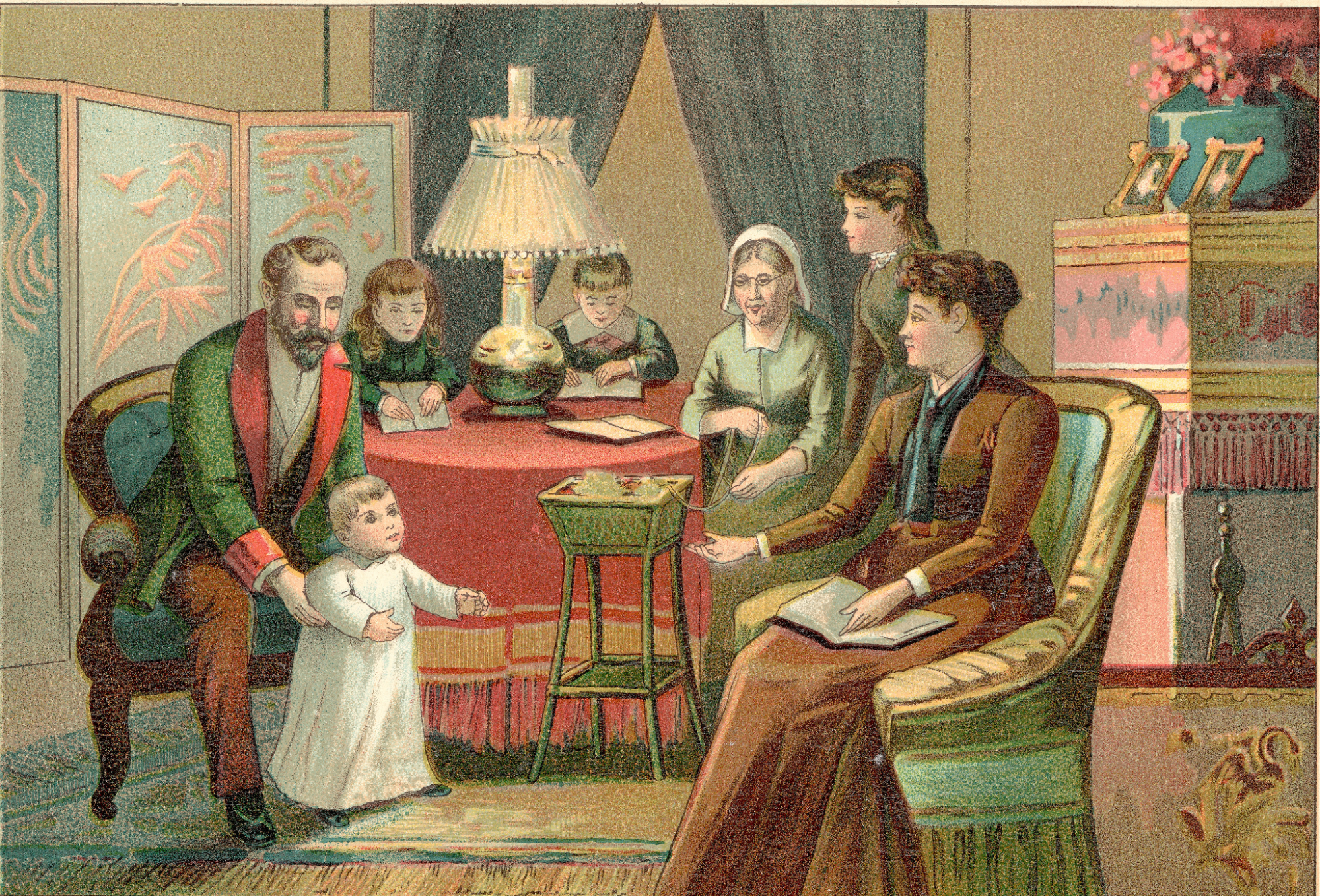
The authors of the U.S. Constitution said one of the purposes of the document was to insure domestic tranquility. The word domestic comes from Latin “domus” meaning house. In the 18th century, it came to refer to one’s country. Our country is our home and the home is a place of safety, stability, and tranquility.
If you could sum up the Founders’ vision for what makes for a good life, it might be this one. Of all the earthly ambitions for which one can hope, domestic tranquility is surely among the highest. Without that, all the wealth and all the money is for naught. But with that, one can withstand the exigencies of financial ups and down, health and sickness, victories and disappointments.
It’s been on my mind because of a grave confusion that is out there concerning human well-being. Somehow we have conflated this with purely material measures, none of which encapsulate the life ambition of the normative human person.
The crudest possible bromide is to say that a country is prosperous and wealthy based on its rising stock market. It’s probably the most common economic fallacy. It is completely wrong historically and theoretically.
The greatest year for the German stock market was 1923, as the currency vanished into thin air, more useful for fueling furnaces in winter than for spending. In this case, the rising price of everything fed rising stock valuations too. It was completely illusory. Freshly printed money often lands in financials first. This is not wealth. It is fiat.
We see some of that phenomenon in our economy now, and this helps explain why so many people are discouraged about their prospects in life. A rising stock market does not make for a Golden Age. It might even be a contrary indicator.
The GOP messaging this election cycle was all about how high the stock market has risen, as if it were a proxy for human well-being. This presumption has proven to be a political loser. Some perspective is in order here.
Only 25 percent of Americans have more than $100K in a brokerage account. Most of that is locked away in retirement accounts and cannot be removed without a huge penalty. They cannot get to it until retirement age.
Only 5–10 percent of Americans have liquid funds of more than $100K in a brokerage account with the possibility of trading. To have one requires setting aside or inheriting that money. It is nearly impossible for a young person today to imagine having that kind of extra cash around to throw at a broker. They are too busy paying off debts: cars, student loans, credit cards, and so on.
A person with a huge debt obligation is not likely working on savings. Indeed, household savings right now are historically very low. It is running 2–4 percent and falling as compared with 10 to 15 percent in the 1960s and 1970s. This is terrible foreshadowing for future prosperity.
A lucky return in a stock market index fund of 10 percent gets you $10K of which 3–4 percent is eaten by inflation. If you realize the gains—actually sell what you own into cash so you can actually use it—you pay capital gains or income taxes which (depending on many factors) is another 15 percent of the gain. You are down to a 5 percent return. That’s not getting it done.
Nor are the paper rich really rich. You have $10M in retirement that you tap at 67. Within 10 years, you are going to be dealing with long-term care questions. This can run $250K a year for a couple, which, alongside special medical care, can deplete half in just five or so years depending. You might hope to leave an inheritance to the kids too. So really, there is no point at which you can actually use your supposed riches.
And this is why the messaging of a Golden Age these days has fallen on deaf ears. Those who are rich are only rich by digits on a screen or on a phone app. This is not wealth. It is a picture on the screen. Try to use it and you get slaughtered by taxes. The overwhelming number of people with money in the stock market simply cannot access this money without being punished. By the time they can use it, it is already committed to medical bills and more.
And let’s talk about housing. Yes, valuations are growing ever higher. For those who own a home, this is delightful. But you cannot eat a valuation. You cannot pay for a grandchild’s education with a valuation. You cannot pay medical bills with a valuation. What a rising valuation on your house gets you is a higher tax bill, which you have to pay with cash you do not likely have.
This is the problem with the so-called K-shaped economy. This is the metaphor used to explain the widening gap between the asset-holding rich and everyone else. It expresses a reality but it is wrong to think that everyone in the upper brackets is doing well. They aren’t. They are paper rich or digit rich. But that is not the same thing as holding usable wealth.
The stock market is not the economy. Nor is money the same as wealth. Money is sloshing everywhere and we’ve come to expect ever higher stock prices. But beneath the surface, the foundation of American prosperity is being eroded dramatically. Everyone knows this. A political movement that fails to understand this simply cannot succeed in today’s environment.
Let’s return to the idea of domestic tranquility. Millions of women in their 30s and 40s today have come to realize that they were sold a brutal lie. They were told they should aspire to a high professional life, put off kids, and get the empowerment that comes with a high income.
They followed the prescribed path but then found disaster on the other side. If they get married and have a child, domestic tranquility is elusive because neither mom nor dad can stop working. The household requires two incomes. They cannot afford child care. They cannot afford good schooling. They have no time for household care. Life becomes a terrible scramble just to stay ahead. They panic and they suffer. It is simply impossible to live this way, much less think about a second or third child. They cannot even afford basic medical services for one child.
And this is for the upper income brackets! The simple and mainstream life of decades ago—one middle-class income covering house, food, education, cars, and kids—has completely vanished throughout the Western world. This is the truth of the matter, and yet hardly anyone speaks about this reality at all.
The reason this is not in the news traces to the lies of economic statistics. None of the data tells the truth. The CPI, GDP, employment rate, household income, the stock market and on through the list, all of this is an illusion. None of it speaks to the issues that actually matter for people. None of it!
I’ve spent time thinking about this lately. What is the one measure we can see that would actually sum up and capture whether and to what extent we are actually experiencing domestic tranquility? There is not one. But we know this much: we don’t have it. We used to have it but it has been stolen from everyone under the age of 50 and a vast number of people over 70 too.
Here is our problem. The political movement that can speak to these issues, with real and workable answers, is the one that will thrive in the future. Neither party truly gets this, which is why there is such a vast gulf between the people and the rulers. Until we can recapture this idea of domestic tranquility and find a way to get it back, there will be seething disgruntlement in the populations of the entire Western world. |
|
|
|

|
Jeffrey A. Tucker is the founder and president of the Brownstone Institute and the author of many thousands of articles in the scholarly and popular press, as well as 10 books in five languages, most recently “Liberty or Lockdown.” He is also the editor of “The Best of Ludwig von Mises.” He writes a daily column on economics for The Epoch Times and speaks widely on the topics of economics, technology, social philosophy, and culture. |
|

|
|
|
Thank you for being a subscriber
Your Feedback |