Several top officials at the Centers for Disease Control and Prevention stepped down following the ouster of Susan Monarez, the agency’s director.

|
|
|
| “Plato is my friend—Aristotle is my friend—but my greatest friend is truth.” |
| |
|
-
Several top officials at the Centers for Disease Control and Prevention stepped down following the ouster of Susan Monarez, the agency’s director.
-
The Food and Drug Administration has approved updated COVID-19 vaccines, while withdrawing emergency authorization. Here’s what to know about the developments.
-
People who lived through Hurricane Katrina shared their stories with The Epoch Times for the 20th anniversary of the massive natural disaster.
-
France, Germany, and the UK provided a 30-day notice on Thursday of their intent to reinstate sanctions on Iran for noncompliance with its 2015 nuclear deal.
-
🍵 Health: Why some people can’t forgive themselves while others break free.
|
☀️ Good morning! It’s Friday. Thank you for reading the Morning Brief, an exclusive newsletter for Epoch Times subscribers. 👋 New to Morning Brief? Subscribe. 🎧 Prefer to listen? Get the podcast. |
|
|
| Ivan Pentchoukov
National Editor |
|
|
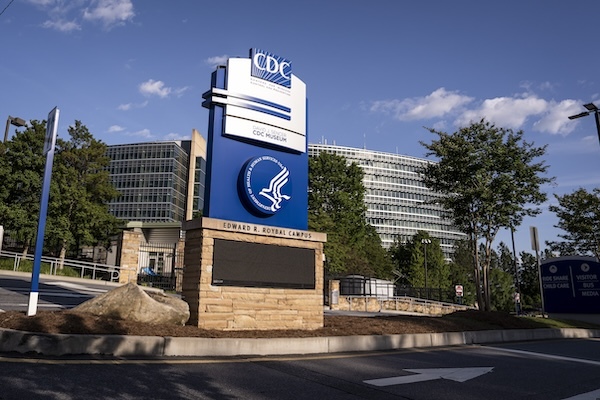
Centers for Disease Control and Prevention headquarters in Atlanta, Ga., on May 21, 2024. (Madalina Vasiliu/The Epoch Times) |
Several top officials at the Centers for Disease Control and Prevention stepped down following the ouster of Susan Monarez, the agency’s director.
Among those leaving the agency was Dr. Demetre Daskalakis, director of the CDC’s National Center for Immunization and Respiratory Diseases.
“I am unable to serve in an environment that treats CDC as a tool to generate policies and materials that do not reflect scientific reality and are designed to hurt rather than to improve the public’s health,” Daskalakis said in a letter posted on X Wednesday, shortly after the Department of Health and Human Services said Monarez was no longer director of the CDC.
Daskalakis said the move was motivated in part by the removal of COVID-19 vaccines from immunization schedules for healthy children and pregnant women. He also said that as far as he is aware, no CDC experts have briefed Health Secretary Robert F. Kennedy Jr. since Kennedy took office in February.
“I am not sure who the Secretary is listening to, but it is quite certainly not to us,” he wrote. Daniel Jernigan, director of the CDC’s National Center for Emerging and Zoonotic Infectious Diseases, has also resigned.
“Over the last few months, it really has been a different approach to things,” Jernigan said. “We were asked to host a number of individuals that were brought in specifically to review and revise scientific information we had thought was settled—information about vaccines and vaccine safety.”
Also exiting is Debra Houry, the CDC’s chief medical officer, who said that Monarez’s attempts to be transparent, including posting documents for public comment, had been blocked.
“She was given feedback from HHS that those couldn’t happen, and she was called to a meeting with the secretary on Monday,” Houry said. “For us, we knew that if our scientific leader couldn’t make changes like that, we could no longer stay.”
HHS did not respond to a request for comment. (More) More Politics: |
-
Member of the Federal Reserve Board of Governors Lisa Cook has sued President Donald Trump in Washington, alleging that he denied her due process in his attempt to fire her.
-
The Trump administration has asked a military base outside Chicago for support with immigration operations, according to the base.
-
President Donald Trump has ordered officials to investigate the use of taxpayer funds for grants that support illegal partisan political activities.
-
More than 200 individuals have filed paperwork to run for president in 2028, even as Democrats begin internal debates over which states will lead their nominating contests.
-
Former Democratic National Committee Chairman Jaime Harrison is urging his party to view the 2026 midterms as an opportunity similar to that of 2006, when Democrats won control of Congress during President George W. Bush’s second term.
|
It was supposed to be a typical Florida storm, New Orleans resident Sherry Grace said. Twenty years ago, a tropical storm made landfall in southeast Florida. But it crossed the Everglades and continued to grow over warm Gulf waters.
Less than a week later, Katrina was a catastrophic Category 5 hurricane. It is still considered to be one of the worst natural disasters ever recorded on the Gulf Coast. Nearly 1,400 lives and countless homes and businesses were lost, and some areas and industries have yet to fully recover.
Some of those who lived through the disaster shared their stories with The Epoch Times. The National Hurricane Center (NHC) issued its first hurricane watch for the Louisiana coast on the morning of Aug. 27, 2005.
Grace, her husband, and her two children chose to board up their house in Mid-City, New Orleans, gather their essential documents and belongings, shut off the power and water, and evacuate. “We told the kids to look at the house because we weren’t sure if we'd be there or if they would see the same thing when they came back,” she said. The next day, Katrina was a full-blown hurricane with sustained winds reaching 165 mph. The NHC warned of storm surges reaching 28 feet, high enough to breach some of the levees. (More) More U.S. News: |
- Officials praised children at Annunciation Catholic School in Minneapolis who put themselves in harm’s way to protect their friends during a mass shooting on Aug. 27.
-
The U.S. Air Force has agreed to provide military funeral honors for Ashli Babbitt, the Air Force veteran shot and killed during the Jan. 6, 2021, U.S. Capitol breach, reversing a 2021 decision that denied her family’s request, according to a letter from an Air Force official made public by a legal group.
-
People who first use cannabis for self-medication purposes have been associated with a higher average rate of consumption as well as increased anxiety, depression, and paranoia, according to a new study published in the journal BMJ Mental Health.
|
| Advertiser's Note: |

|
|
France, Germany, and the UK provided a 30-day notice on Thursday of their intent to reinstate sanctions on Iran for noncompliance with its 2015 nuclear deal.
The 2015 deal, known as the Joint Comprehensive Plan of Action (JCPOA), capped Iran’s ability to stockpile and enrich uranium in exchange for the removal of international economic sanctions. “Iran has been severely out of compliance with its nuclear commitments under the JCPOA deal for many years,” UK Foreign Secretary David Lammy said in an X post. “That’s why, alongside our European allies, the UK has triggered the snapback mechanism to end sanctions relief against Iran.” French Foreign Minister Jean-Noël Barrot and German Foreign Minister Johann Wadephul also shared posts on X, commenting on the sanctions snapback decision. The move to reapply sanctions on Iran comes two months after Israel launched a surprise aerial campaign targeting Iran’s military and its nuclear infrastructure.
During the ensuing 12-day conflict, Iran returned fire on Israel, and the United States targeted three Iranian nuclear facilities with bombs and cruise missiles. Iranian leaders have signaled a reluctance to cooperate with nuclear inspectors in the weeks since the Israeli and U.S. strikes.
In 2018, the United States became the first JCPOA signatory to withdraw from the deal, which President Donald Trump said was too soft on Iran. Following the unilateral withdrawal, Trump began reapplying sanctions in what he described as a “maximum pressure” campaign.
Iran, in turn, openly began enriching uranium beyond the 3.67 percent purity the 2015 deal had allowed. (More) More World News: |
-
Suspected Chinese money laundering operations moved approximately $312 billion through U.S. banks between January 2020 and December 2024.
-
North Korean leader Kim Jong Un will attend a grand military parade in China next week, the two countries announced on Aug. 28. The event in Beijing offers Kim a rare opportunity to appear in public alongside his Russian and Chinese counterparts.
-
All members of NATO are on track to commit 2 percent of their annual gross domestic product to military and defense spending, the alliance announced on Aug. 27.
-
A large-scale overnight Russian drone and missile attack on Kyiv killed 15 people, including four children, according to the head of Kyiv’s military administration, Tymur Tkachenko.
-
A 15-year-old boy who admitted to inflicting fatal injuries on Colombian Sen. Miguel Uribe Turbay—a potential presidential candidate—when he shot him at a political rally in June was sentenced on Aug. 27 to seven years of detention in a youth rehabilitation facility.
|
People compete in the tug of war during the Argyllshire Gathering in Oban, Scotland, on Aug. 28, 2025. (Jeff J Mitchell/Getty Images) |
📸 Day in Photos: Flooding in Pakistan, Protests in Indonesia, and Falconry Exhibition (Look) 🎤 American Thought Leaders: Why Isolationists and Interventionists Are Both Wrong—Yoram Hazony (Watch) ✍️ Opinion |
- Why SWIFT, Not Sanctions, May Shape the Ukraine Endgame—by Tanvi Ratna (Read)
-
The Feds Should Get Tougher on the CCP’s Interference in New York Politics—by Anders Corr (Read)
- The Case for Speaking Your Mind to Others—by Jeffrey A. Tucker (Read)
- Big Money and Higher Ed—by Mark Bauerlein (Read)
- All 50 States Provide Annual Audited Financial Statements—by John Moorlach (Read)
|
💸 Personal Finance: Smart Thrift Store Shopping in Today’s Economy (Read) 🎵 Music: Mozart - Cassation No. 2 (Listen) |
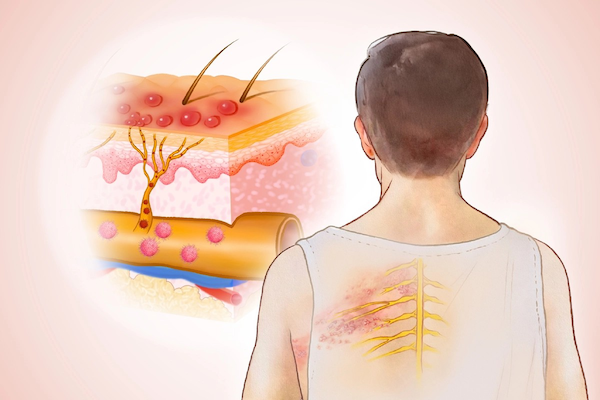
A shingles rash typically appears as painful, blistering skin on one side of the body. (Illustration by The Epoch Times, Shutterstock) |
If you’ve ever had chickenpox, you’re in good company—about 98 percent of adults in the United States share this experience. However, what many people don’t realize is that the virus responsible for chickenpox never truly leaves the body. Instead, it stays dormant in the nervous system, and for roughly one in three people, it can reactivate later in life as shingles.
Shingles, medically known as herpes zoster, affects more than 1 million people in America each year. Cases have increased more than fourfold over the past 60 years.
Anyone who has had chickenpox can later develop shingles, but the risk increases with age as the immune system naturally weakens. Recognizing the early signs and understanding different lifestyle choices can help you better manage the disease.
Shingles rarely appears without warning. Days before the telltale rash shows up, your body often sends signals such as:
|
- Pain, tingling, or itching on one side of the body
- Headache and sensitivity to light
- Flu-like symptoms that make you feel generally unwell
|
This early discomfort often feels like a burning sensation or sharp, shooting pain along what doctors call a “dermatome”—a path that follows specific nerves under the skin. For some, the pain can be excruciating. It usually peaks within a few days after the rash appears, making sleeping extremely difficult.
The hallmark of shingles is its distinctive, painful red rash that typically:
|
- Starts as red patches that develop into fluid-filled blisters
-
Forms a narrow band from the spine to the chest, abdomen, or lower back (it can also appear on the face, affecting areas around the eyes, mouth, or ears)
- Breaks open, forms sores, and scabs over within seven to 10 days
|
The rash heals completely within two to four weeks, usually without scarring. (More) |
|
|
Thanks for reading 🙏 Have a wonderful day! |
—Ivan Pentchoukov, Madalina Hubert, and Kenzi Li. |
|
|
Copyright © 2025 The Epoch Times, All rights reserved.
Our mailing address is: The Epoch Times. 229 W. 28 St. Fl. 7 New York, NY 10001 | Contact Us
Our Morning Brief newsletter is one of the best ways to receive the most up-to-date information. Manage your email preferences here or unsubscribe from Morning Brief here.
|
|
|
|