How pharma companies use the patent system to delay generic drugs from coming to market.

|
|
|
| “A nation reveals itself not only by the men it produces but also by the men it honors, the men it remembers.” |
| |
|
Good morning, it’s Memorial Day. Ahead of America’s 250th birthday, we honor the brave patriots who made the ultimate sacrifice defending the nation’s freedoms at home and abroad. To all veterans and service members, thank you for your service and sacrifice. Here are today’s top stories: |
-
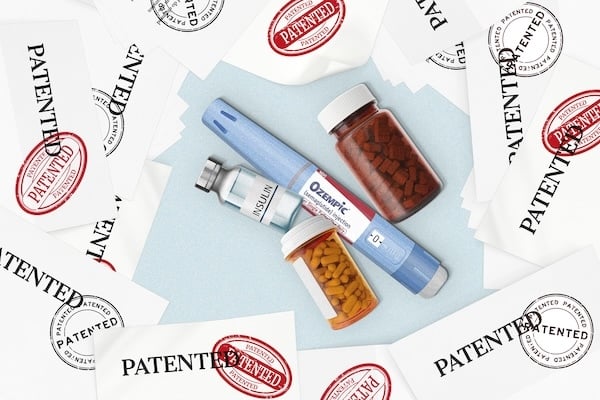
Drug makers are using a loophole to keep prices high. Our health care reporters, Lawrence Wilson and Sylvia Xu, explain how pharma companies use the patent system to delay generic drugs from coming to market.
-
President Donald Trump said he told his representatives not to rush into a deal with Iran, and that a U.S. blockade on the Strait of Hormuz remains in place in the meantime. This comes a day after the president said an agreement to reopen the strait was “largely negotiated.”
-
New research suggests that content from Chinese state media is deeply embedded in the datasets used to train major artificial intelligence systems and may be subtly shaping how some models respond to politically sensitive questions.
-
While Ebola is deadly, our health reporter Marina Zhang breaks down why those outside of Africa don’t need to worry too much about the virus.
-
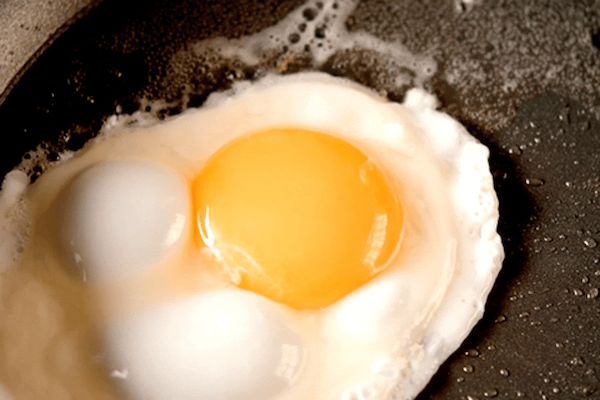
🍵 Health: Could breakfast be your medicine? Scientists have discovered that an egg a week may lower Alzheimer's risk.
|
|
|
(Illustration by The Epoch Times, Shutterstock) |
Bob Parant left his home on Long Island for the first time when he enrolled in college. Always interested in sports, he decided to try out for the football team in his sophomore year. One day, Parant got a message to report to the athletic office. “The coach calls me in and says, ‘You’ve got diabetes mellitus,’” Parant said. “That was back in 1972, and that’s where it started.”
Parant, now 73, has been living with diabetes for over 50 years. He’s generally upbeat about his condition, despite the unending regimen of blood testing and insulin injections. None of that stopped him from having a successful career in pharmaceutical sales.
Yet one thing troubles Parant about needing this drug to stay alive. It’s the way drug makers seemingly game the system to keep prices high. “They have a patent for a certain period of time, so they’re protected,” Parant said.
A drug patent generally lasts for 20 years, though the period of exclusivity—during which only the patent holder can produce the drug—varies by drug type. That enables the creator to control prices and recoup the cost of development. After that, anyone can make and market the item.
But opening the market to competition can be delayed by new patents, which can be created at any time for a particular drug, and can cover a variety of things. “[Drug manufacturers] come out with another formulation of the drug, which gives them another number of years. And they just keep going, and generics and biosimilars cannot come into the market,” Parant said.
That tactic is known as a patent thicket.
The problem has been around since at least 2001, when Carl Shapiro of the University of California–Berkeley described it this way: “A patent thicket [is] a dense web of overlapping intellectual property rights that a company must hack its way through in order to actually commercialize new technology.” (More)
|
-
50,000 residents in Southern California have been ordered to evacuate due to a faltering chemical storage tank. The tank, which holds a flammable, toxic chemical, had become more pressurized and was rising in temperature for days, which could possibly lead to an explosion. Officials on Sunday said they discovered a crack in the tank, which may reduce some of the pressure, potentially lowering the risk of an explosion.
- A Chinese national accused of smuggling controlled substances through Georgia’s Port of Savannah was recently arrested in China, according to U.S. prosecutors.
-
In the wake of U.S. charges against former Cuban leader Raúl Castro, Cuban Americans told The Epoch Times the indictment is more than just a symbolic gesture—it’s a promise that the 94-year-old will soon be facing justice.
|
Rescue workers try to put out a fire at a residential building after a Russian strike on Kyiv, Ukraine, on May 24, 2026. (Evgeniy Maloletka/AP Photo) |
- Russia unleashed a powerful hypersonic drone attack on Kyiv, Ukrainian President Volodymyr Zelenskyy said. The assault, he said, included a hypersonic Oreshnik ballistic missile, which killed at least two people and wounded at least 83 others in residential areas, near government buildings, and around the city center.
- María Corina Machado, a Venezuelan politician who won the Nobel Peace Prize, said she wants to run in Venezuelan elections as a candidate and that she is working on making those elections exemplary.
-
Veteran Chinese pro-democracy activist Mao Qingxiang was allegedly detained by police in the eastern Chinese city of Hangzhou after sharing a video of recently released dissident Xu Guang. In the video, Guang, who was just released from prison, urged people to “never forget June 4,” a reference to the 1989 Tiananmen Square massacre.
- Secretary of State Marco Rubio called India “one of [the United States’] most important strategic partners in the world” during his visit to the country.
|
- Two Billboards in New York Capture the Conflict of Our Time—by Kay Rubacek (Read)
- We Can Stop Outsourcing Conscience—by Mollie Engelhart (Read)
- When Someone Else Owns the Car, They Can Dictate Where You Travel—by Donald Kendal (Read)
-
1776—The Year the United States Was Born, and Its All-Important First Amendment Foundations Were Laid—by Mike Fredenburg (Read)
|
Visitors pause to pay their respects at The Tomb of the Unknown Soldier during Flowers of Remembrance Day at Arlington National Cemetery in Virginia on May 24, 2026. (Tom Brenner/Getty Images) |
🇺🇲 America in Photos: Horse Drive Fundraiser, Chemical Leak, and Military Academy Graduation (Look) 🍳 Food: Memorial Day BBQ Recipes That Support Gut and Metabolic Health (Read)
🍿 Movie: The Best War Movies to Watch This Memorial Day (and Why) (Read) 💸 Money: Strategically Using Your HSA as a Retirement Account (Read)
🎵 Music: Mozart’s Sonata In G (Listen)
|
Dr. Dale Bredesen, a neurologist who has treated thousands of patients with cognitive decline, told The Epoch Times that nutrition is emerging as a key factor to help with Alzheimer’s Disease, both in prevention and in slowing progression.
One part of his approach might surprise you: the humble egg. Many studies have shown the egg’s effect on Alzheimer’s.
A study published in The Journal of Nutrition found that eating more than one egg per week was associated with a 47 percent lower risk of developing Alzheimer’s, compared with eating eggs less than once a month or not at all. Egg intake has also been associated with better performance on tests measuring the brain areas involved in planning, focus, and decision-making.
“The link is biologically plausible,” Chantelle van der Merwe, a registered dietitian, told The Epoch Times. Eggs provide several nutrients the brain depends on. One of the most important is choline. “Choline is the precursor for acetylcholine, which is the most important neurotransmitter for memory,” Bredesen said. Eggs also contain antioxidants such as lutein, which help protect brain cells from damage, and omega-3 fatty acids, which support brain structure and help regulate inflammation.
There is also evidence that people with Alzheimer’s disease have a shortage of both choline and DHA, a type of omega-3 fat, in the brain. Eggs are one of the few foods that contain both, and the two nutrients have been shown to work better together than alone. (More)
|
|
|
Thanks for reading 🙏 Have a wonderful day! |
—Cathy He, Madalina Hubert, and Kenzi Li. |
|
|
Copyright © 2026 The Epoch Times, All rights reserved.
Our mailing address is: The Epoch Times, 129 West 29th Street, Fl 8, New York, NY 10001 | Contact Us
Our Morning Brief newsletter is one of the best ways to catch up with the news. Manage your email preferences here or unsubscribe from Morning Brief here.
|
|
|
|