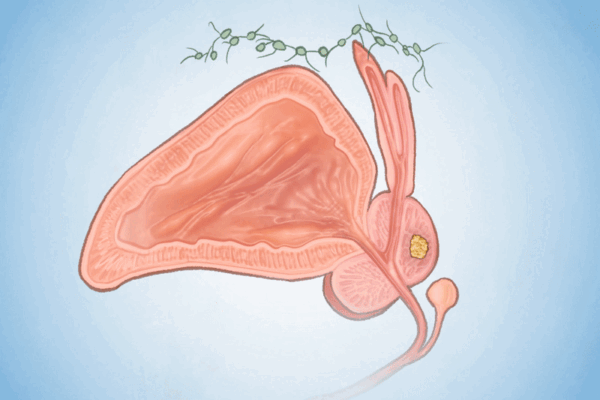
Happy Thursday! Today, we'll explore prostate cancer—affecting 1 in 8 men and the key warning signs to watch for—and new research revealing why lupus often improves with age.
Let's begin. |
| |
| |
| |
Today's Top Stories
|
| |
| |
| |
| |
| |
Other Studies: • Your stomach and brain work more in sync during mental distress.
• Johnson & Johnson’s new drug seltorexant may help treat insomnia. |
| |
WORDS OF WISDOM
A leader is a dealer in hope. | | – Napoleon Bonaparte – | |
| |
Healthy Living
|
| |
| |
| |
| |
Workout of the Day
|
| |
| |
| |
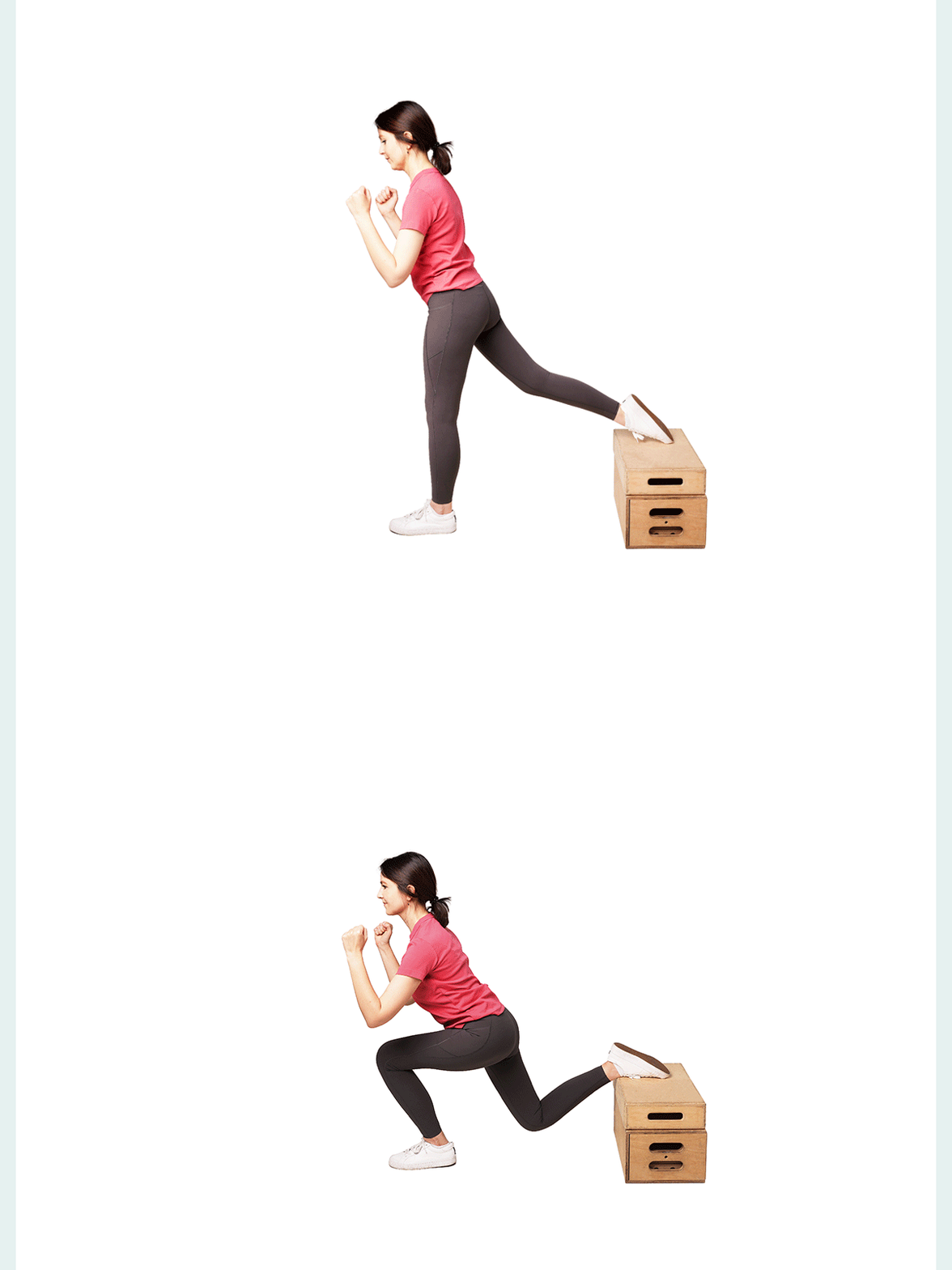
| Bulgarian Split Squat | The Bulgarian split squat combines features of the standard squat and lunge exercises. It’s an intense movement because it places the vast majority of muscle exertion on one leg while the other only contributes marginally. The positioning of your legs during movements also challenges your balance and core muscles.
Step 1: While looking straight ahead, stand tall with your back to the front of a sturdy chair or bench with your feet hip-distance apart, shoulders back, and your core engaged.
Step 2: Place your right foot behind you on the center of the chair. You can either point your toes and place the top of your foot on the chair or lift your toes, flex your ankle, and place the ball of your foot down like you would in a traditional lunge. Be sure to keep your back leg at about shoulder width; don’t place your elevated foot straight behind you since it will make balancing more difficult. Your back foot is designed to keep you balanced, and your front leg is where you will focus your movement and engage your muscles.
Step 3: Begin the squat by bending your left knee. Continue until you reach 90 degrees, allowing your right knee and hip to bend at the same time. Lower down until your left quad is parallel to the floor.
Step 4: Push through your left foot while using your left quad to power you back up to standing.
Step 5: This counts as 1 repetition. Try to perform 3 sets of 12 repetitions per leg, alternating legs to allow your muscles to rest between sets.
This is a tough exercise that pays solid dividends. Don’t abandon it if it seems too hard at first. Just do what you can and build up from there. | | Explore More Fitness |
| |
Worth a Look
|
| |
| |
Contributed by Gan Jing World |
Exercise Your Brain
|
| |
| |
| |
| |