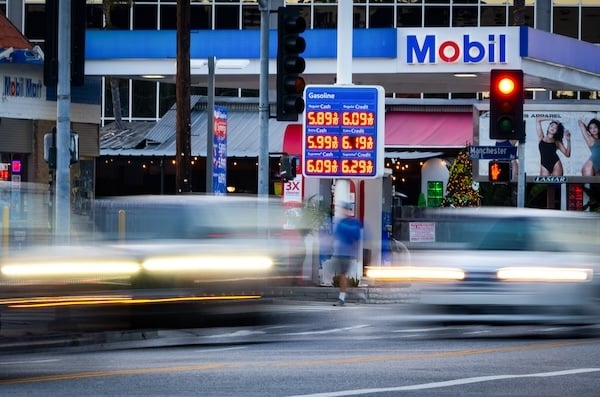
The United States gets almost no oil via the Strait of Hormuz, which has been choked off by Iran. So why did gas prices go up?

|
|
|
| “Impatience is a great obstacle to success.” |
| |
|
| Ivan Pentchoukov
National Editor |
|
|
| Ivan Pentchoukov
National Editor |
|
|
Good morning! It’s Wednesday. Here are today’s top stories: |
- The United States gets almost no oil via the Strait of Hormuz, which has been choked off by Iran. So why did gas prices go up? The reality is complicated.
-
Companies that legally sell recreational marijuana to adults are being sued in Illinois and Connecticut for allegedly not warning customers of the possible health problems caused by the drug.
-
Secretary of State Marco Rubio said that China’s human rights violations remain a key concern for the Trump administration and will be on the agenda during the president’s upcoming visit to Beijing.
-
The United States, with its Gulf partners, is proposing a United Nations Security Council resolution to reopen the Strait of Hormuz.
-
🍵 Health: Learn about the dangers of seed oils and discover a recipe for healthy homemade mayonnaise.
|
|
|
Traffic moves past a gas station in Los Angeles on March 11, 2026. (John Fredricks/The Epoch Times) |
Average gas prices in the United States have gone up by almost 40 percent since March 1. The reason appears straightforward: Iran has blocked the Strait of Hormuz in response to the U.S. military operation that decapitated its regime and degraded its military. Hundreds of tankers trapped behind the strait cannot deliver their oil, depriving the world of 7 percent to 10 percent of its supply.
Although that explains drastic price increases and even shortages in Europe and Asia, the United States gets almost no oil through the strait. In theory, the country should be energy-independent, as it is a net petroleum exporter.
But in reality, the United States is highly intertwined with the global oil market, and there is little chance it could disentangle itself from it, according to experts who spoke to The Epoch Times. “Oil is a fungible commodity that can be shipped anywhere in the world, and that is why everyone is impacted by the events,” said Patrick De Haan, petroleum analyst with gas price tracker GasBuddy. Countries facing shortages are willing to pay top dollar for U.S. oil. “There’s huge demand to export the product,“ said Paul Sankey, an oil market analyst and president of Sankey Research. “So that draws the prices up.”
If the U.S. government were to impose limits on oil exports, it would likely cause more problems than it would solve, the experts said. (More)
|
(Olena Yakobchuk/shutterstock) |
A public clash between Elon Musk and Sam Altman has intensified debate over artificial intelligence—its reliability, its control, and whether rapid development is outpacing safeguards. As AI systems become more integrated into daily life, we invite you to share your views.
The results will be featured in an article published this Saturday. (Take the Survey)
|
-
Several Republican state senators who opposed a redistricting plan backed by President Donald Trump lost primary election challenges on May 5 to candidates endorsed by the president.
-
Seeking to make a return to the U.S. Senate, former Sen. Sherrod Brown (D-Ohio) decisively defeated Ron Kincaid in the Democratic primary. Sen. Jon Husted (R-Ohio), who was unopposed in the GOP primary, will meet Brown in the Nov. 3 midterm election to fill the remaining two years of the Senate term vacated by Vice President JD Vance.
- Former presidential candidate Vivek Ramaswamy glided to victory in the Ohio GOP primary election for governor, solidifying the predicted Nov. 3 General Election showdown between him and the uncontested Democratic nominee, Dr. Amy Acton.
-
Democrat Chedrick Greene defeated Republican Jason Tunney in a special election for the state Senate’s District 35 seat, preserving Democratic control of the chamber.
|
- U.S. exports climbed to a record high, driven by surging shipments of crude oil and other petroleum products during the first month of the war in Iran, new government data released on May 5 show.
-
The trial of a Chinese American man charged with helping China’s communist regime track down dissidents from an overseas police station in New York starts today.
-
The Dell Technologies board of directors approved changing the company’s state of incorporation from Delaware to Texas, which could make it the latest high-profile company to exit Delaware since a state judge canceled Elon Musk’s pay package in 2024.
|
Secretary of War Pete Hegseth during a press briefing at the Pentagon in Arlington, Va., on April 24, 2026. (Madalina Kilroy/The Epoch Times)
|
-
War Secretary Pete Hegseth said on May 5 that the ceasefire with Iran remains in force despite events in the Persian Gulf in recent days. At a Pentagon briefing, Chairman of the Joint Chiefs of Staff Gen. Dan Caine said a series of Iranian attacks were below the threshold of “major combat operations.”
-
President Donald Trump announced that he was briefly pausing Project Freedom, the mission of assisting commercial ships through the Strait of Hormuz, to give the Iranian regime time to finalize a deal.
-
Iran’s Foreign Minister Abbas Araghchi is in Beijing for talks with his Chinese counterpart Wang Yi.
-
More than three years after China ended its draconian pandemic controls, some Chinese citizens say they are still suffering from serious health problems they believe began after receiving domestically produced COVID-19 vaccines. Several individuals also say they have seen a rise in deaths among younger people from sudden heart attacks or strokes. Chinese authorities have not acknowledged a broader vaccine injury issue. But an analyst who recently spoke to The Epoch Times said the lack of answers—and lack of support—has turned fear into anger.
- An explosion at a fireworks factory in central China has claimed at least 26 lives, local authorities said on Tuesday, prompting the regime’s top leader to call for a speedy investigation into the cause.
|
OPINION: The Car You Own May Soon Decide If You’re Allowed to Drive It—by Mollie Engelhart (Read) |
A boy walks with collected ears of wheat during the harvest season in the Marajah village of the Mishkhab District, north of Iraq's central city of Najaf, on May 5, 2026. (Ahmad Al-Rubaye / AFP via Getty Images) |
📸 Day in Photos: Cruise Ship Crew Members Evacuated, Transport Strike, and Battle Reenactment (Look)
🎙️ Podcast: Chinese Man Arrested, Sentenced to Prison for Trying to Smuggle 2,200 Ants Out of Kenya—Facts Matter (Listen)
💛 Inspiration: Tajik dances are often steeped in hidden meaning, with movements conveying narratives about daily life, natural phenomena, or deeply held beliefs. (Watch)
🎵 Music: Mozart - Andante And Allegretto (Listen)
👁️ (Sponsored) Still Using Eye Drops? 5 Reasons They’re Not Solving Your Dry Eye Problem — Eye drops may offer temporary relief, but they don’t always address the root cause. Discover 5 overlooked reasons symptoms return*—and the simple shift people are making for longer-lasting comfort.
|
(Terri Ward/The Epoch Times) |
First developed in 1756, mayonnaise began as a simple emulsion of egg, acid, and olive oil. Today, it has become one of the biggest delivery vehicles for refined seed oils in the American diet—even when the front label says, “Made with olive oil.” Turn that jar around, and you’ll often see soybean oil, canola oil, or both in the ingredient list alongside olive oil.
Seed oils are highly processed vegetable oils extracted from seeds such as soybeans, canola, corn, sunflower, safflower, grapeseed, rice bran, and cottonseed. These oils are high in omega‑6 fatty acids, including linoleic acid. While the body needs some omega‑6, modern diets deliver far more than we’re designed to handle, often crowding out anti‑inflammatory omega‑3 fatty acids.
In modern diets, seed oils are nearly everywhere, from restaurant frying oil to packaged snacks, salad dressings, and many “healthy” foods. Seed oils undergo heavy chemical refining, and in restaurants, they are often heated to high temperatures and reheated repeatedly. When seed oils are overheated and reheated, they break down, forming harmful compounds, including oxidized fats and toxic aldehydes. These damaged molecules can increase oxidative stress and place a burden on the body.
Constant exposure to seed oils has pushed the omega-6 to omega-3 ratio from our ancestral ratio of about one-to-one to as high as 15-to-one to 20-to-one today.
Some research suggests that replacing other fats—mostly saturated fats—does not raise inflammation markers. However, these studies usually tested seed oils in controlled settings with relatively low overall seed oil intake. They did not examine the ultra‑processed, fried‑food‑heavy pattern many people follow day to day. More recent research links a higher omega-6-to-omega-3 ratio to an increased risk of death from all causes. (More)
|
|
| Thanks for reading 🙏 Have a wonderful day! |
—Ivan Pentchoukov, Madalina Hubert, and Kenzi Li. |
|
|
Copyright © 2026 The Epoch Times, All rights reserved.
Our mailing address is: The Epoch Times, 129 West 29th Street, Fl 8, New York, NY 10001 | Contact Us
Our Morning Brief newsletter is one of the best ways to catch up with the news. Manage your email preferences here or unsubscribe from Morning Brief here.
*Disclaimer: The opinions expressed in this advertisement are exclusively those of the advertiser and do not represent our views or positions. This material is promotional in nature and should not be mistaken for news, research or editorial content. |
|
|
|