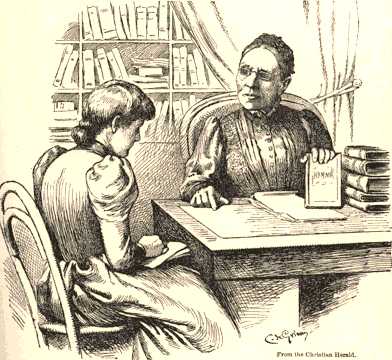
| Fanny Crosby was blind for almost her entire life, but her resilience and faith are what defined her. That, and the 8,000 hymns she wrote, made her one of the most prolific and beloved hymnists in American history.
Though blinded in infancy, Crosby never regarded her condition as a misfortune. Instead, she came to see it as a gift—one that sharpened her inner vision and deepened her spiritual life. Raised by a devoted mother and grandmother, she absorbed Scripture, poetry, and a strong moral foundation from an early age, memorizing long passages that would later inform her writing.
Her achievements extended well beyond music. As a young woman, Crosby became the first woman to testify before the U.S. Senate, advocating for people with disabilities. She later addressed Congress in verse and built connections with influential people of her time. Yet her life wasn't without hardship. She endured the early loss of her father, the death of her only child, and a marriage marked by long separations.
Even so, her response to suffering was consistent: gratitude, perseverance, and a deep commitment to serving others. For years, she worked among the poor, imprisoned, and forgotten, often giving away much of her income to support charitable missions. Her hymns, rooted in hope and redemption, reflected not only theological conviction but also lived experience.
Crosby’s legacy lies not simply in the sheer volume of her work, but in the spirit behind it. She believed that kindness, encouragement, and faith could transform lives—and she lived those principles out on a daily basis.
Her story reminds us that every life guided by purpose and compassion can leave a lasting mark.
|