| Washington made good on its promise to enact higher tariffs on countries that did not negotiate a new trade deal with the United States by the Aug. 1 deadline. |
| On the evening of July 31, President Donald Trump signed an executive order imposing tariffs on imports from dozens of countries. |
| Those tariffs, which range from 10 percent to 41 percent, are scheduled to take effect on Aug. 7. The order covers 66 countries, the 27-member European Union, Taiwan, and the United Kingdom’s self-governing Falkland Islands. |
| On the same day, Trump signed an executive order raising tariffs on Canadian goods imported to the United States to 35 percent from the previous rate of 25 percent. |
| The order, which has a stated focus on stemming the flow of illegal drugs from Canada, will also add a 40 percent tariff on any goods found to be transshipped through Canada to avoid tariffs. |
| New Tariffs |
| The United States initially announced a new, broad tariff schedule touching nearly every country in the world in April. |
| However, most of those tariffs were soon rolled back to a so-called baseline of 10 percent with a White House ultimatum to make a new bilateral trade deal with the United States or face the high tariff rate. |
| After extending the original deadline to Aug. 1, the tariff rates are now set and will be enacted within a week of the order’s signing, according to the executive order. |
| In a statement, the White House said some countries have made a formal trade deal with the United States during this period or are “on the verge of agreeing to meaningful trade deals and security agreements, however, most countries initially targeted for what Washington considers unfair trade practices have not.” |
| The July 31 executive order set new rates ranging from 10 percent to 41 percent, depending on the country and the nature of imports. |
| This definitive action, the statement said, was taken because some countries did not make a satisfactory offer during the nearly four months since the initial tariff announcement, or they “have not negotiated at all.” |
| The baseline tariff, according to the executive order, for countries not specifically listed in the order is 10 percent, while specific countries face higher rates due to trade imbalances and other economic factors. |
| India is one of the notable exporters to the United States, facing new or adjusted tariffs. While the United States and India appeared to be close to making a deal in July, it never materialized. |
| Importers of Indian goods will pay a 25 percent tariff. |
| European nations that aren’t members of the European Union face tariffs as low as 15 percent and as high as 39 percent. Switzerland is facing a 39 tariff, while Serbia will pay a 35 percent tariff. |
| The White House imposed a 10 percent tariff on Brazilian goods on July 31 that brought the overall tariff rate on Brazilian goods to 50 percent. |
| On July 30, Trump signed an executive order imposing a 40 percent tariff rate on the South American country over its prosecution of former Brazilian President Jair Bolsonaro and other issues the White House considers to be “a threat to the economy of the United States.” |
| China was not among the nations receiving a new tariff rate. |
| The executive order said Washington is maintaining the terms of a May agreement between the United States and the Chinese communist regime that would allow both to negotiate a binding, bilateral trade deal. |
| Senior American officials met with leading Chinese officials at the end of July. |
| Transshipments Targeted |
| In the order on Canadian goods, the White House authorized Customs and Border Patrol to apply a 40 percent tariff to goods it determines were transshipped through Canada from unspecified other countries to avoid tariffs. |
| In a statement, Canadian Prime Minister Mark Carney said Ottawa is disappointed by the tariff announcement. |
| “Canada accounts for only 1 percent of [United States] fentanyl imports and has been working intensively to further reduce these volumes,” Carney said in a statement. |
| Stopping transshipping, which is often used by importers to avoid tariffs on Chinese-produced goods, is a key plank of the Trump administration’s trade policy. |
| Some experts are skeptical that the transshipment rule will achieve its intended results. |
| “Enforcement is likely to be challenging, and even if outright rerouting is reduced, trade diversion will continue to dampen the impact of [United States] tariffs on China’s aggregate export performance,” Leah Fahy, China economist at Capital Economics, said in an Aug. 1 research note. |
| Trade Deals Reached So Far |
| Ahead of the Aug. 1 deadline, the Trump administration reached a series of trade agreements with several countries and trading blocs. |
| These agreements secured reductions or postponements of higher tariff rates. |
| In a July 31 Truth Social post, Trump said he spoke with Mexican President Claudia Sheinbaum and the pair agreed to enter a 90-day negotiating period while maintaining the current 25 percent tariff rate on Mexican goods. |
| Mexico is one of the United States’ largest trading partners. |
| “Mexico will continue to pay a 25 percent Fentanyl Tariff, 25 percent Tariff on Cars, and 50 percent Tariff on Steel, Aluminum, and Copper,” the Truth Social post stated. |
| “Additionally, Mexico has agreed to immediately terminate its Non-Tariff Trade Barriers, of which there were many.” |
| In the final week before the Aug. 1 deadline, a number of last-minute deals came together, too. |
| The European Union struck a deal to set tariffs on its goods at 15 percent. |
| A White House statement said the EU agreed to purchase $750 billion in American energy and make new investments of $600 billion in the United States by 2028 as part of the deal. |
| The United States also made bilateral trade deals, which are finalized or pending with Indonesia, Japan, the Philippines, and the United Kingdom. |
| On July 31, on his Truth Social, Trump said Washington reached a deal with South Korea and Pakistan as well. |
| Also on the evening of July 31, Bangladeshi, Cambodian, and Thai authorities said their respective countries had reached deals with the United States to avert higher tariffs. |
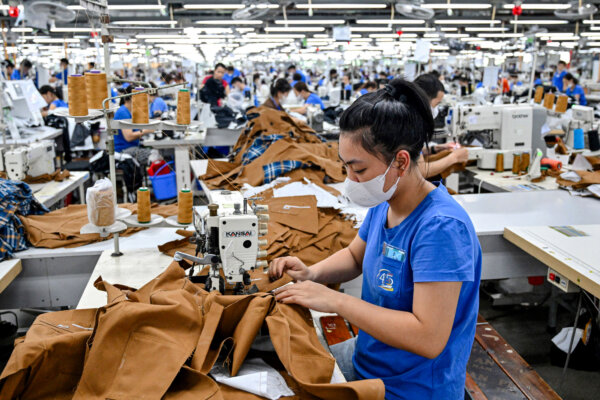
| Bangladesh, in particular, relies on garment exports to the United States. |
| Early on Aug. 1, Taiwanese President Lai Ching-te said the island nation reached a deal with the United States to avoid tariffs as high as 39 percent. |
| Lai said in the speech that the 20 percent rate is “temporary” and should be lowered as negotiations continue. |
| Taiwan is a key exporter of semiconductors used in technology around the world. |
| Closing a Trade Loophole |
| In a related move, the Trump administration announced the end of the longstanding de minimis exemption on low-value imports. |
| The de minimis exemption was originally designed to ease customs processing for shipments valued under $800. |
| Effective on Aug. 29, all goods imported into the United States valued at $800 or less will be subject to tariffs and customs duties, regardless of origin. |
| This expands a similar policy enacted in May that had already suspended the exemption for shipments originating from China and Hong Kong. |
| In a July 30 statement, the White House described the measure as closing a “catastrophic loophole” used to evade tariffs and funnel dangerous synthetic opioids and unsafe goods into the country. |
| The policy aims to prevent abuse by retailers shipping low-value parcels, often directly from China, that previously avoided tariffs and regulatory scrutiny. |
| Customs and Border Protection reported that more than 1.3 billion de minimis shipments entered the United States in 2024. |
| The volume of such shipments surged significantly in the first half of 2025. |
| Under the terms of the order, international postal shipments will be subject to either percentage-based tariffs or a fixed fee ranging from $80 to $200, depending on origin, with the fee option available only for six months before all packages must be assessed by percentage. |
| Personal exemptions for travelers and small gifts remain unchanged under the new executive order. |
| Correction: The “Top Story” newsletter on July 26 incorrectly stated the amount of the U.S. national debt. It’s $37 trillion. The Epoch Times regrets the error. |
| |
| To dig deeper into the subject, read the following original reporting by our journalists: | |
| |
Thank you for being a subscriber
If you enjoy what you’re reading, please consider forwarding this email to someone who might find it informative. Your Feedback
We'd love to hear from you. You can email us at constitutionave@epochtimes.us
| | |